Almost immediately upon arriving into Fort Kochi, India, you feel how ancient everything is. Fort Kochi (Kochi was formerly known as Cochin) has been a trading hub since at least the 14th century. The Portuguese arrived in 1500 under Pedro Alvares Cabral, making it the first European colonial settlement in India. The Dutch took over in 1663, then the British in 1795. Each left their mark.
Add in the architecture from multiple religions that co-existed at one point here, and you have a mess of a very deep and vivid history. Christianity, Judaism, Islam, Hinduism, Communism, and British and Portuguese Colonialism, all in one place.
Also, there is a fun element of animals wandering around freely here. Goats, cats, chickens, dogs… and even the occasional cow.
St. Francis Church & Santa Cruz Cathedral
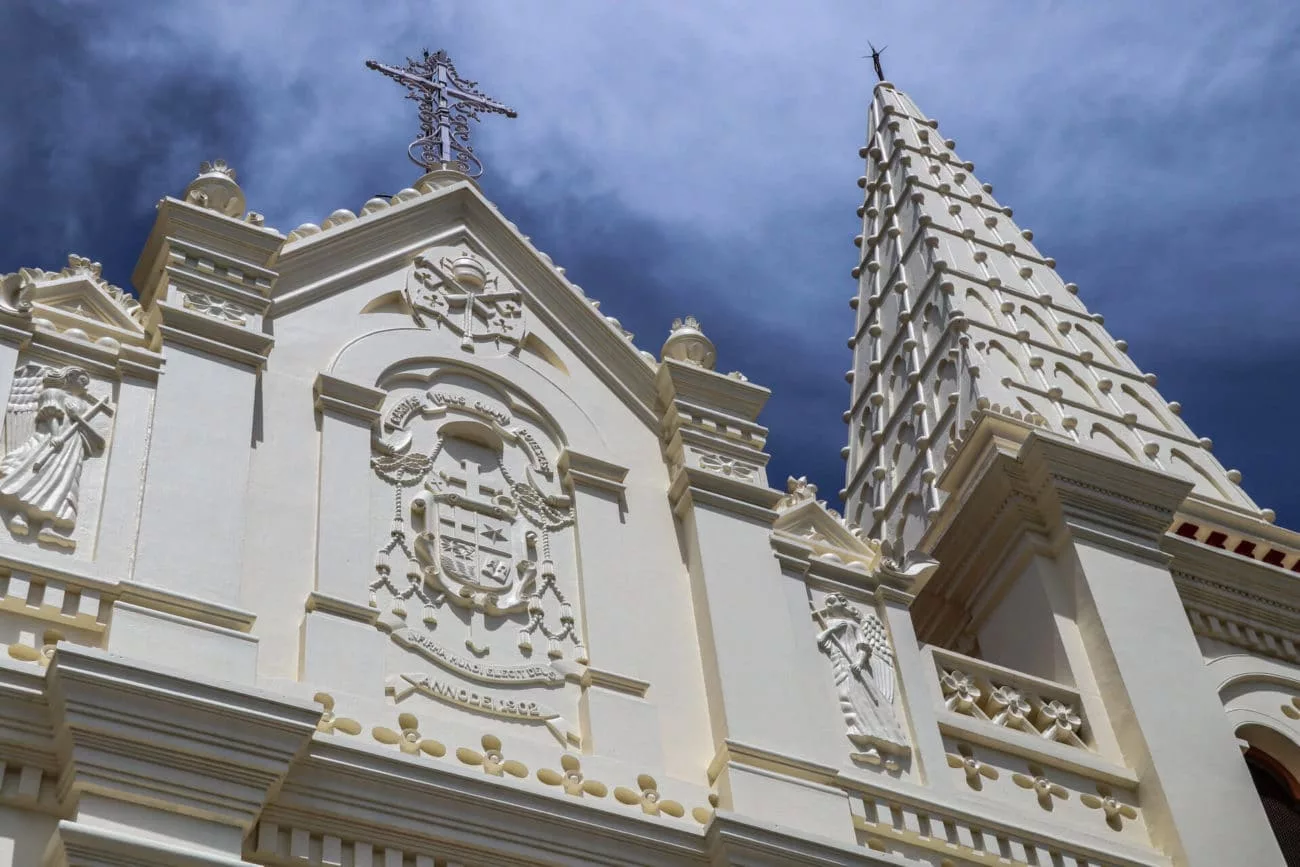
St. Francis Church, built in 1503, is the oldest European church in India. Vasco da Gama was originally buried here in 1524 before his remains were moved to Lisbon in 1539. Santa Cruz Cathedral Basilica was originally built by the Portuguese in 1505, destroyed by the British in 1795, and rebuilt in its current Gothic form in 1905.
The white Gothic facade of Santa Cruz Cathedral Basilica
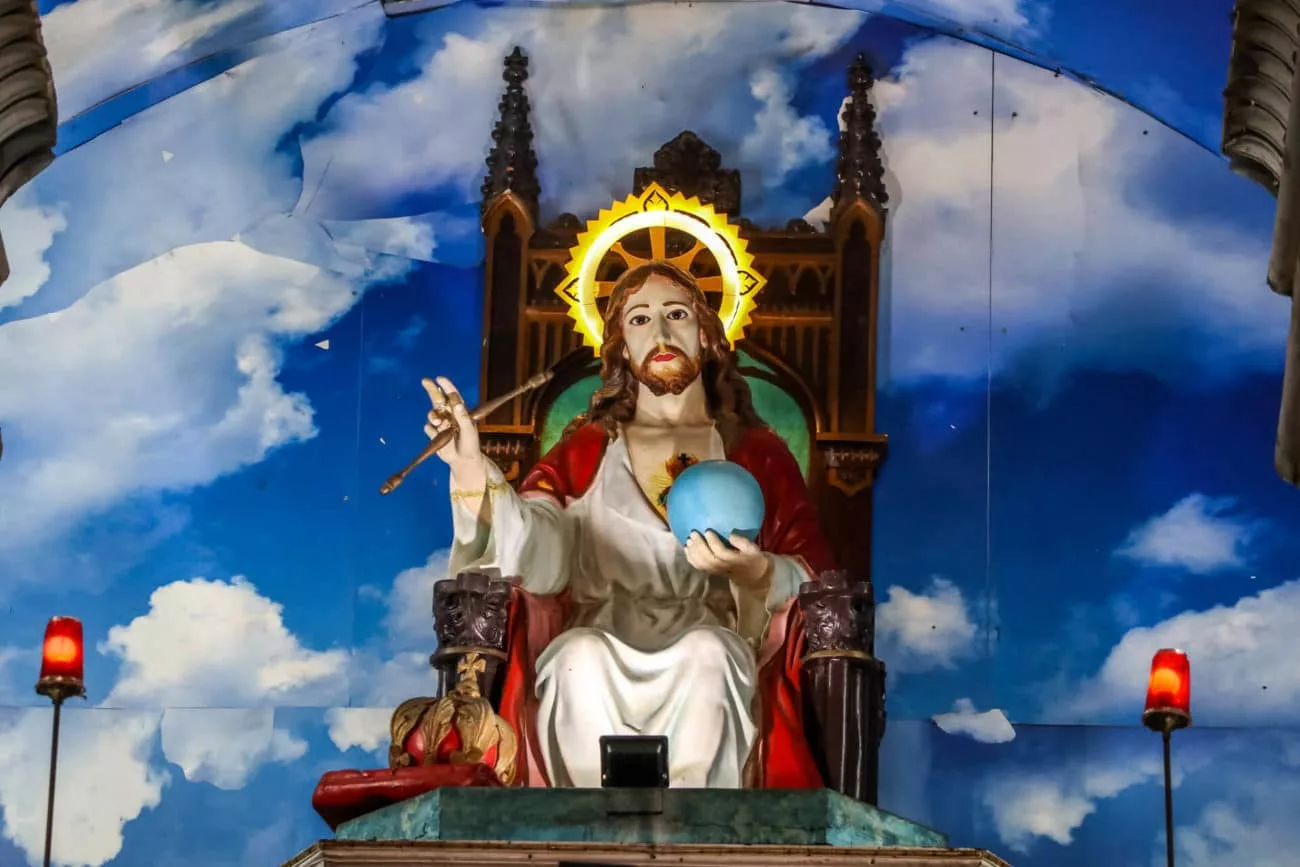
The ornate painted altar inside Santa Cruz Cathedral Basilica
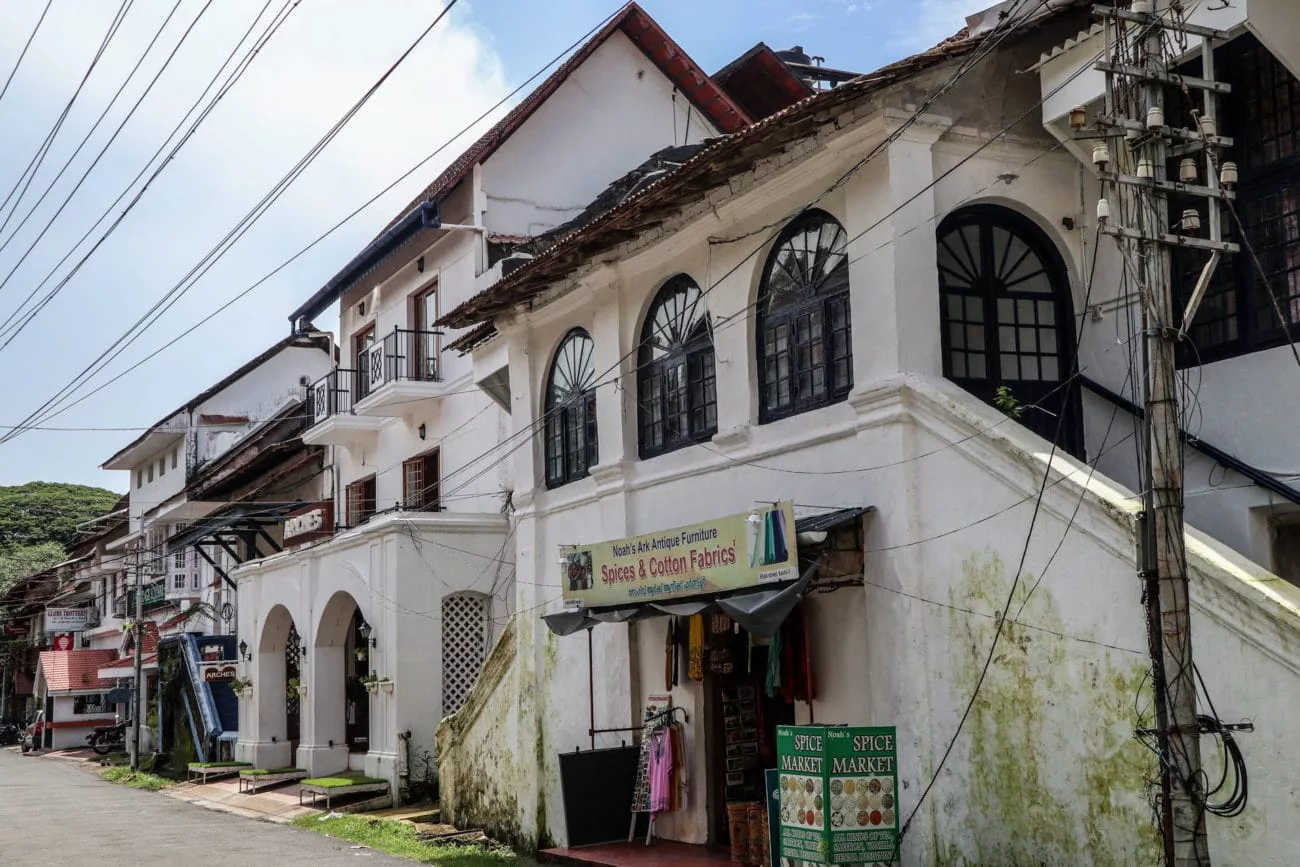
A Portuguese-era spice shop beneath whitewashed colonial arches
The Dutch-gabled facade of St. Francis Church with a memorial stone out front
St. Francis Church, where Vasco da Gama was buried in 1524
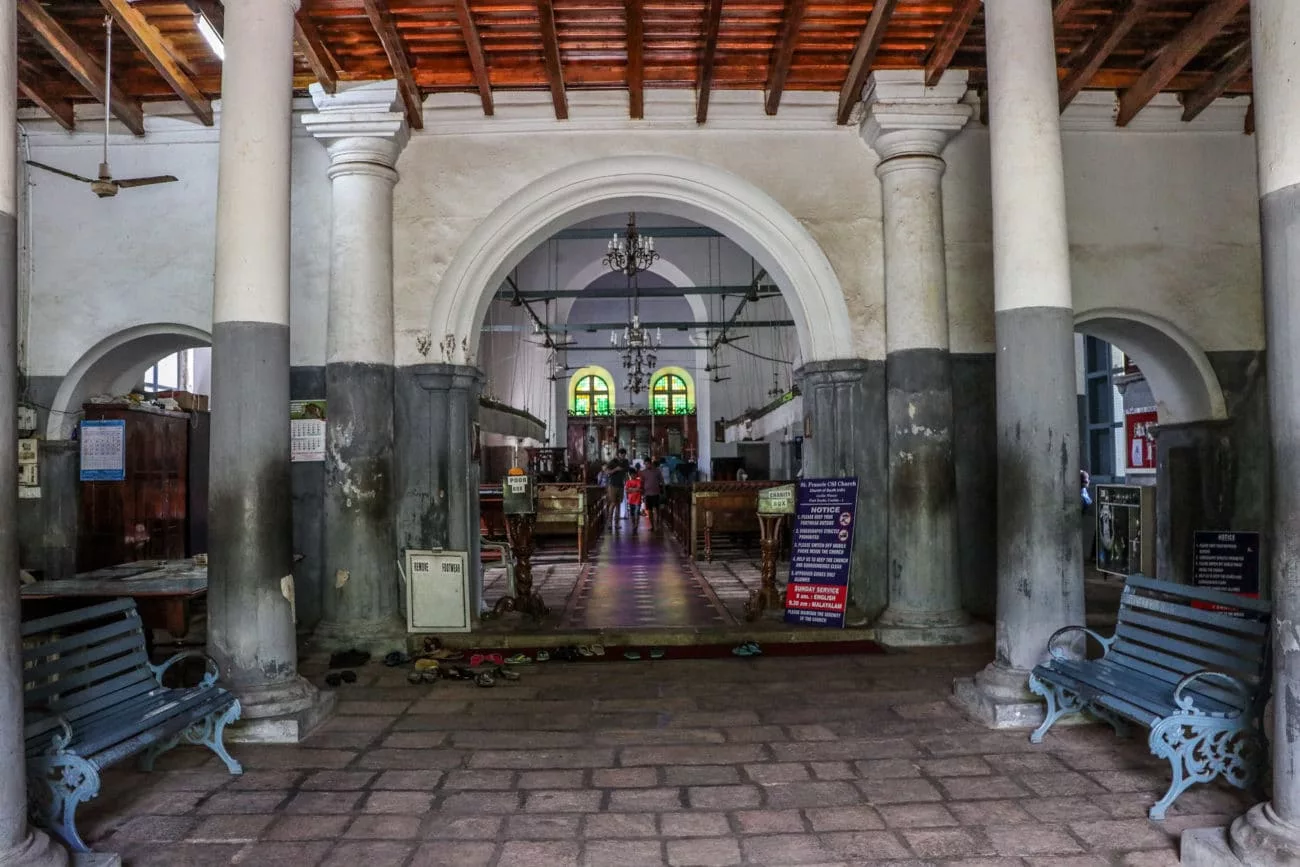
Inside St. Francis Church, the oldest European church in India
A Dutch colonial tombstone from 1688 inside St. Francis Church
A small Christian church on a quiet back street
The white Portuguese-era Our Lady of Hope Church
A red and cream Gothic Revival church monument
Portuguese Colonial Architecture
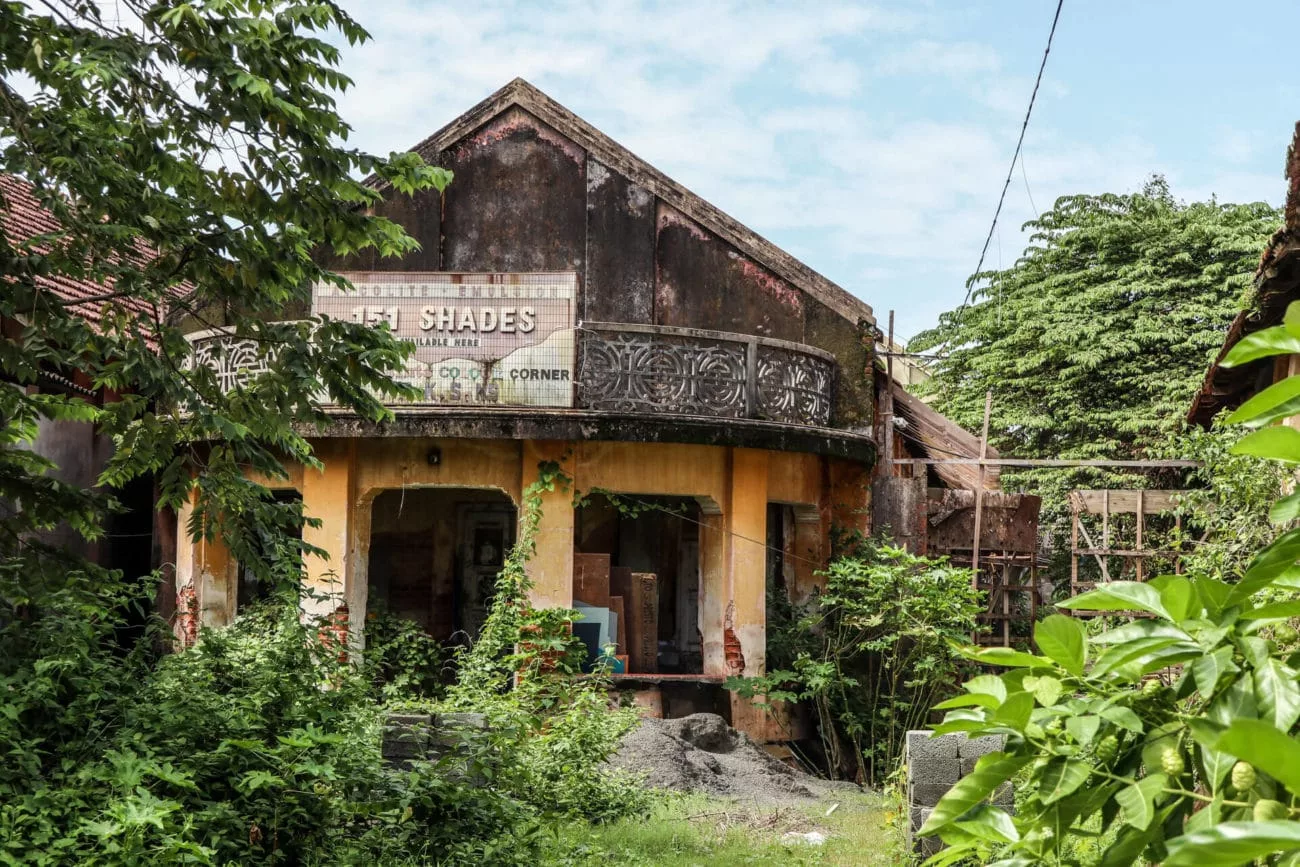
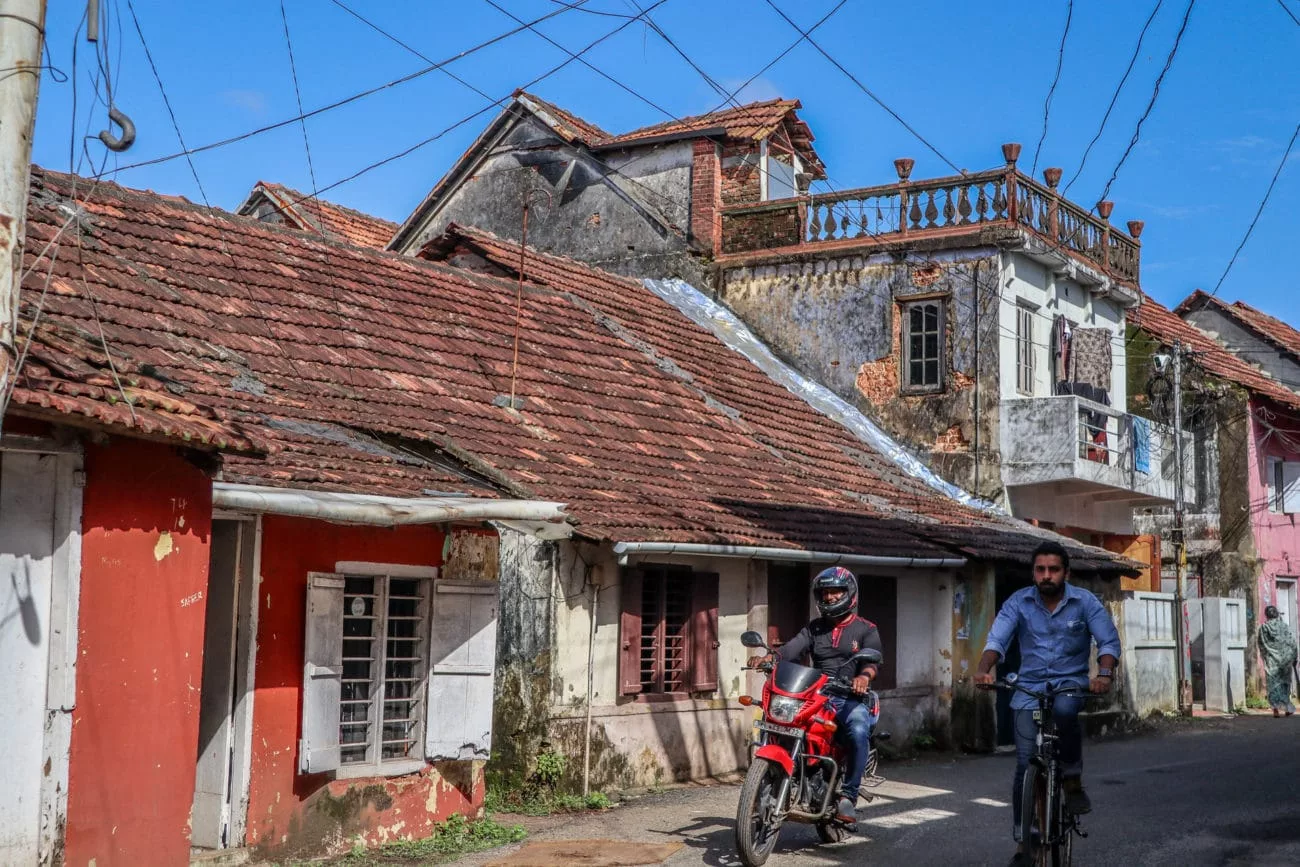
The colonial architecture has survived over 500 years here, mixing with tropical greenery and slowly decaying in the Kerala heat. Portuguese bungalows, Dutch warehouses, and British administrative buildings sit side by side on streets that haven’t changed much since.
Hindu swastika symbols painted on a wall along the railway tracks
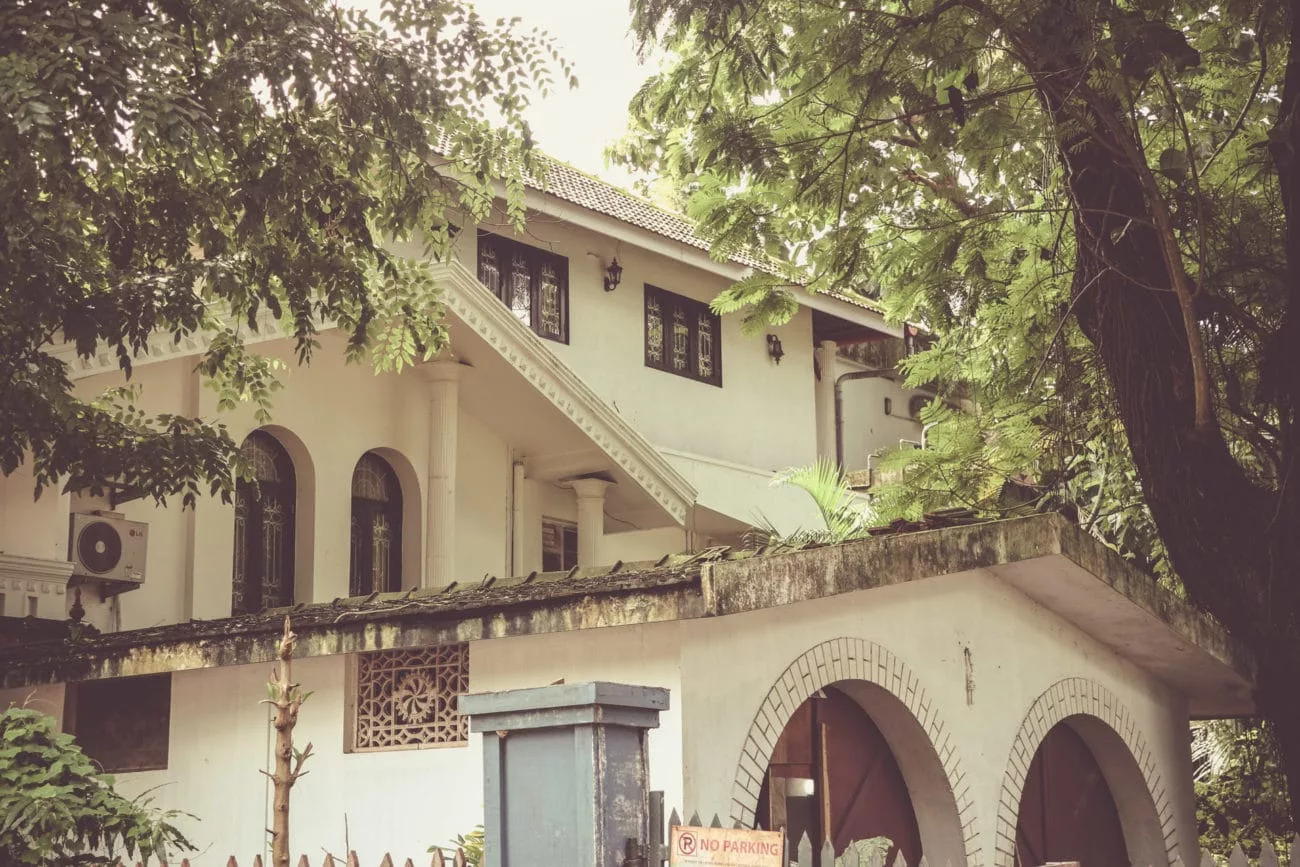
A colonial-era bungalow surrounded by tropical greenery
A colonial bungalow with arched windows slowly being swallowed by tropical trees
An elderly couple chatting in a colorful narrow lane
Men on a scooter outside a weathered colonial building with green shutters
A brick-paved lane with colorful houses, auto-rickshaws, and scooters
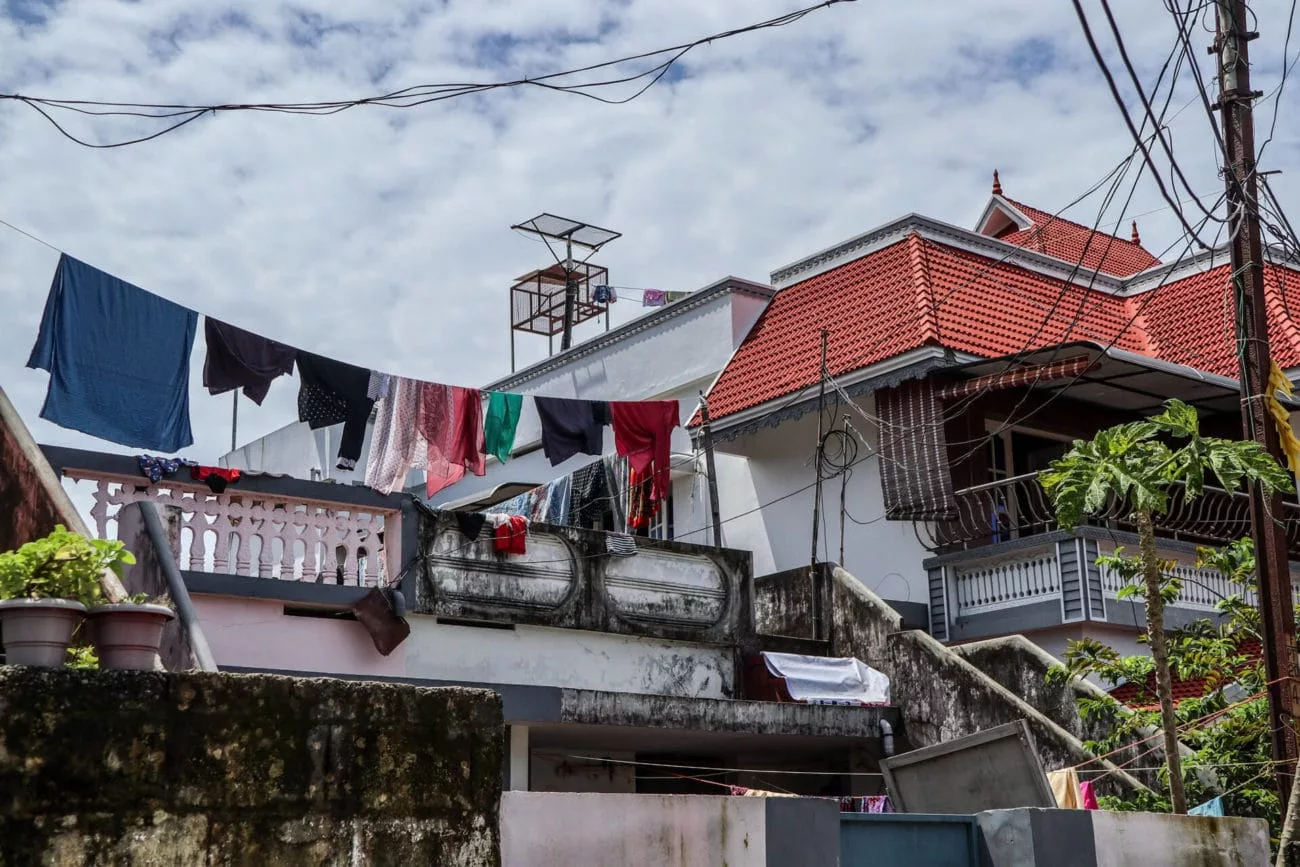
Laundry drying on rooftops between terracotta tiles and TV antennas
Boats moored in a canal between colonial-era buildings
A colonial warehouse consumed by banyan roots and creeping vines
The Gateway Hotel across the harbor, a canoe gliding past
An abandoned auto-rickshaw overtaken by weeds and graffiti
Terracotta tile rooftops and a weathervane tower peeking over the trees
A weathervane tower atop a colonial-era building
The Chinese Fishing Nets
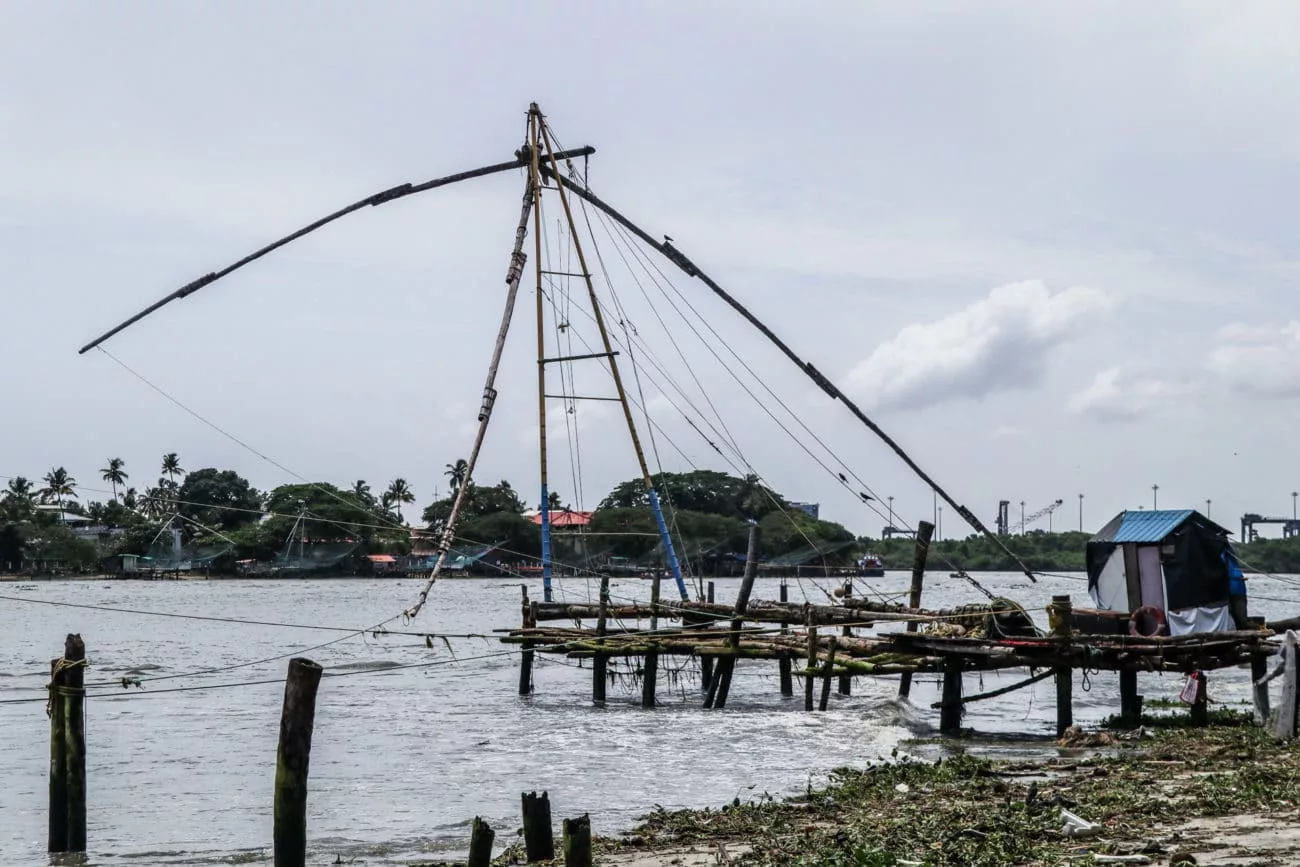
The iconic Chinese fishing nets (cheena vala) have been used along the Kochi shore since at least the 14th century. Legend says they were introduced by traders from the court of Kublai Khan. Each net requires a team of 4-6 men to operate, and they’ve barely changed in 600 years.
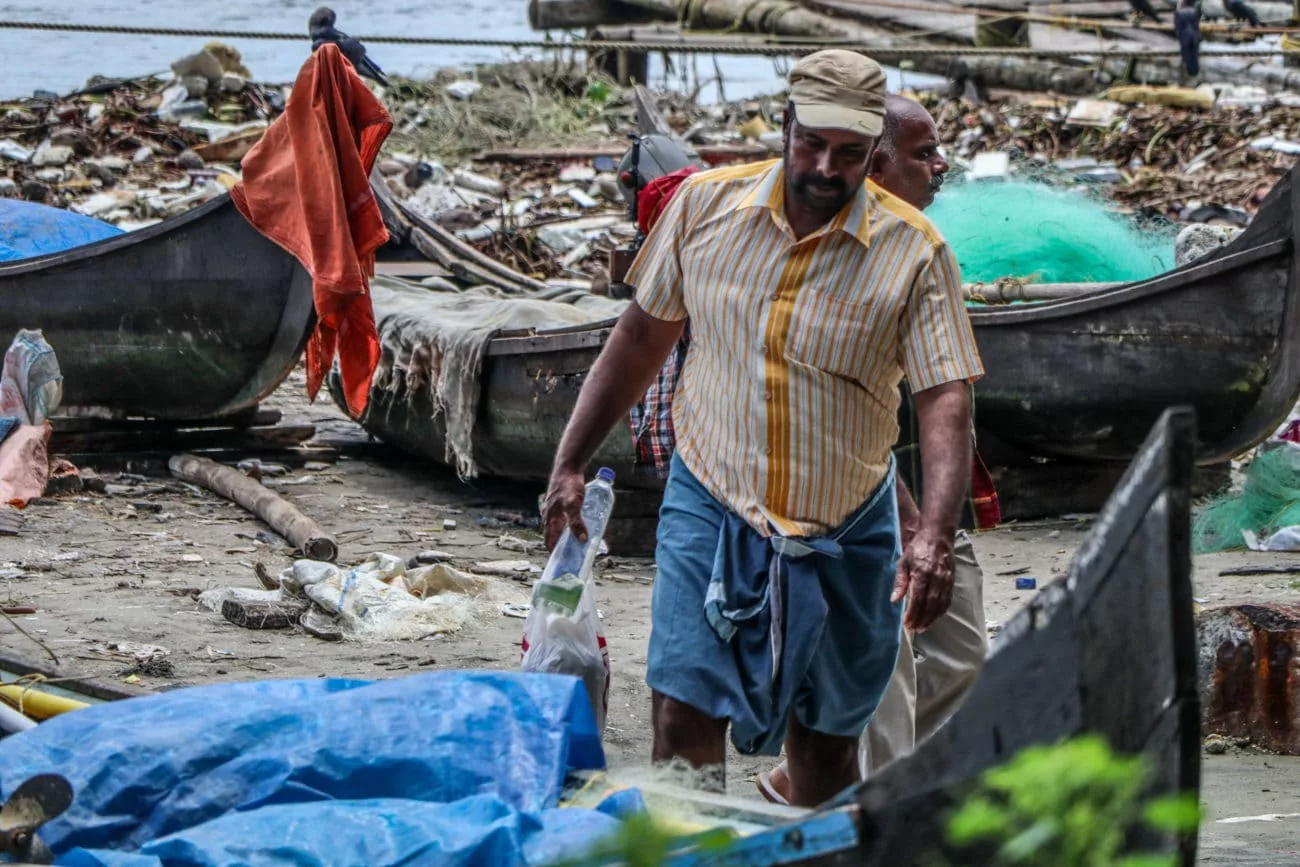
The only real difference now is the extreme amount of pollution and nearby industrialization.
A Chinese fishing net rig standing idle on the shoreline
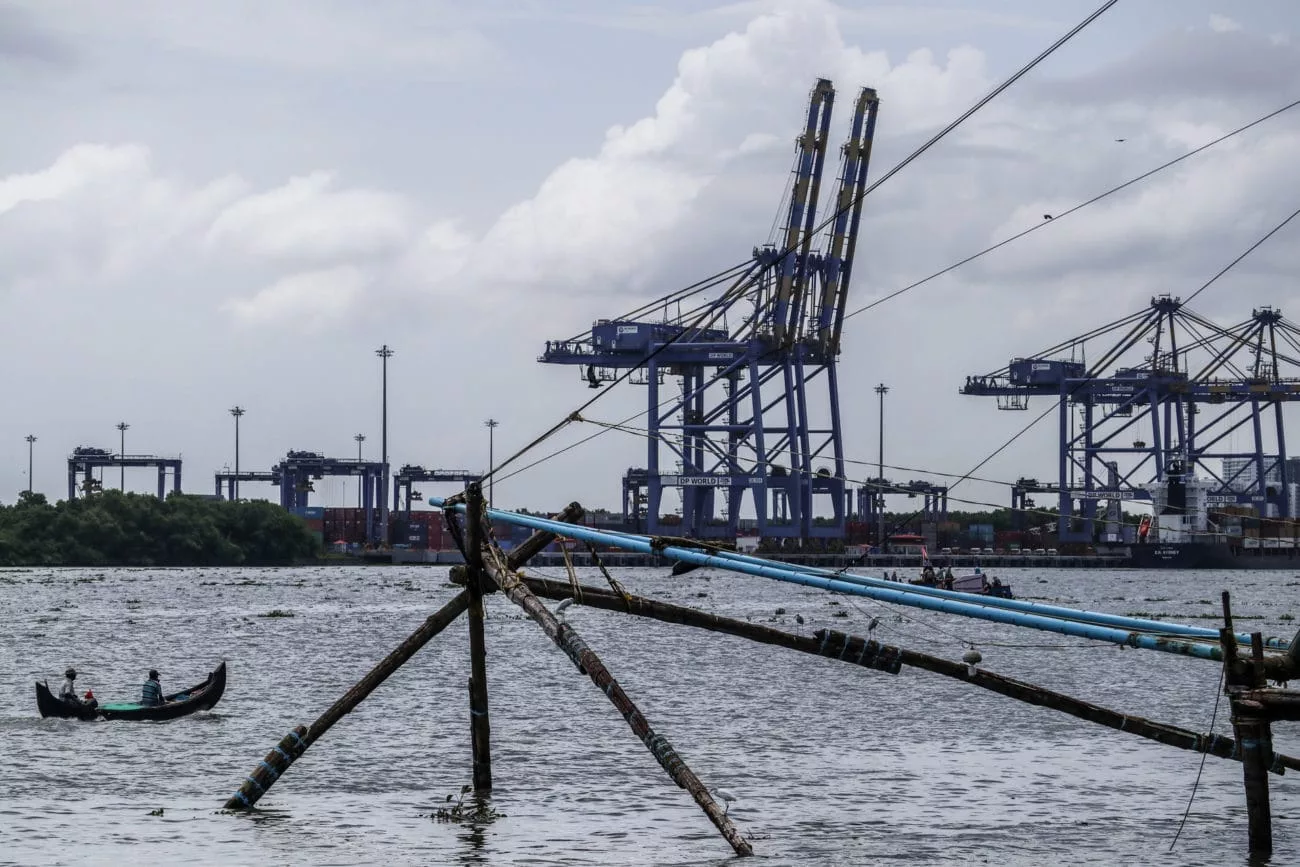
Chinese fishing nets along the shore with container cranes in the background
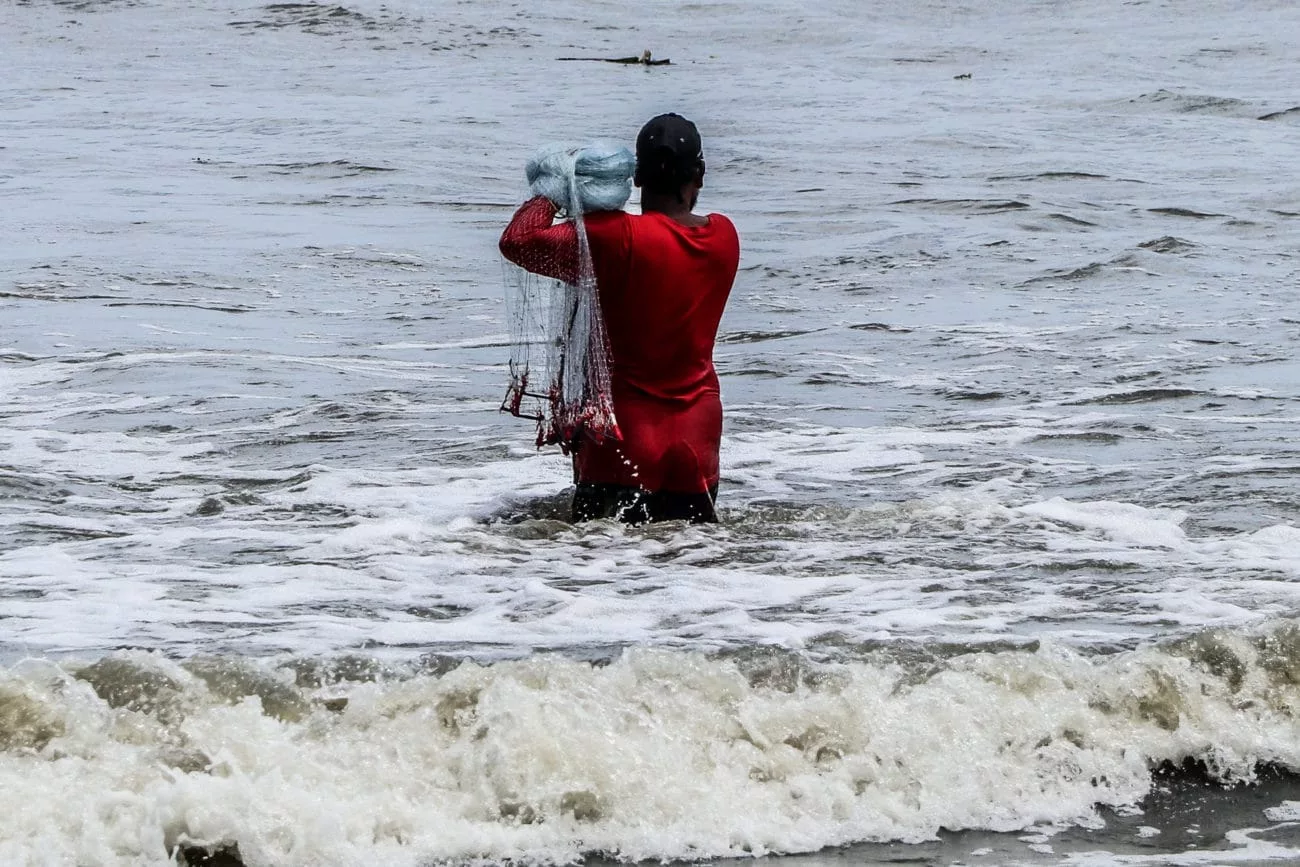
A fisherman wading waist-deep into the surf with his cast net
Fishermen tending their boats along the shore
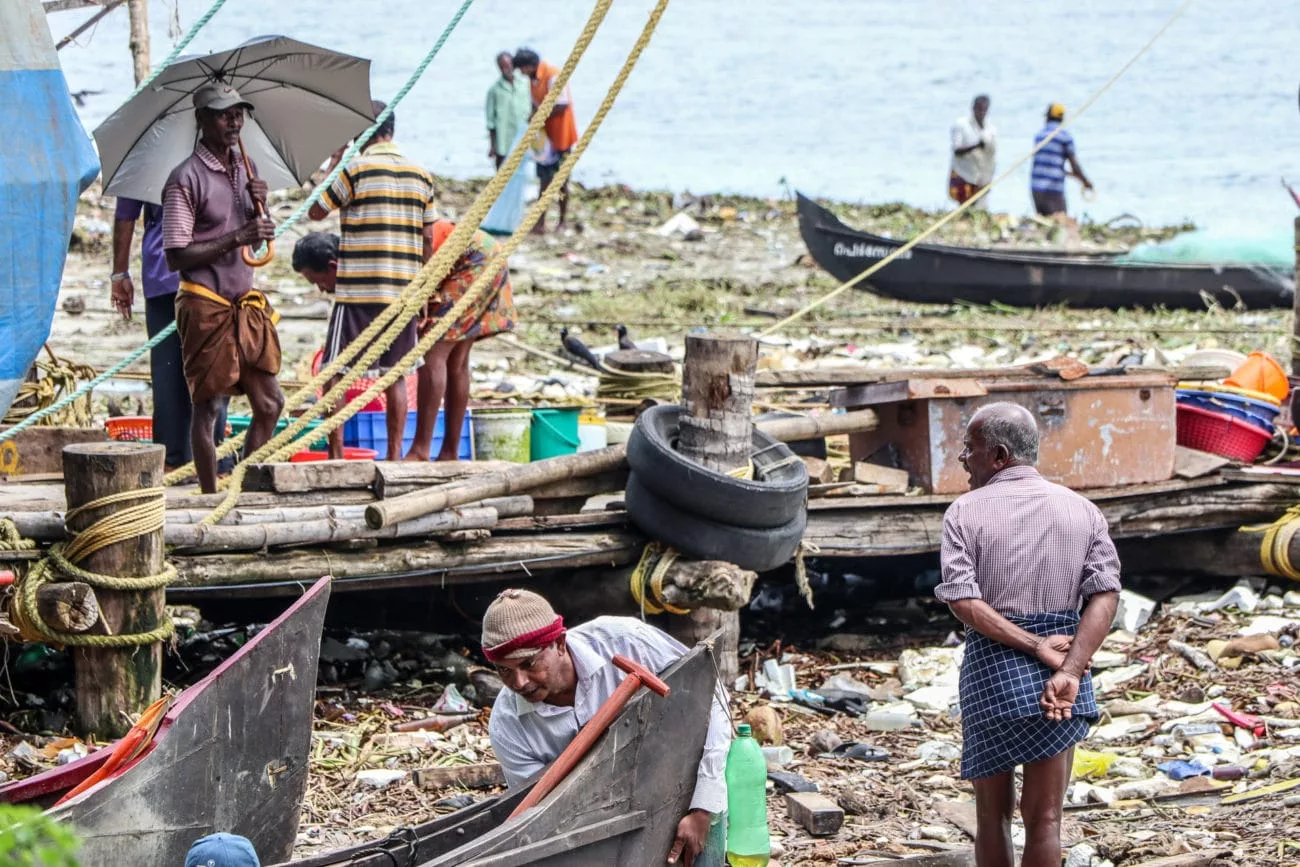
Two fishermen walking through the debris-strewn boatyard
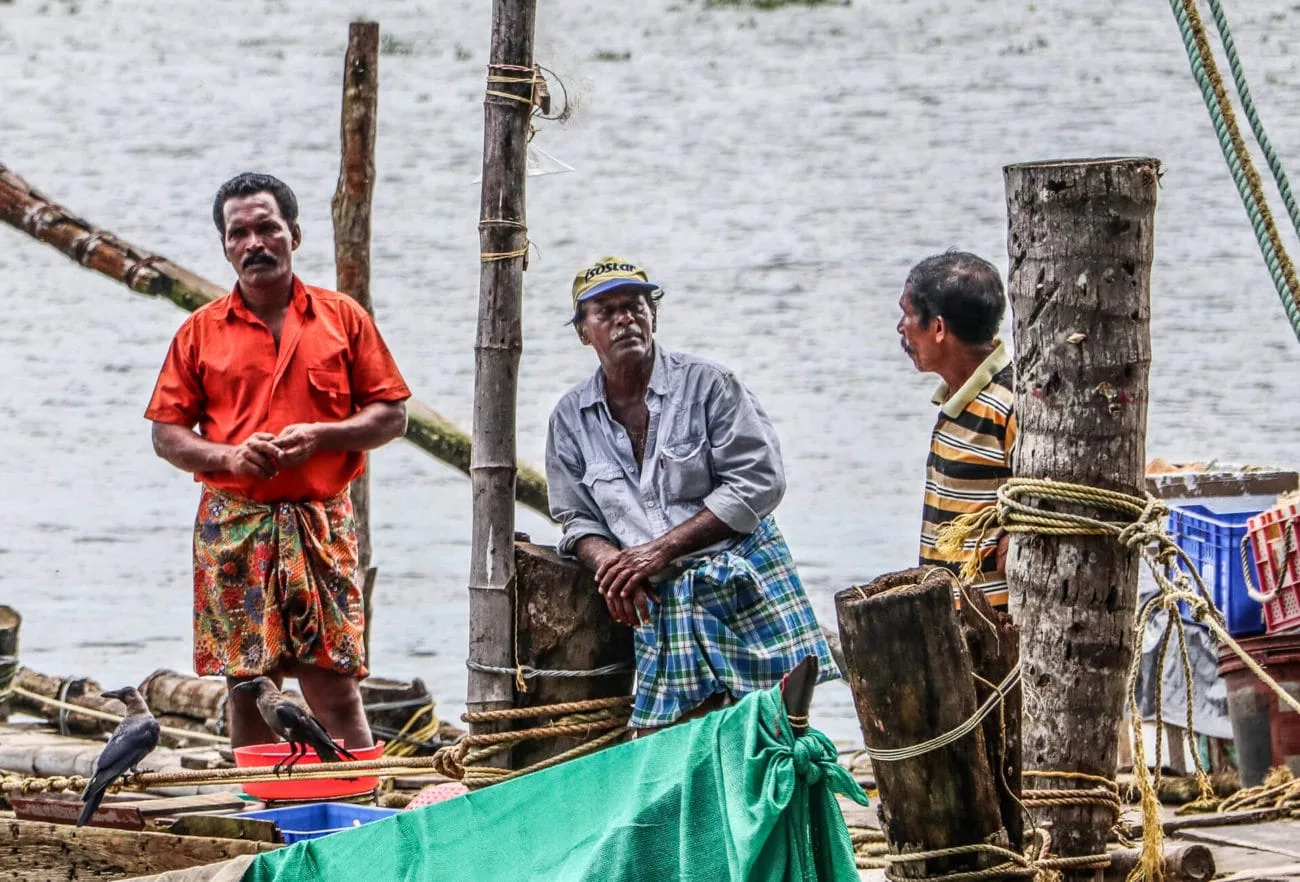
Three fishermen chatting on a net platform between hauls
Fishermen repairing boats and nets along the polluted shore
Container cranes looming behind the wooden poles of a Chinese fishing net
Two fishermen rowing a traditional wooden canoe across the harbor
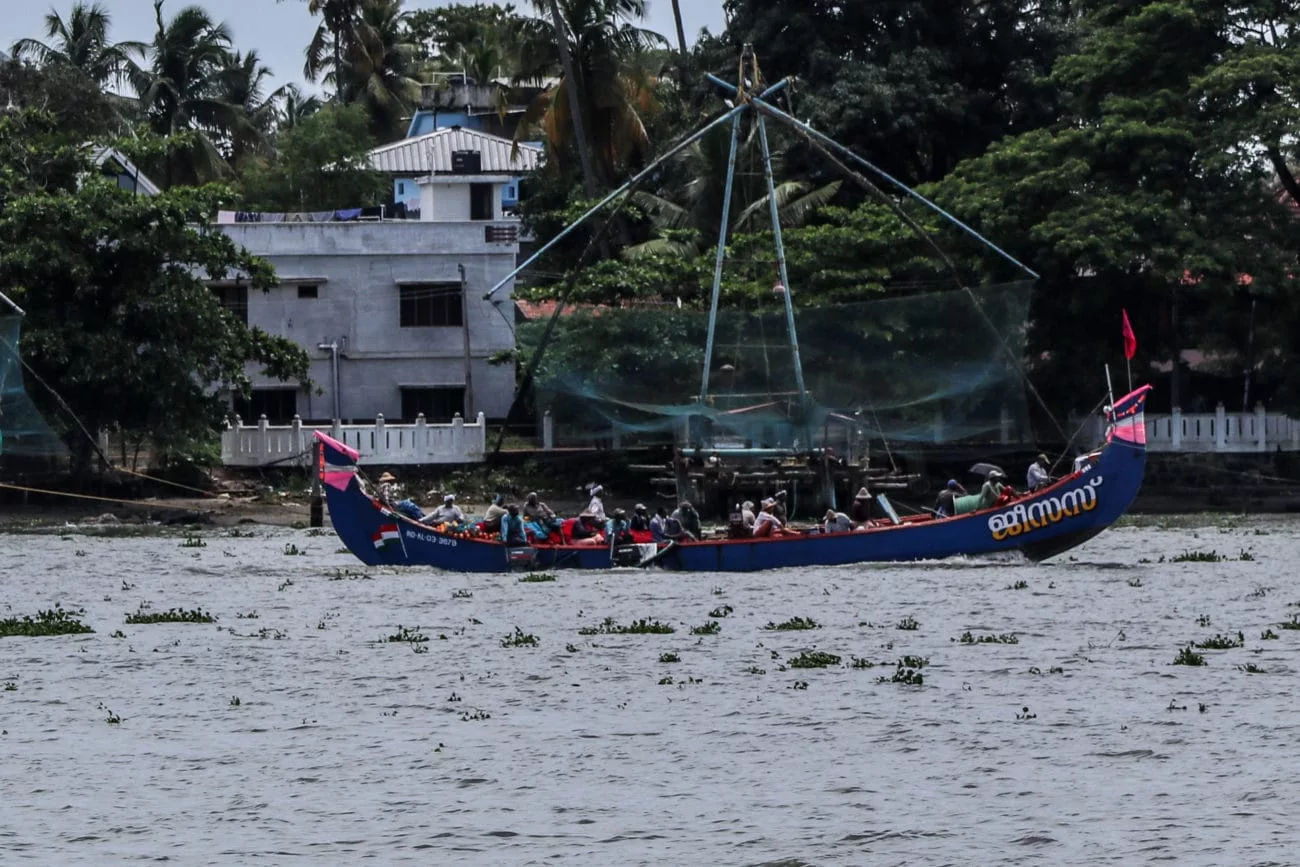
A packed ferry boat with Malayalam script passing a fishing net
A fisherman pulling ropes on the net platform under a palm tree
Two men heaving the counterweights to lower the Chinese fishing net
A fisherman checking the ropes with coconut palms across the water
A fisherman on a Chinese fishing net platform with industrial cranes behind him
A team of four men pulling the Chinese fishing net up together
A weathered blue fishing trawler anchored in Kochi harbor
Motorcycles crowded at the Sagarmala ferry dock
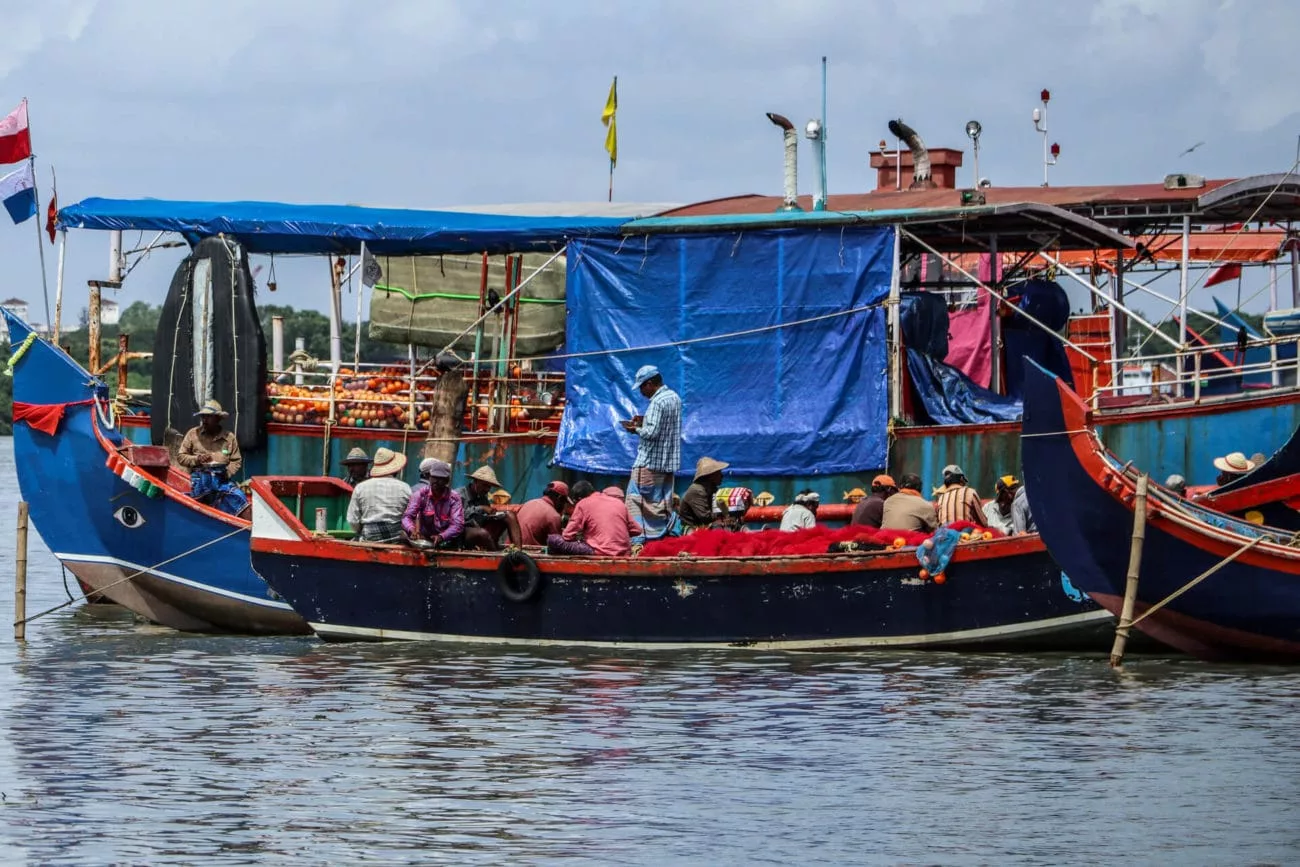
A crew on a blue trawler sorting their catch among the moored boats
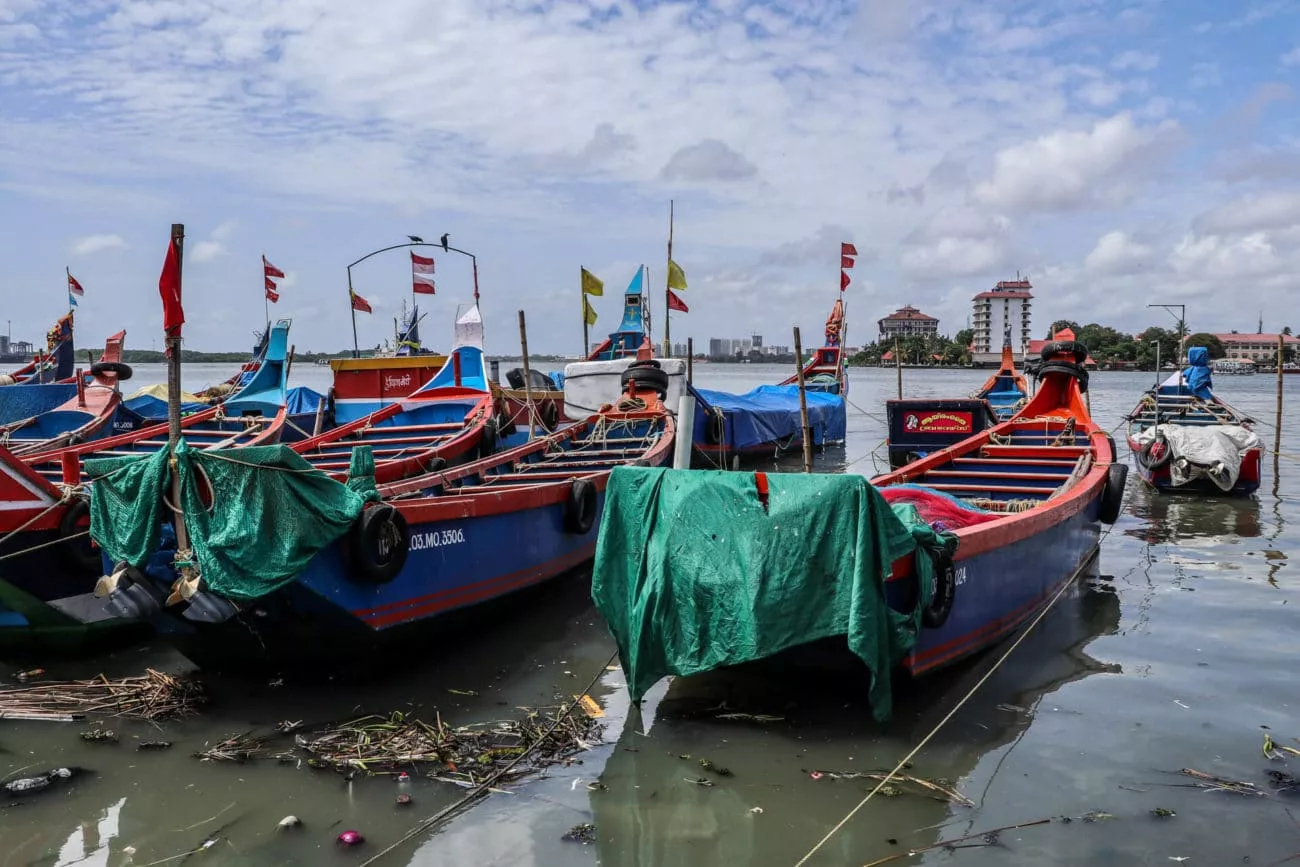
Colorful trawlers with red flags moored in the harbor, the Gateway Hotel behind
Fishing boats covered in green tarps, floating in murky water full of debris
A large cargo ship anchored off the rocky Kochi coastline
The Kochi Markets
The market in Kochi is absolutely ancient. Built on top of itself, layer after layer. The spice trade is what brought every colonial power here in the first place. Kochi was the pepper capital of the world for centuries.
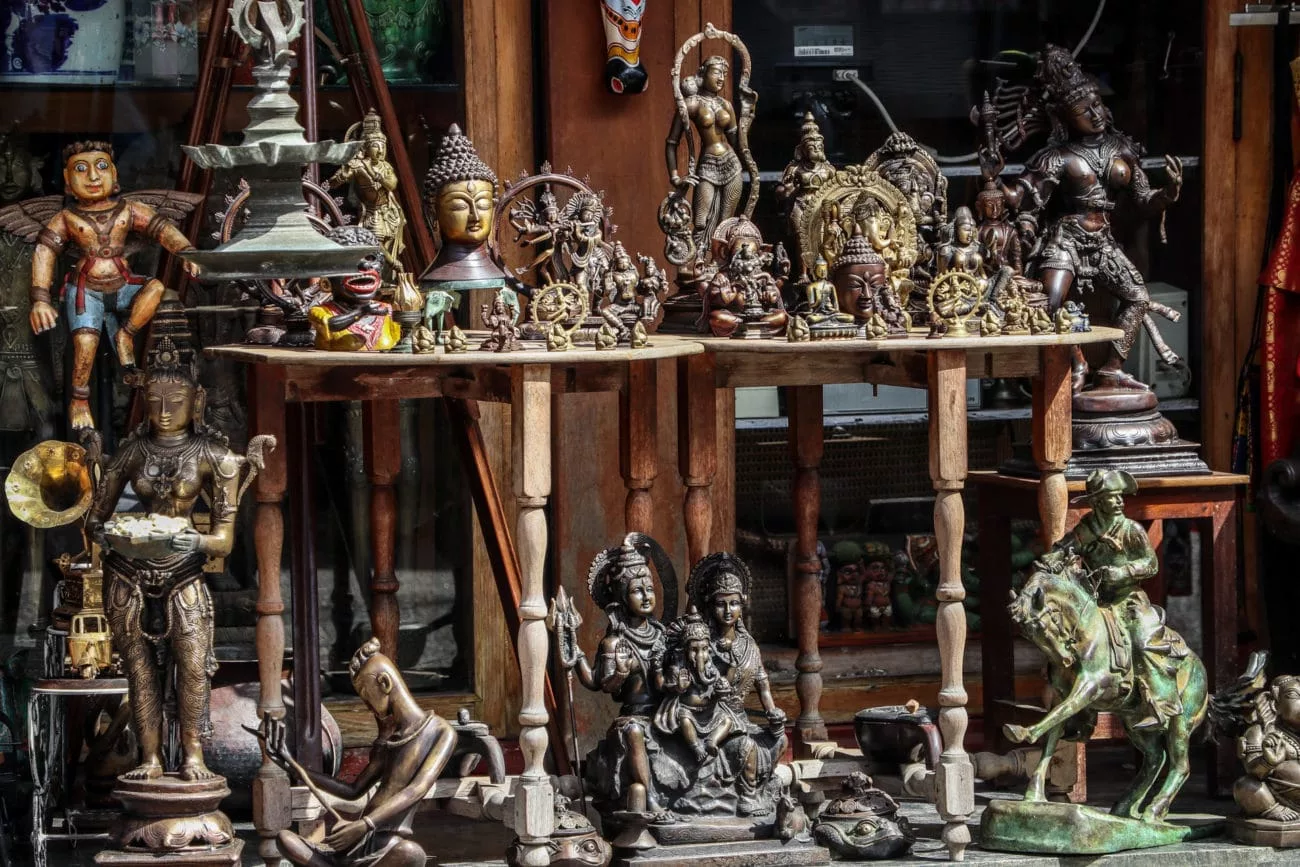
You can buy pretty much everything here, from local goods, to tourist trinkets, and even giant statues for your hotels and villas.
David browsing trinkets at a street market stall
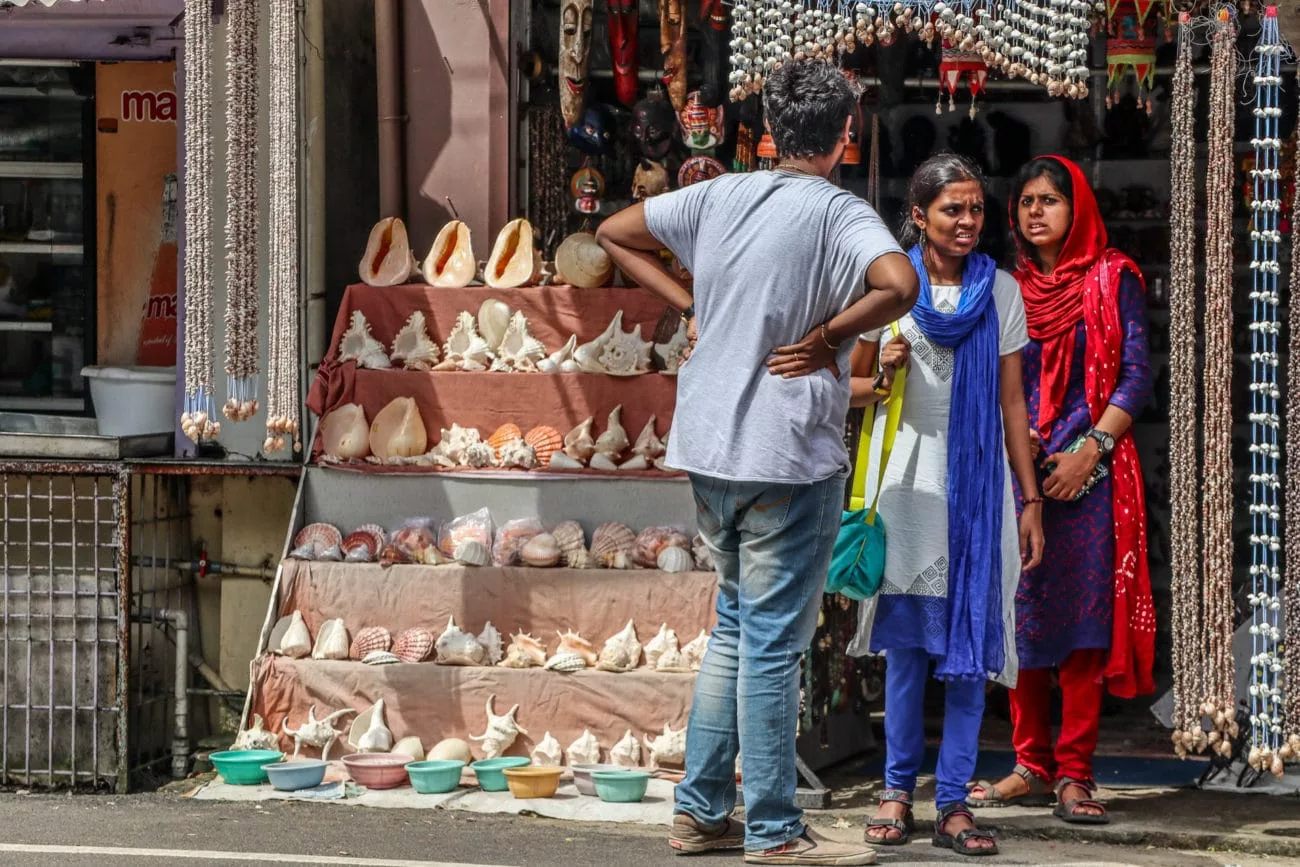
Sea shells and conch shells for sale at a market stall
Butchers cutting meat at an open-air street stall
A Kerala mural painting of the goddess Saraswati
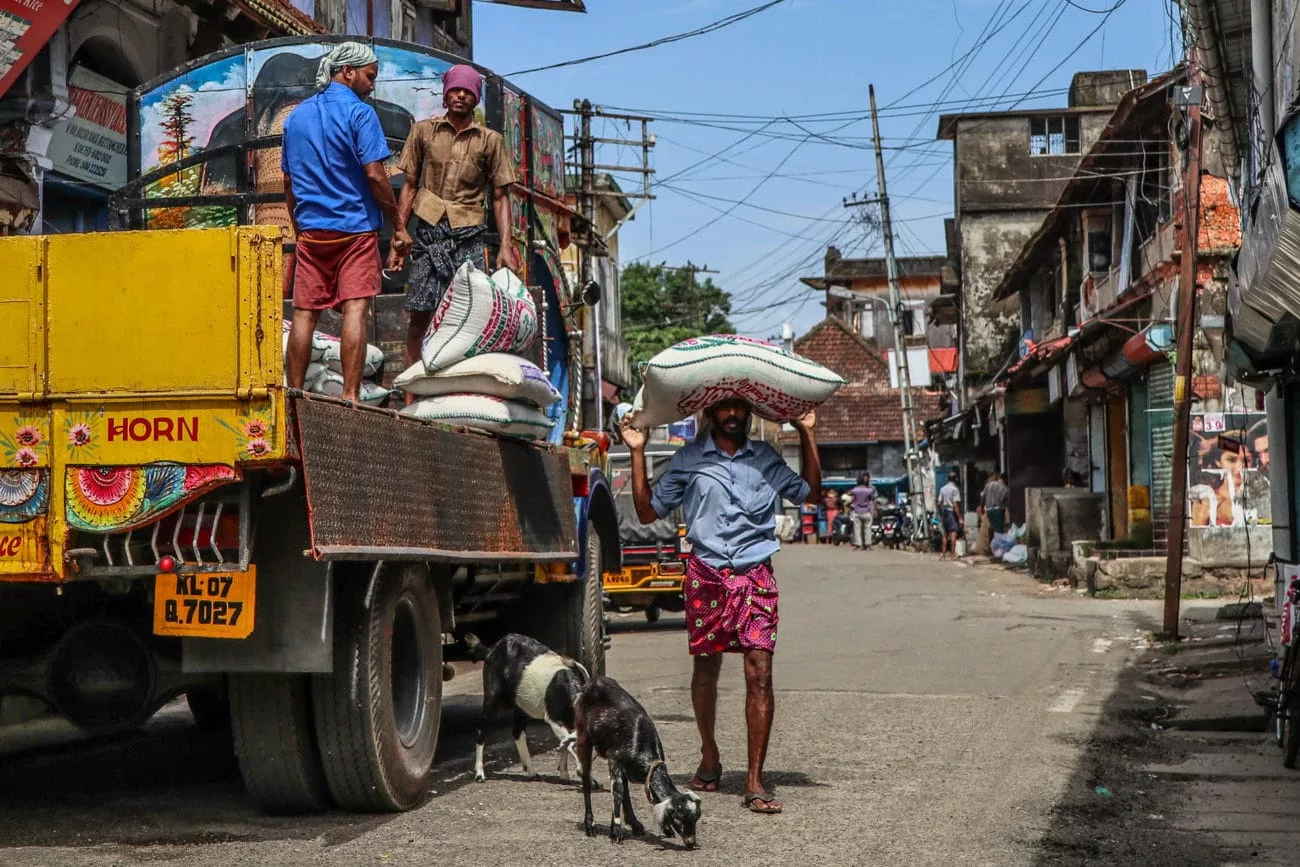
Workers unloading burlap sacks from a decorated truck while a dog watches
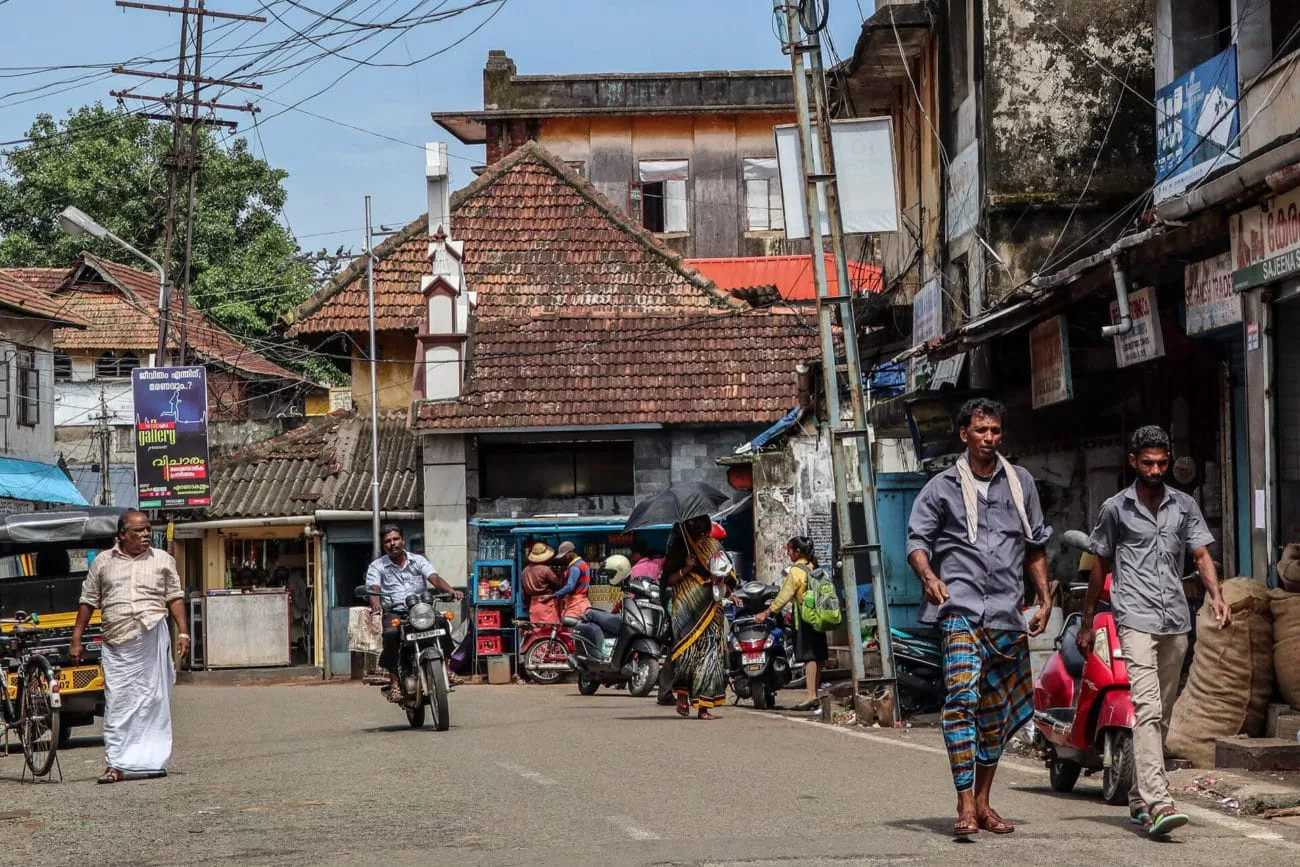
Pedestrians, motorcycles, and lungis on a busy market street
Colorful decorated TATA trucks squeezing through a narrow street
Burlap sacks, scooters, and a bicycle crammed into a narrow market lane
A shopkeeper doing his books in a cluttered hardware and kitchenware store
An abandoned colonial storefront with iron balcony, overgrown with vines
Conch shells and seashells displayed on a tiered roadside stall
A woman surrounded by Kathakali masks, bronze lamps, and brass figurines
Hindu deity figurines decorated with flower garlands in a home shrine
A large reclining Ganesha stone sculpture outside a shop
Antique wooden figurines, a painted parrot, and temple sculptures in a shop window
Bronze Buddha and Hindu deity statues crowded on a shop table
A motorcyclist and cyclist passing weathered colonial-era houses
Christianity, Judaism, Islam, Hinduism and Communism
All of these belief systems have coexisted within this region of India. Judaism grew during the Spanish Inquisition of the 16th century, which caused many Jews to leave Europe, fleeing persecution and torture. The Paradesi Synagogue in Jew Town was built in 1568 and is the oldest active synagogue in the Commonwealth.
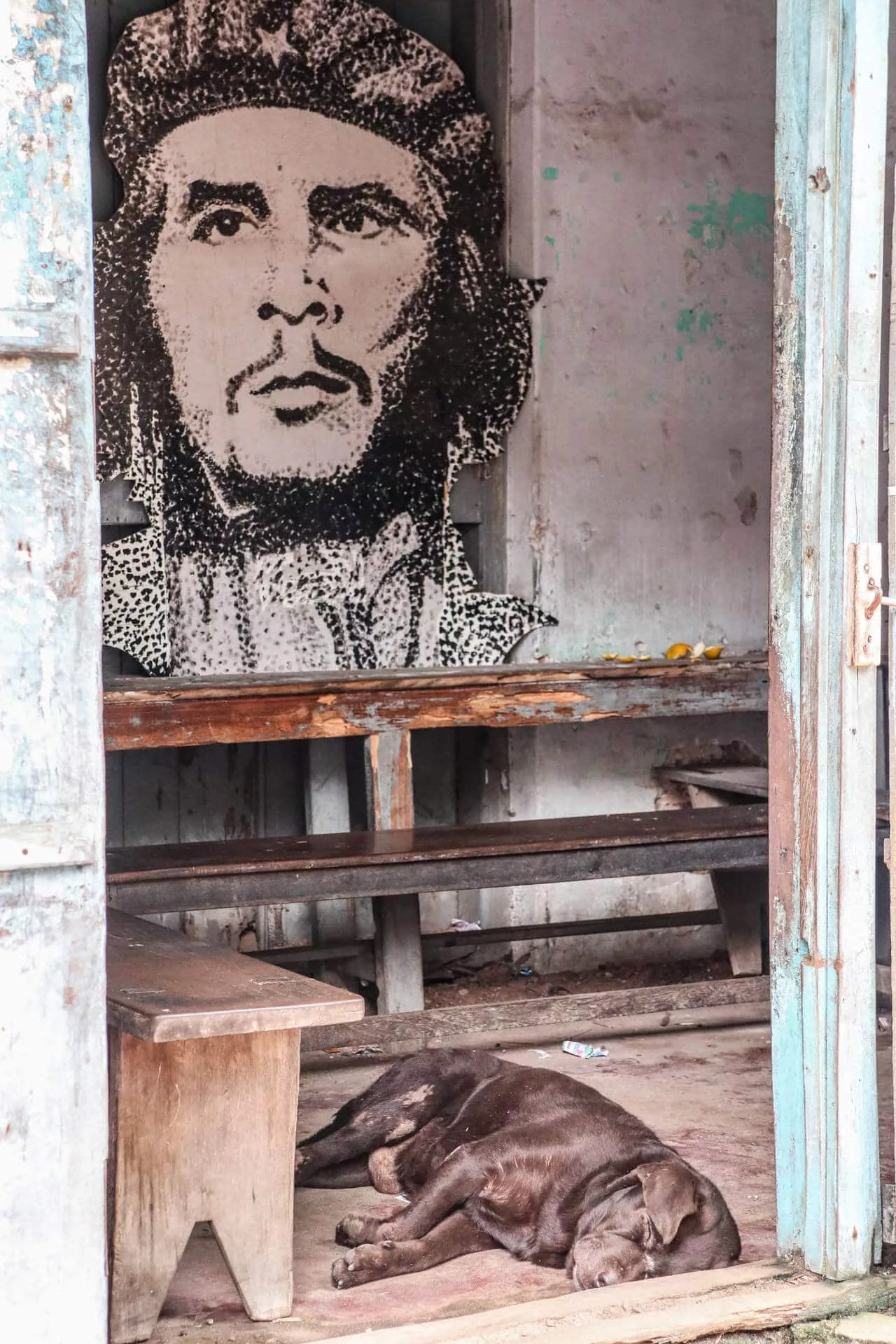
Islam eventually became the dominant religion in the area. And then there’s Kerala’s communist government (CPI-M), which has been in power on and off since 1957. So you get this interesting mix of an Islamic-Communist viewpoint, which is not something you see every day.
The ornate white facade of Santa Cruz Cathedral against a stormy sky
A painted Christ Enthroned statue inside the cathedral, sky-blue ceiling behind
Young men in white kurtas and prayer caps walking down the street
A hammer and sickle communist symbol painted on a wall
Leonidas raising a fist next to a CPI(M) hammer and sickle mural
A Che Guevara portrait on a wall with a dog sleeping in the doorway below
A Che Guevara mural from the DYFI communist youth wing
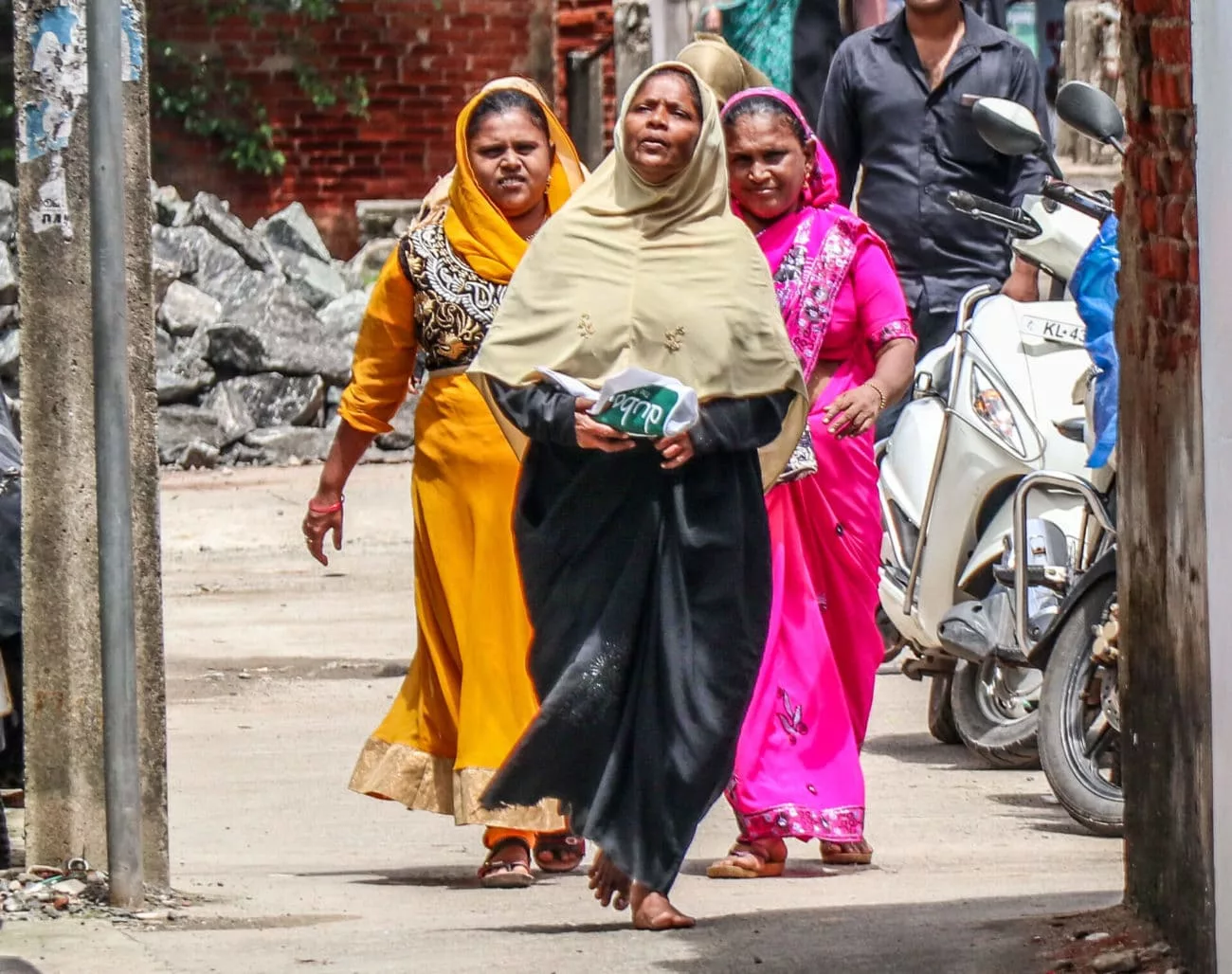
Three women in colorful saris walking through a dusty lane
Star of David symbols and a Ganesha carving on a Jew Town handicraft shop
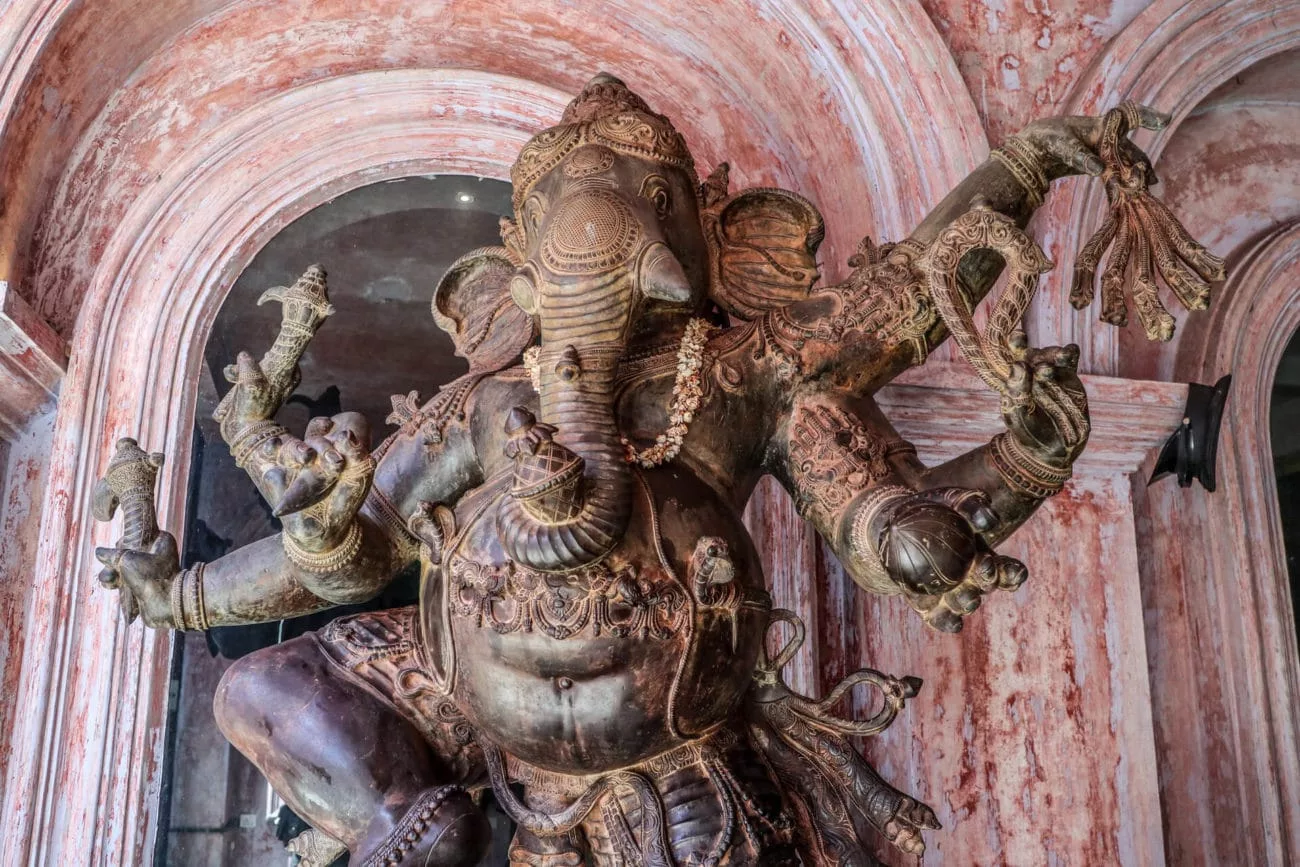
A large bronze dancing Ganesha statue in a temple alcove
The Paradesi Synagogue, built in 1568 in Jew Town
The Streets & People of Fort Kochi
Walking around Fort Kochi is the whole point. The streets are narrow, the canals feel like Amsterdam, and there’s always something going on. Schoolkids are the friendliest, always waving and wanting photos.
Laundry hanging across a narrow alley between houses
Schoolboys laughing and waving through the blue iron gate of their school
Schoolgirls with henna on their hands peeking through a school gate
Leonidas posing with excited schoolgirls showing their henna hands
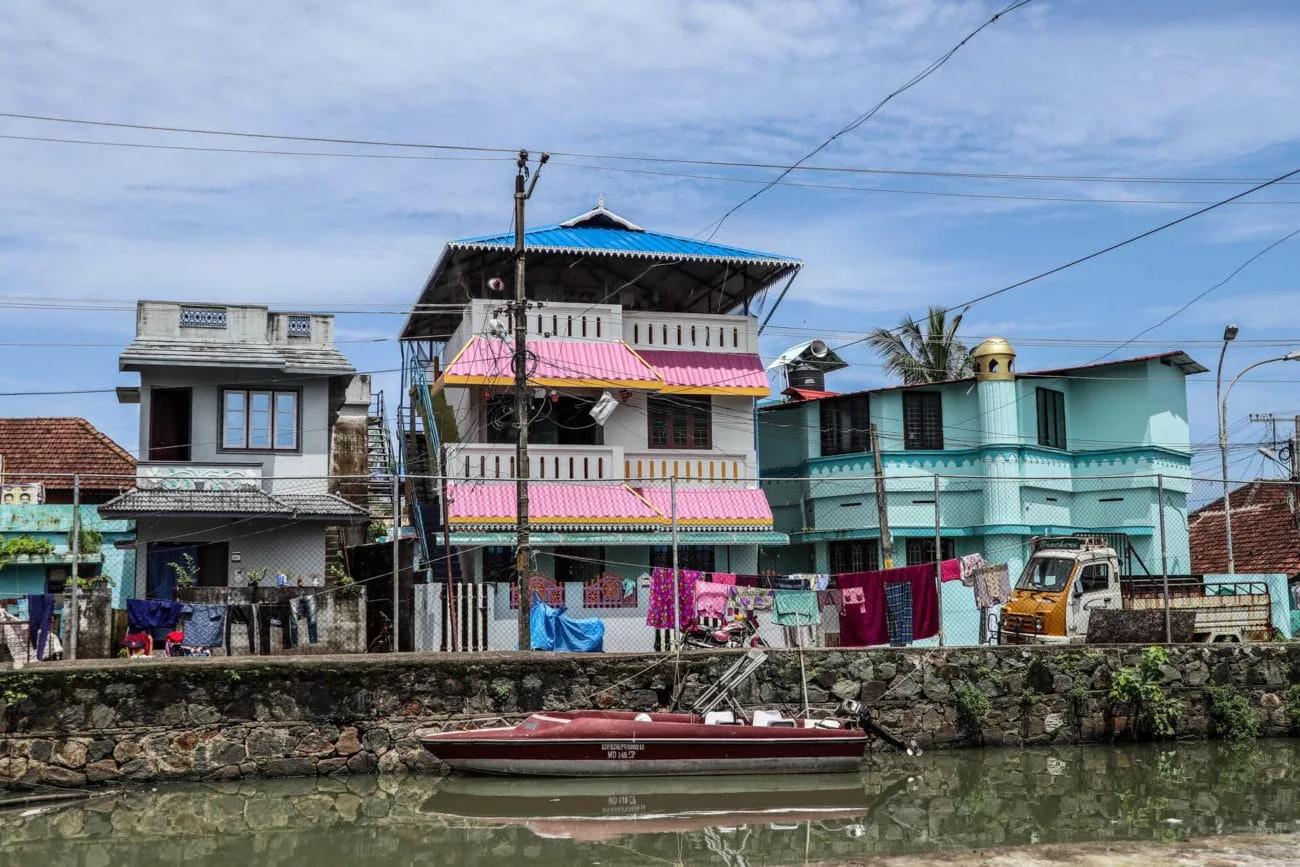
Colorful pink and turquoise houses lining the canal with a boat below
A teal house and a wooden boat reflected in the still canal water
Coconut palms and weathered houses on the waterfront, the city skyline behind
A yellow and white colonial-revival hotel towering over the palm trees
Two women sitting on a bench outside a colonial building
An auto-rickshaw in front of the old Paradesi Synagogue clock tower
An elderly woman sitting on the ground with her belongings
Schoolgirls in blue uniforms cycling down a tree-lined street
Women in saris and schoolgirls chatting at a bus stop
Street Art of Fort Kochi
Fort Kochi hosts the Kochi-Muziris Biennale, India’s largest contemporary art event (running since 2012), which has turned the streets into an open-air gallery. You’ll find murals and installations around every corner.
Leonidas posing in front of a colorful angel wings mural
Close-up of Leonidas in front of the rainbow wings street art
Bonus: Animals of Fort Kochi
Goats, chickens, cats, dogs, crows, and even cows roam around freely in this city. All with full autonomy. Nobody bothers them, they don’t bother you. It’s a good system.
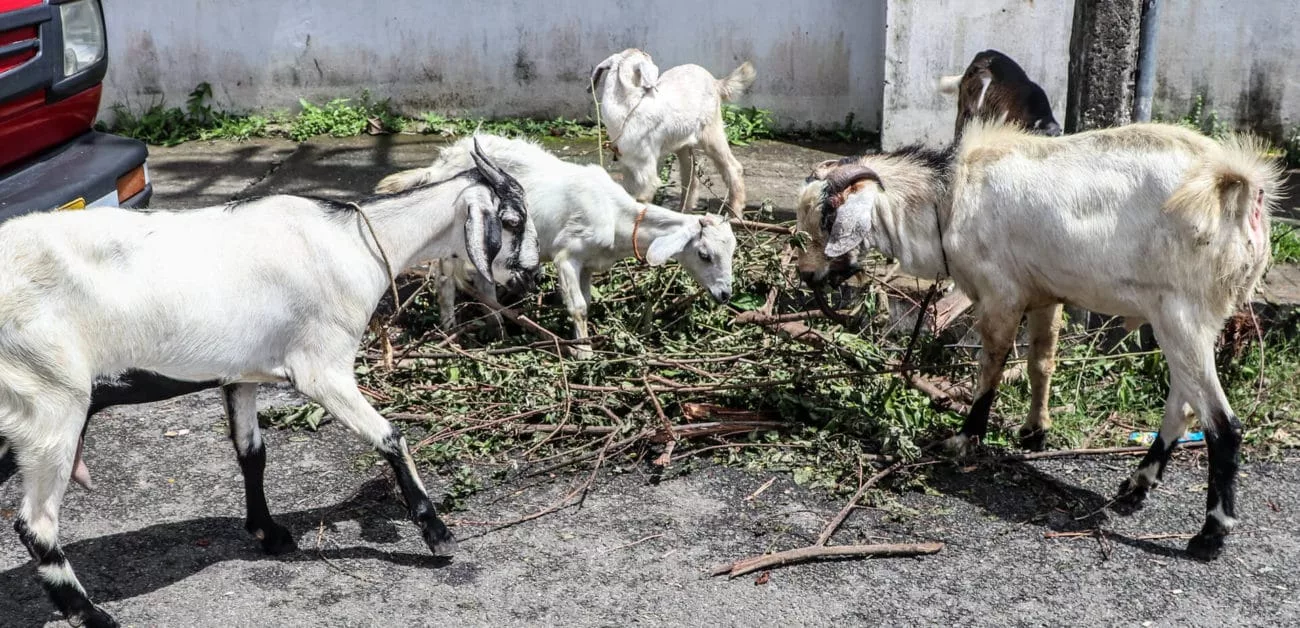
A herd of goats fighting over a pile of branches on the street
Leonidas crouching down to hand-feed a white goat
Leonidas crouching down near a goat in Fort Kochi
A cat sleeping with its head inside a plastic bag
Goats trotting down a narrow tiled alleyway
A house crow perched on a flower pot, sizing up the camera
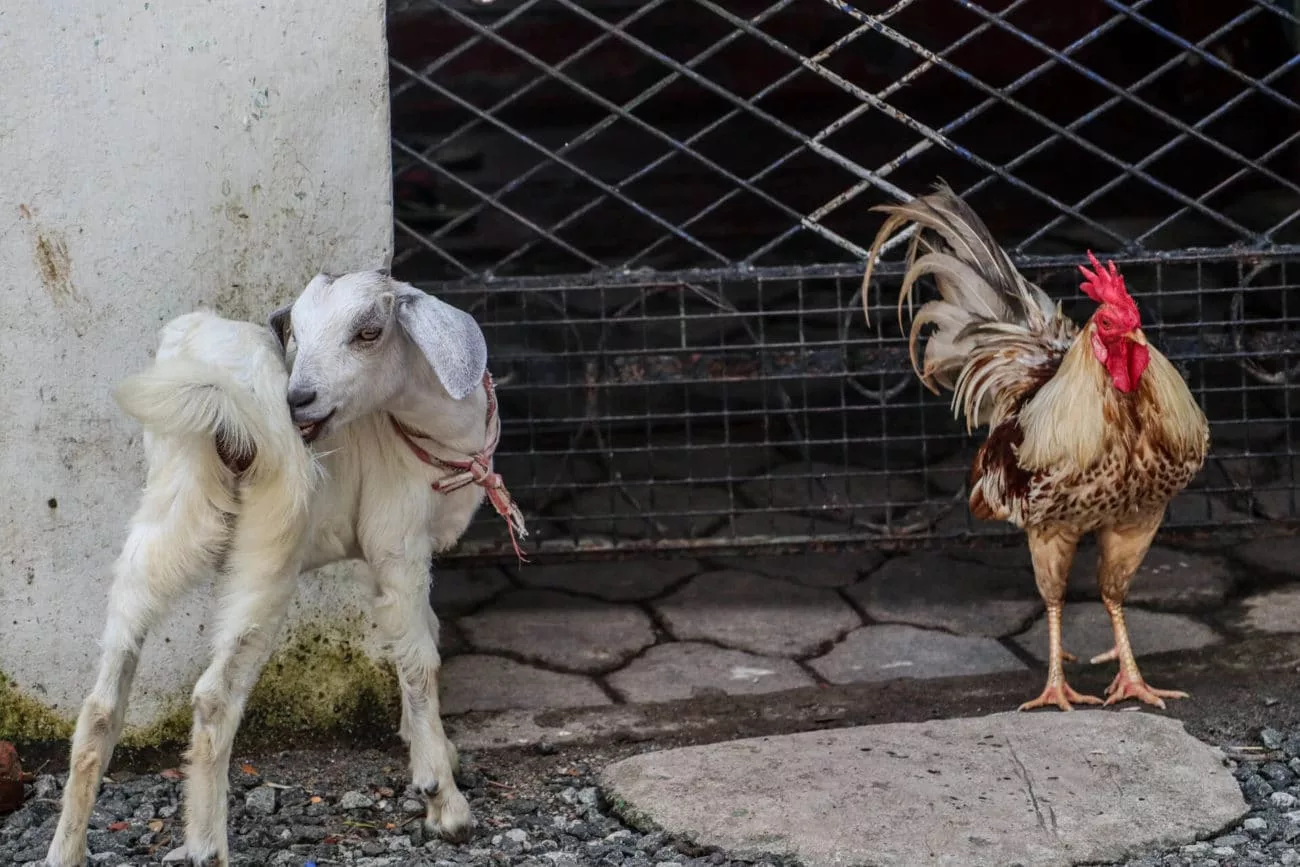
A goat and a rooster in a standoff by a metal gate
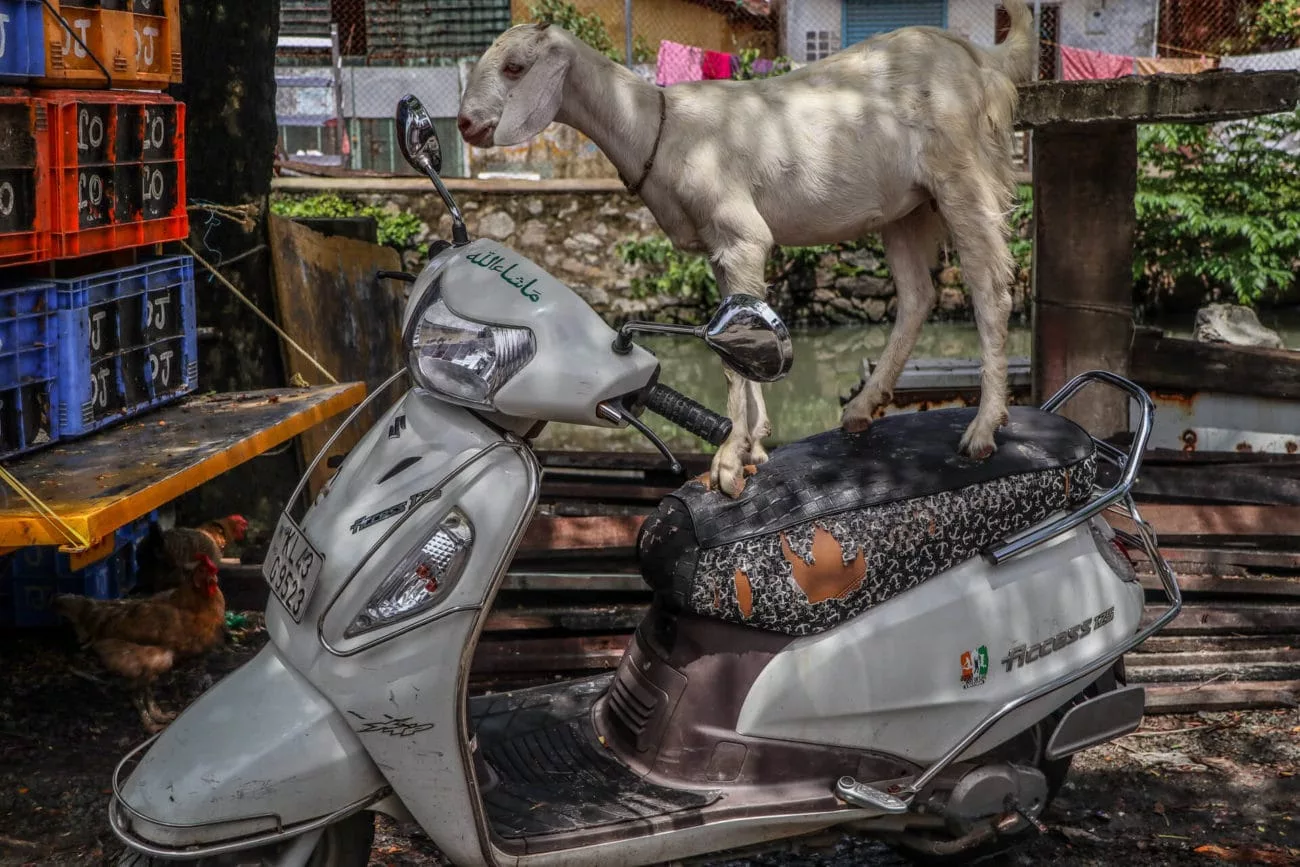
A goat standing on top of a parked scooter, chickens underneath
A white goat standing behind a scooter with Arabic script
Close-up of a black goat nibbling on branches
A rooster standing guard outside a doorway
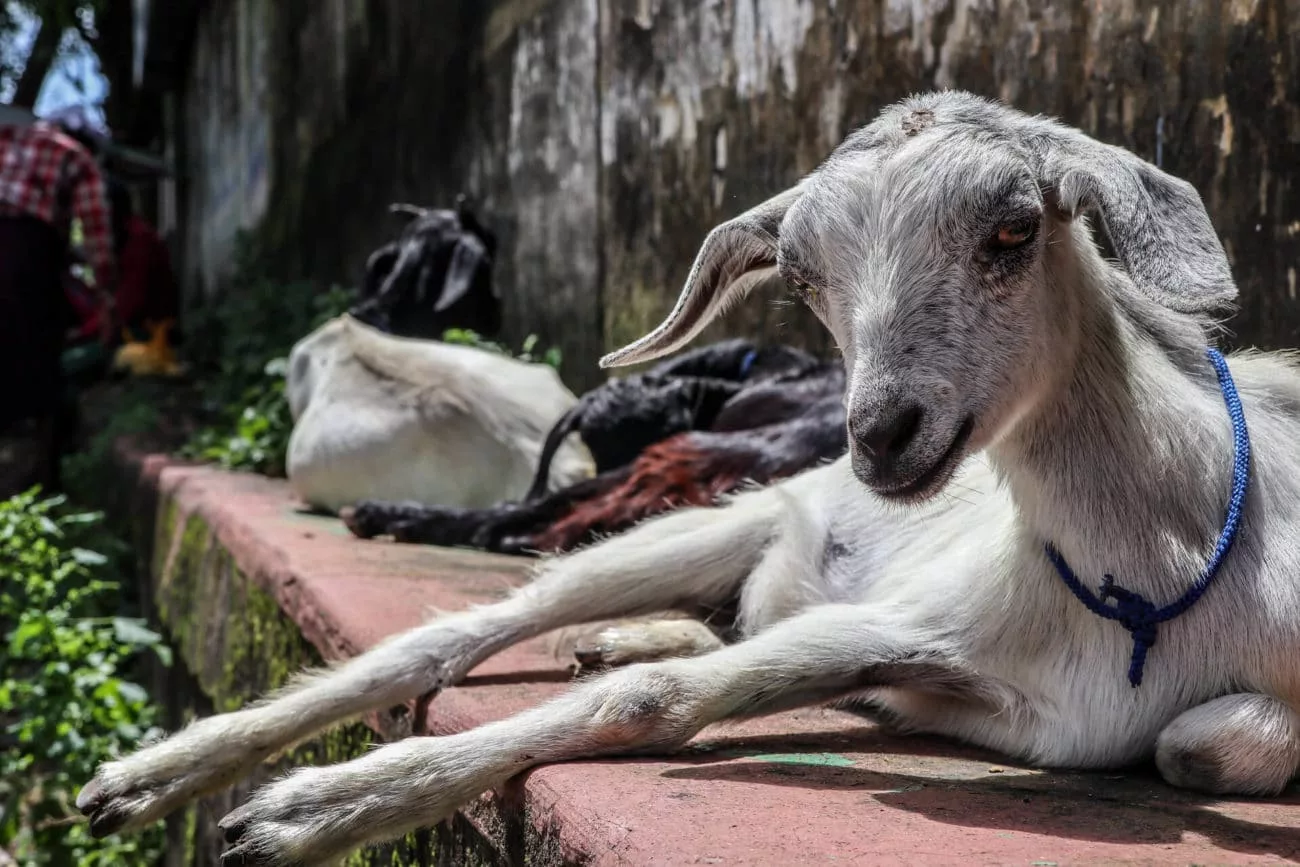
A goat lounging on the curb, front legs stretched out like a dog
Extreme close-up of a goat’s face, mid-chew
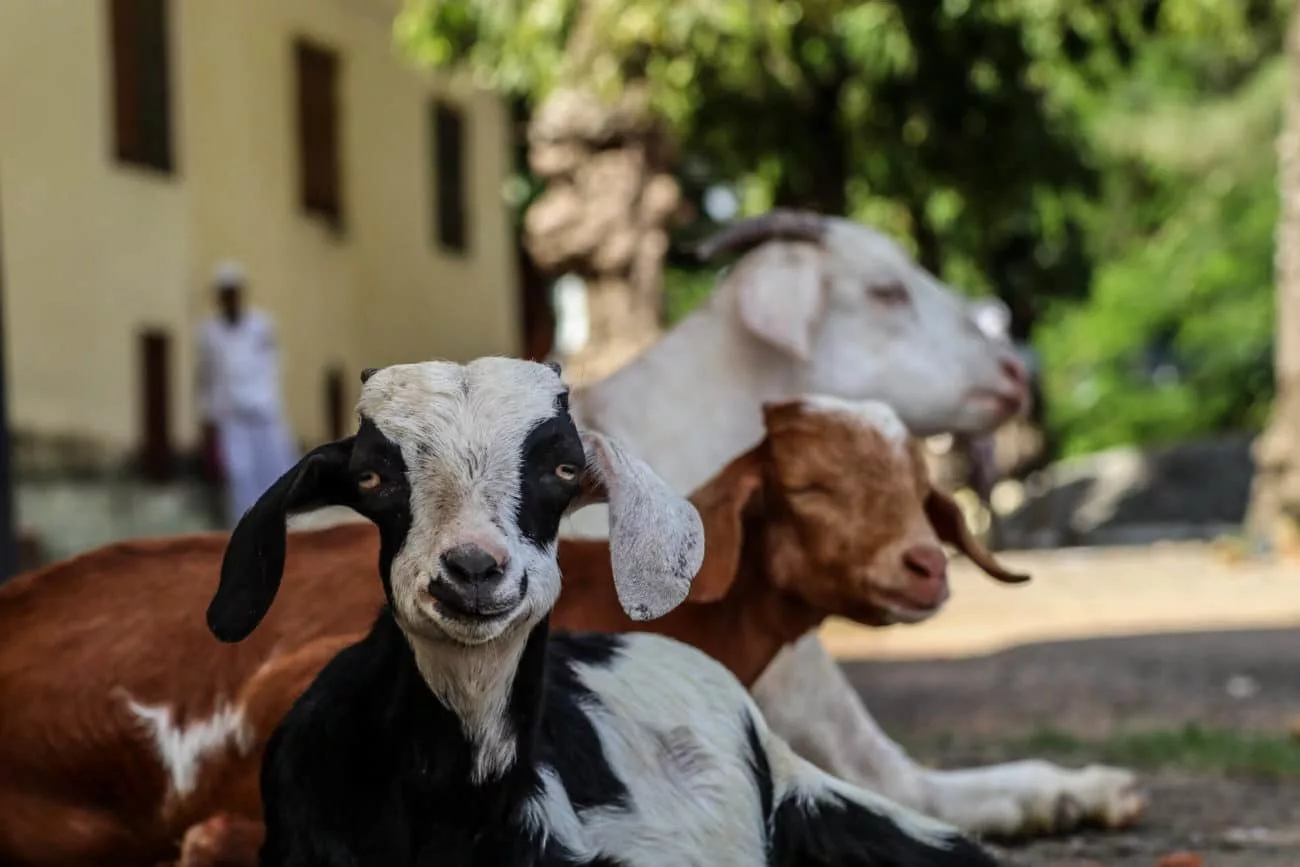
A spotted goat looking straight at the camera, friends napping behind
Cows lounging in the middle of a road, blocking a red car
Since 2010, Leonidas has been an incredible Web Developer, and amazing Digital Marketer. He is the author of various exciting case studies in digital marketing, most notably in Pay Per Call Marketing.
Make sure to read the case studies to make your life so much better!