

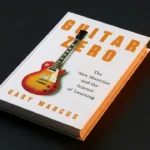
“There may be no better way to achieve lasting happiness — as opposed to mere fleeting pleasure — than pursuing a goal that helps us broaden our horizons.”
A friend recommended this one to me, and the pitch was simple: can adults still learn new things as well as kids? Or does the brain just… lock up at some point?
It’s a question that hits close to home. Because I’ve been on both sides of it — the obsessive learner who couldn’t stop, and the frustrated adult who couldn’t even start.
My Salsa Addiction
In 2006, at the age of 18, I embarked on a journey to learn salsa dancing. Whether it was the pure joy of movement or the obvious appeal of meeting girls in university — probably both — something clicked. I became literally addicted.
I was going out to dance anywhere from one to four times a week, sometimes for hours on end. I started a student organization to teach salsa at the same time. And that combination — learning and teaching simultaneously — is what accelerated everything to a completely different level.
When you have to explain a cross-body lead or a copa to a room full of beginners, you break things down in ways you never would on your own. You internalize the mechanics. You start understanding why something works, not just how. My salsa addiction ran from 18 to 24, at which point I transitioned into traveling the world. But those six years shaped how I think about learning anything.
Gary Marcus, a cognitive psychologist at NYU, did essentially the same thing — except with a guitar, and at age 38.
The Myth of the Critical Period
One of the most important arguments in the book is that critical periods — those magical windows in childhood where the brain supposedly soaks up skills like a sponge — are not the hard cutoffs we’ve been told they are.
Yes, kids have advantages. Their brains are more plastic, more forgiving. But the idea that there’s some biological deadline after which learning becomes impossible? Marcus calls that out as a myth. And the neuroscience backs him up.
The brain continues to form new connections throughout life. Neuroplasticity doesn’t expire. It slows down, sure. But it doesn’t stop. That’s an important distinction, and one that should give every adult permission to pick up something entirely new.
Practice Isn’t Just About Hours
If you’ve read anything about skill acquisition in the last decade, you’ve heard about the 10,000-hour rule. Marcus takes a more nuanced stance.
It’s not just about logging hours. It’s about deliberate practice — focused, structured repetition that targets your weaknesses. Noodling around on a guitar for 10,000 hours won’t make you a virtuoso. But 3,000 hours of focused, intentional practice with feedback? That might actually get you somewhere.
This mirrors exactly what happened with my salsa. It wasn’t just the dancing itself — it was the teaching, the analyzing, the breaking down of every step into its smallest components. I wasn’t just doing the hours. I was doing the right hours.
The Keyboard That Never Was
Several years after my salsa chapter ended, I ordered an 88-key MIDI keyboard. The goal was to learn to play salsa music — the music that had become a passion not only from years of dancing, but also from the occasional listen that would take me right back to those nights on the dance floor.
But here’s where Marcus’s journey diverges from mine. He had resources. Guitar lessons are everywhere — YouTube, apps, schools, instructors on every corner. I had… nothing.
Every online school, every application, every course taught classical music or American pop. Not a single platform taught the salsa piano montunos, the tumbaos, the guajeos that I wanted to learn. No Flowkey for salsa. No Justin Guitar equivalent for Latin piano. The idea faded quickly, and the keyboard collected dust.
Reading Guitar Zero made me think about that experience differently. Maybe the barrier wasn’t my age or my ability — it was simply the lack of structured resources. Marcus had a path, even if it was difficult. I didn’t even have a trailhead.
Too Many Names, Not Enough Context
Now, here’s where I have to be honest. While I enjoyed the psychology and the learning science woven throughout the book, I couldn’t help but gloss over the hundreds of references to musicians I had never heard of.
Marcus clearly loves music deeply, and the book is written for someone who shares that passion. Every other page drops a name — an obscure guitarist, a jazz legend, a classical composer — with the expectation that you know who they are and why they matter.
If you’re a music enthusiast, this is probably a goldmine. For me? It was too many names to digest with only the occasional one I actually recognized. It’s the kind of thing that doesn’t ruin the book, but does make you skim faster than you should.
The Science That Sticks
Where the book shines is in its blend of psychology, sociology, and the history of how humans interact with music. Marcus weaves in research on neuroplasticity, cognitive development, and the nature of talent vs. practice in a way that’s genuinely digestible.
These are my kind of books — the ones that take a personal journey and use it as a vehicle to explore deeper human questions. Why do we gravitate toward music? Why does practice feel painful at first and euphoric later? What separates the good from the great?
His answer to that last question is nuanced. Some people, due to certain neurological traits like ADHD, can actually hyperfocus their way to rapid skill acquisition. Their brains are wired for intensity. For the rest of us, the formula is more straightforward: passion, dedication, purpose, and time.
Final Thoughts
My takeaway from Marcus’s journey is that anyone can learn something new and become genuinely good at it. Not just passable — good. The catch is that it requires real passion driving you forward, not just a vague wish. You need a reason to push through the frustrating early stages where everything sounds terrible and your fingers don’t cooperate.
Marcus found that reason at 38. I found mine at 18 with salsa. The age didn’t matter nearly as much as the obsession did.
Guitar Zero is a fun, insightful mix of memoir and science. If you’re interested in learning, neuroplasticity, or the psychology of mastery, it’s well worth your time. Just be prepared to Wikipedia a lot of musicians along the way.
I’d give this book a solid 4.5 out of 5 stars.
Thanks for reading.
— Leonidas
