

“Eye contact has the power to forge a connection so strong between humans in so short a time that two people feel like one in an instant.”
Have you ever walked into a room full of people and instantly felt drawn to the one person who held your gaze for a second longer than everyone else? That tiny moment — maybe two seconds of direct eye contact — communicated more than a ten-minute conversation ever could.
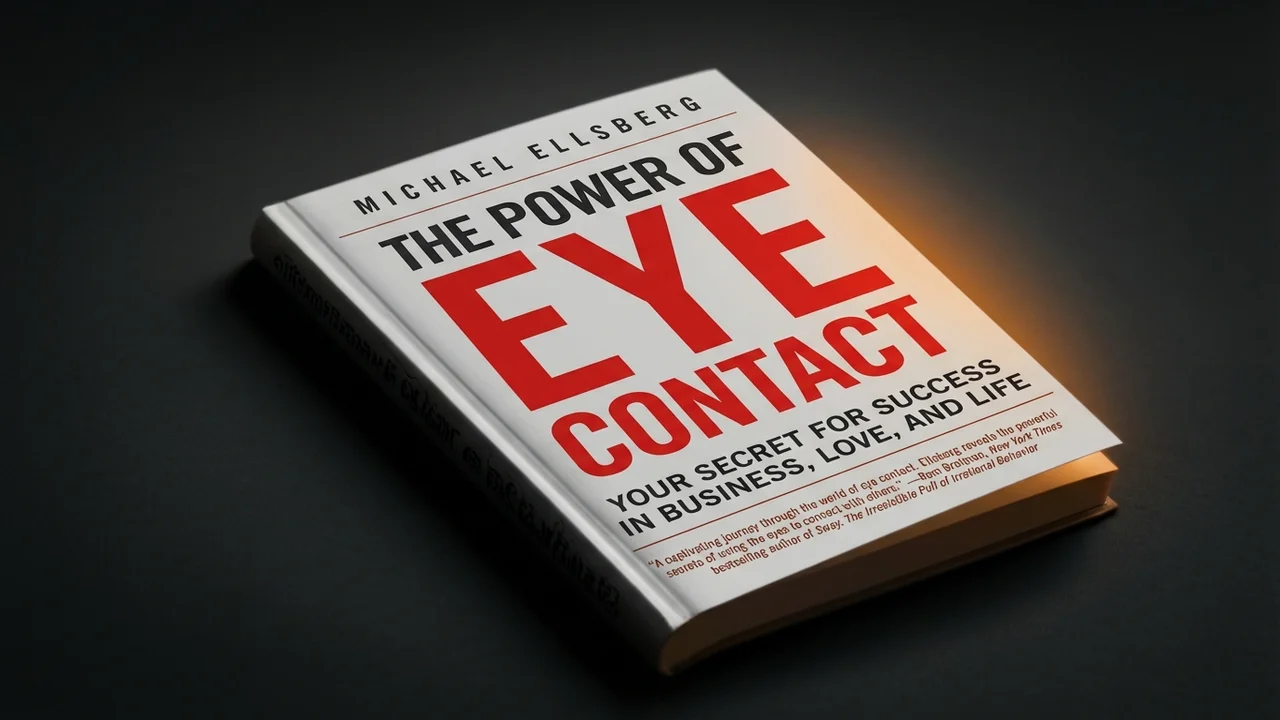
That’s the premise of Michael Ellsberg’s The Power of Eye Contact. And honestly? The premise is solid. The execution, however, left me wanting more.
The Core Idea
Ellsberg’s central argument is simple: eye contact is the most powerful nonverbal tool we have. It builds trust, signals confidence, creates intimacy, and can completely change the dynamic of any social interaction — whether it’s a business meeting, a first date, or a conversation with a stranger on the street.
None of this is particularly controversial. We ALL know, intuitively, that strong eye contact matters. When someone looks you in the eye, you feel seen. When someone avoids your gaze, you feel dismissed. It’s primal, it’s hardwired, and it’s universal across cultures — though the specifics vary.
The question is: can an entire book sustain itself on this idea?
What Works
The strongest parts of the book are the practical ones. Ellsberg interviews people whose livelihoods depend on mastering eye contact — salespeople, public speakers, therapists, poker players, and even professional seducers. Some of these interviews are genuinely fascinating.
The poker chapter stood out to me. In poker, eye contact is a weapon. You use it to read opponents, project false confidence, and control the psychological tempo of the table. That’s not fluffy self-help nonsense — that’s real tactical application.
There’s also a section on “eye gazing” exercises — where you sit across from another person and maintain unbroken eye contact for several minutes. Ellsberg describes the experience as deeply intimate and even transformative. I’ll admit, reading about it made me uncomfortable. But that discomfort is kind of the point. Most of us are TERRIBLE at holding eye contact because it makes us feel vulnerable.
And in a world where most people interact through screens, this skill has only become more rare — and more valuable.
What Doesn’t Work
Here’s where I have to be honest. This book is light on actual scientific content. Ellsberg leans heavily on anecdotal interviews and personal narratives, and the deeper you get into the book, the fluffier it becomes.
The chapters on spiritual gurus and religious practices of eye contact felt like filler. When we start talking about “gazing into someone’s soul” and referencing esoteric traditions, I check out. I wanted neuroscience — the actual mechanisms behind why eye contact triggers oxytocin release, activates mirror neurons, and creates feelings of trust. That’s the stuff I find compelling. Instead, I got pages of vague mysticism that felt more like a yoga retreat brochure than a serious exploration of human connection.
And then there’s the recurring love story. Ellsberg found the love of his life through eye-contact practices, and he circles back to this narrative REPEATEDLY. It’s sweet, sure. But by the third time, I was ready to move on.
The whole book could have been a really excellent 30-page essay. Instead, it got stretched into a full-length book, and you can feel the padding.
The Osmosis Effect
That said, here’s something I can’t deny: reading this book actually changed my behavior. Not because of any specific technique or exercise, but because of sheer osmosis. When you spend several hours reading the words “eye contact” over and over, you become hyper-aware of it in your daily life.
After finishing the book, I caught myself making stronger eye contact in conversations, holding it a beat longer during handshakes, and noticing when OTHER people broke eye contact first. It was like someone flipped a switch in my awareness.
And that awareness — even if accidental — is genuinely useful. Whether you’re negotiating a deal, going on a date, or just trying to connect with someone at a party, maintaining comfortable eye contact gives you an immediate edge. People perceive you as more confident, more trustworthy, and more present.
Real-World Application
As someone who’s built businesses around communication — writing copy, creating content, meeting clients — I can tell you that eye contact is one of those skills nobody teaches but EVERYONE notices. I’ve been in meetings where the person who held the room wasn’t the smartest or the most experienced. They were the one who looked people in the eye when they spoke.
Ellsberg is right about one thing: in a world of distraction, the simple act of giving someone your full visual attention is almost revolutionary. Your phone is always buzzing. Notifications are always pulling. The person who can sit across from you and lock eyes without flinching? That person stands out.
I’ve noticed this especially when traveling. In countries where I don’t speak the language, eye contact becomes your primary communication tool. A warm gaze and a genuine smile can get you further than a phrasebook in most situations. It’s the universal language nobody teaches in school, yet EVERYONE fluently understands. I’ve closed deals, made friends, and defused awkward situations — all without saying a single word. Just a look.
Final Thoughts
Look, this isn’t a bad book. It’s just not a great one. The core message is valuable, and if you’ve never thought deliberately about eye contact as a social skill, it’ll open your eyes — pun intended.
But if you’re looking for deep research or actionable frameworks, you’ll be disappointed. Ellsberg trades in stories and vibes more than science and systems. For a topic this interesting, I expected more rigor.
3/5 — worth a read if you find it at the library or on a friend’s shelf, but don’t rush to buy it. The osmosis alone might be worth your time, though.
Thanks for reading.
— Leonidas
