

“Change might not be fast and it isn’t always easy. But with time and effort, almost any habit can be reshaped.”
Have you ever caught yourself doing something — scrolling your phone, grabbing a snack, biting your nails — and thought, “Why do I keep doing this?” Not because you chose to, but because your brain just… did it on autopilot?
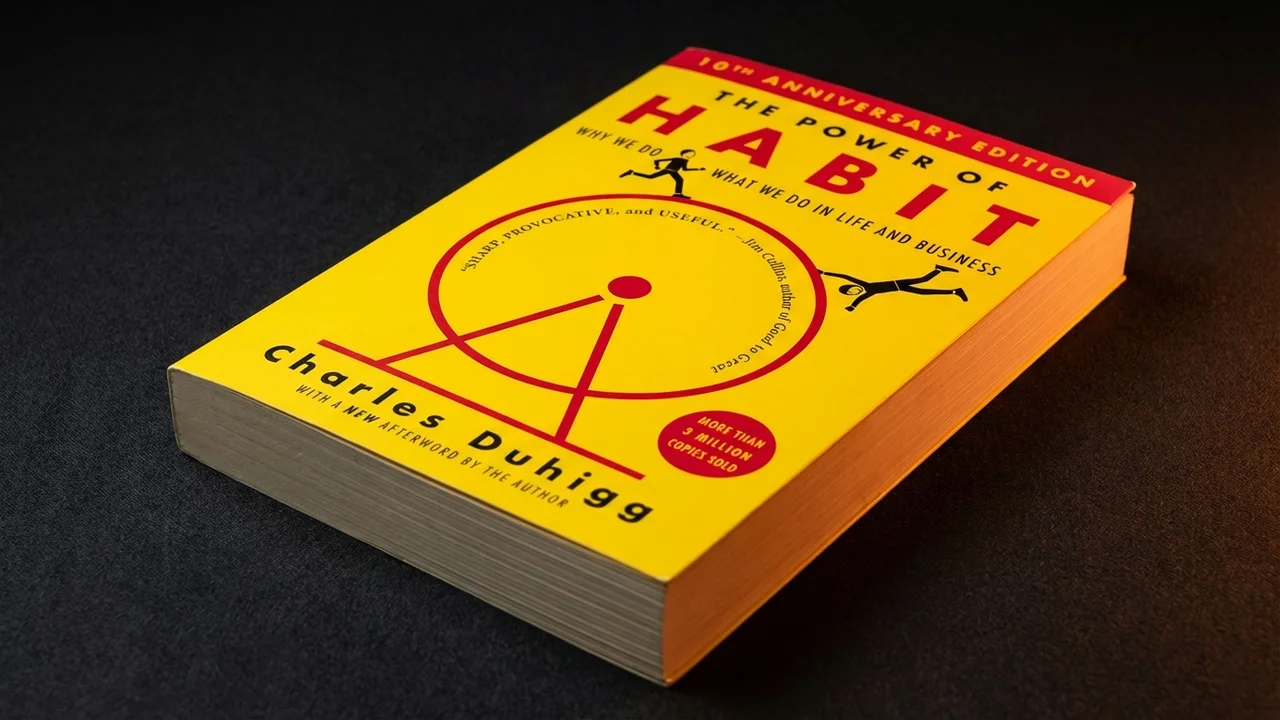
That’s the core of The Power of Habit. Charles Duhigg breaks down the mechanics of why we do what we do, and more importantly, how to change it. The book emphasizes the cyclical routine of cue, routine, and reward that we engage in with everything we do — developing our habits, addictions, and successes.
Through the power of epic storytelling, Duhigg relates to us various habit concepts and how they occurred in certain historically accurate contexts. And honestly? The storytelling is what makes this book stand out from every other self-help title on the shelf.
The Habit Loop
The central framework of the book is dead simple. Every habit follows the same pattern: cue, routine, reward. Your brain detects a trigger, runs the behavior, and collects the payoff. Do it enough times, and the whole sequence becomes automatic. Your conscious mind checks out entirely.
This blew my mind when I first read it. I started noticing my OWN loops everywhere. The mid-afternoon energy crash (cue) leading to a coffee run (routine) for that little dopamine hit (reward). The notification buzz on my phone leading to 20 minutes of mindless scrolling. Once you see the loop, you can’t unsee it.
Duhigg argues that you can’t truly eliminate a habit — but you CAN rewire it. Keep the same cue and the same reward, but swap out the routine. Want to stop stress-eating? You still need to address the stress (cue) and still need the relief (reward) — but maybe you go for a walk instead of raiding the fridge. Simple in theory. Hard in practice. But the framework gives you something to work with.
Habits of Individuals, Organizations, and Societies
We are taken through habits of individuals, organizations, and ultimately societies. Each section is divided into various stories that emphasize how certain people employed habit-building techniques to improve something.
When a football coach was hired to improve the success of a failing team, he decided to cut down on the number of plays in the book and instead master just a few plays. This resulted in a team that consistently made the finals. But to win the championships, the coach went through a life-changing event with the death of a family member, and thus the team rallied behind him 100%. This allowed them to see beyond themselves and compete as a team instead.
This involves that extra bit to solidify habits, even under extreme stress. And that’s a key insight — building a habit is one thing, but making it STICK when the pressure is on requires something deeper. Belief. Community. A reason bigger than yourself.
I’ve seen this play out in my own life. When I was building my first online business, the daily grind of content creation and outreach was a habit I forced myself into. But it only became automatic — truly locked in — when I connected it to a bigger purpose. It wasn’t just “write another article.” It was “build the life you actually want.” That shift made all the difference.
How Companies Exploit Habits
In some cases, casinos use the habits of addicts to get them to spend their money. Or even how Target, an international big-box store, uses data collected from pregnant mothers to get them to shop at Target.
This section is fascinating and honestly a bit unsettling. Duhigg digs into how corporations have entire departments dedicated to understanding your habit loops — and then engineering their products to exploit them. The Target story is wild. They figured out a woman was pregnant before her own family knew, just by analyzing her shopping patterns. That’s the power of data combined with habit science.
As someone who has spent years in internet marketing, this chapter hit DIFFERENT. Every landing page, every email sequence, every retargeting ad — it’s all built on the same cue-routine-reward framework. The companies that win are the ones that understand their customers’ habit loops better than the customers understand themselves. Duhigg doesn’t frame this as purely evil — it’s just how the game works. But it definitely makes you more aware of when YOU’RE the one being played.
Keystone Habits
One of the most powerful concepts in the book is the idea of keystone habits — certain habits that, when changed, trigger a cascade of other positive changes. Duhigg uses the example of exercise. People who start working out regularly also tend to eat better, sleep better, spend less impulsively, and be more productive at work. Not because someone told them to — but because one habit shift created a ripple effect.
I think about this a lot. For me, the keystone habit was reading. Once I committed to reading every single day, everything else started falling into place. My business ideas got better. My conversations got more interesting. My patience grew. It wasn’t a conscious decision to improve all those areas — it just happened as a byproduct of that one daily commitment.
Overcoming Habits of Addiction
Finally, to overcome habits of addiction (such as vices), Charles provides a few techniques. One is writing down every time an addiction creeps in. Another is to replace the routine leading to the reward, because maybe the addiction stems from boredom.
This is where the book gets real. Duhigg tells the stories of alcoholics, gamblers, and compulsive eaters who rewired their lives using the habit loop framework. The common thread? Awareness first, then substitution. You can’t fight a habit you don’t understand. But once you identify the cue and the reward, you have leverage.
Final Thoughts
This book is quite good, and I would gladly provide a rave review for it. The storytelling is impeccably good. Duhigg takes neuroscience, psychology, and corporate case studies and weaves them into narratives that read more like a thriller than a textbook.
If you’re interested in understanding why you do what you do — and more importantly, how to change it — this is the book. It’s practical without being preachy, scientific without being boring, and genuinely useful in a way that most self-help books only pretend to be.
5/5 stars, no questions.
Thanks for reading.
— Leonidas
