
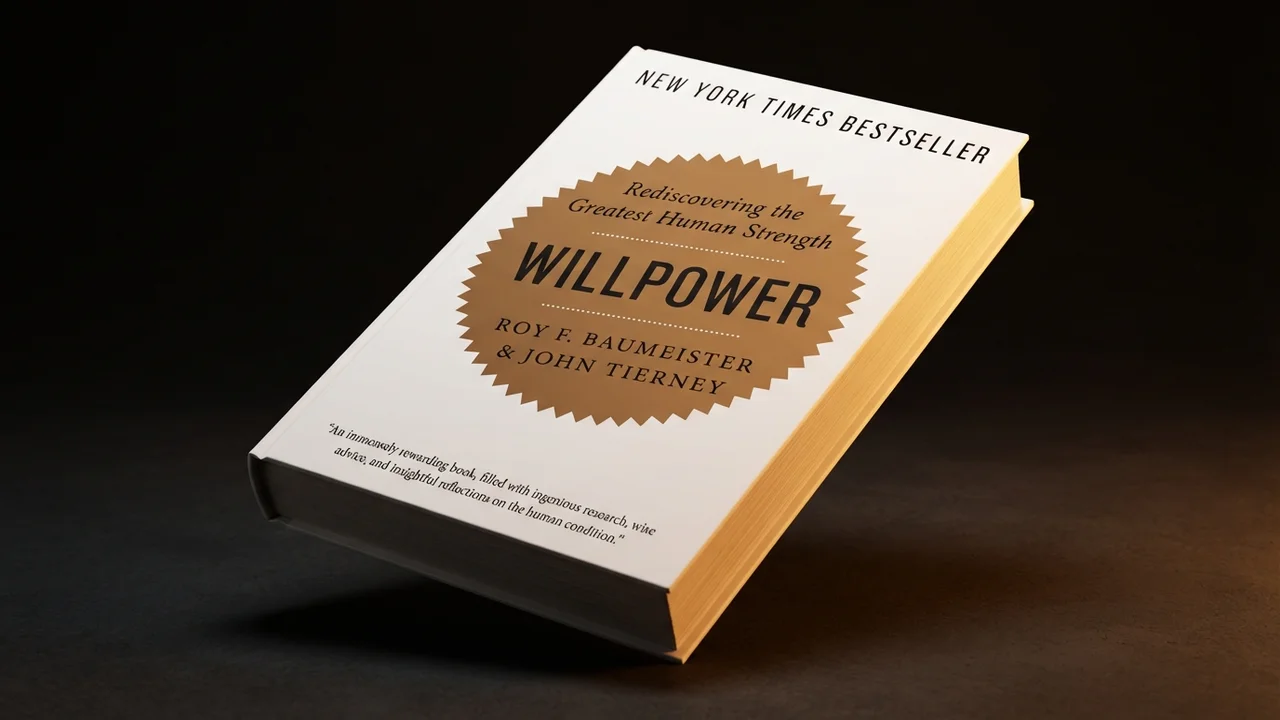
“Willpower is what separates us from the animals. It’s the capacity to restrain our impulses, resist temptation — do what’s right and good for us in the long run, not what we want to do right now.”
Why do we fail at dieting, drinking, finishing that project, or whatever else?
Well, it all has to do with willpower. This book is about various scientific studies done to isolate what willpower is, and how we can replenish and even strengthen it.
As someone who has spent years building businesses and traveling the world, this topic hits close to home. We all KNOW what we should be doing. Eat better. Exercise more. Stop wasting time online. So why don’t we just do it? Baumeister and Tierney dig into the science behind that gap between intention and action, and the answers are both humbling and practical.
The Fuel Gauge
Generally, willpower is like a fuel gauge that slowly depletes itself depending on what you are doing. This includes working on a project you don’t enjoy, or going to the gym, but most notably, resisting temptations.
Resisting temptations is perhaps the biggest weight on willpower, as it saps at us, and eventually we give in anyway. At first you don’t want that piece of cake, or that cigarette, or that drink, or that latest expensive gadget, but it keeps nagging at your mind.
After a long day at the office, or performing anything strenuous, you somehow rationalize that a simple temptation is fine and no harm will be done. This is followed by overindulgence, and sometimes even bingeing.
Here’s what blew my mind — willpower is a SINGLE resource. It’s not like you have one tank for work discipline, another for diet, and another for not checking your phone. It’s all the same tank. So when you spend all morning forcing yourself through a task you hate, you’ve got less fuel left to resist that pizza at lunch. This explains why people who are disciplined in one area completely fall apart in another by evening.
Baumeister’s research also showed that willpower depletion is tied to blood glucose. Your brain burns through sugar when you’re exercising self-control. Low glucose equals low willpower. It’s not a metaphor — it’s biology. This is why you make terrible decisions when you’re hungry. Your monkey-brain takes over.
Decision Overload
Having too many decisions can also sap your willpower. Should you focus on cleaning up after yourself, or go do the groceries, or work on that project, or something else? Just the idea of having too many decisions will strain your energy levels.
This concept — what researchers call “decision fatigue” — is why people like Steve Jobs wore the same outfit every day. Every trivial choice chips away at your reserves. And the worst part? You don’t FEEL yourself getting depleted. You just start making worse decisions without realizing it.
There’s a fascinating study about judges making parole decisions. Early in the morning, they granted parole about 70% of the time. Right before lunch? Nearly zero. Same judges, same cases — but once they were mentally drained, they defaulted to the easiest decision: deny.
But there are mental tools to overcome willpower depletion.
For decision overload, you need to dump everything on your mind onto a sheet of paper and figure out the priorities. This is called a to-do list, yet involves literally everything on your mind that you need to do.
I can personally vouch for this. When I started writing down EVERYTHING — not just work tasks, but errands, things I need to buy, people I need to call — the mental load dropped significantly. Your brain is terrible at storing open loops. Get them out of your head and onto paper, and you free up willpower for things that actually matter.
Overcoming Temptation
Temptations can be overcome with “positive procrastination,” in which, instead of saying “I won’t,” you will simply have as much as you want later. This delayed gratification actually enhances your willpower, and you end up resisting more.
This is brilliant because it tricks your brain. Saying “never” triggers a fight response — your mind rebels against absolute restrictions. But saying “later” calms it down. You’re not denying yourself anything, just postponing it. And more often than not, the craving passes before “later” arrives.
The willpower to lose weight, improve your health, improve your finances, or improve your work habits can be increased through additional ways.
This involves quantifying your objectives and self-regulating everything you do — recording your weight every day, tracking everything you spend money on, and tracking how many hours you spend procrastinating or prioritizing your projects.
The key insight here is that MONITORING itself strengthens willpower. You don’t even have to change your behavior right away. Just the act of tracking what you eat, what you spend, or how you use your time creates awareness — and awareness is the first step toward control. When you know you have to write it down, you think twice.
Building Willpower in Children
The author also covers important techniques for ensuring your kids will develop a strong willpower and be more successful in delaying instant gratification. Research indicates that strong willpower leads to success in the long term.
The famous marshmallow experiment gets a deep dive here. Kids who resisted eating one marshmallow to get two later went on to have higher SAT scores, lower rates of addiction, and better social skills decades later. Willpower in childhood is one of the STRONGEST predictors of success — stronger than IQ, stronger than socioeconomic background.
What’s encouraging is that willpower can be trained like a muscle. Small exercises in self-discipline — like using your non-dominant hand for everyday tasks or committing to better posture — actually strengthen your overall willpower. The gains transfer.
Final Thoughts
Through an additional series of stories about alcoholism, overweight celebrities, and procrastinating, unorganized, overworked comedians, we get a sense of how it’s possible to improve our willpower for long-term success.
What I appreciate most is that this book doesn’t just tell you to “try harder.” Instead, it gives you a FRAMEWORK — understand that willpower is finite, protect it from unnecessary drain, replenish it with proper nutrition and rest, and build it gradually through practice.
If you struggle with discipline — and let’s be honest, that’s all of us at some point — this is essential reading. Baumeister and Tierney take decades of research and turn it into something you can actually use.
Definitely one of the best books I’ve ever read. 5/5 stars.
Thanks for reading.
— Leonidas
