

“A goal without a deadline is just a dream.”
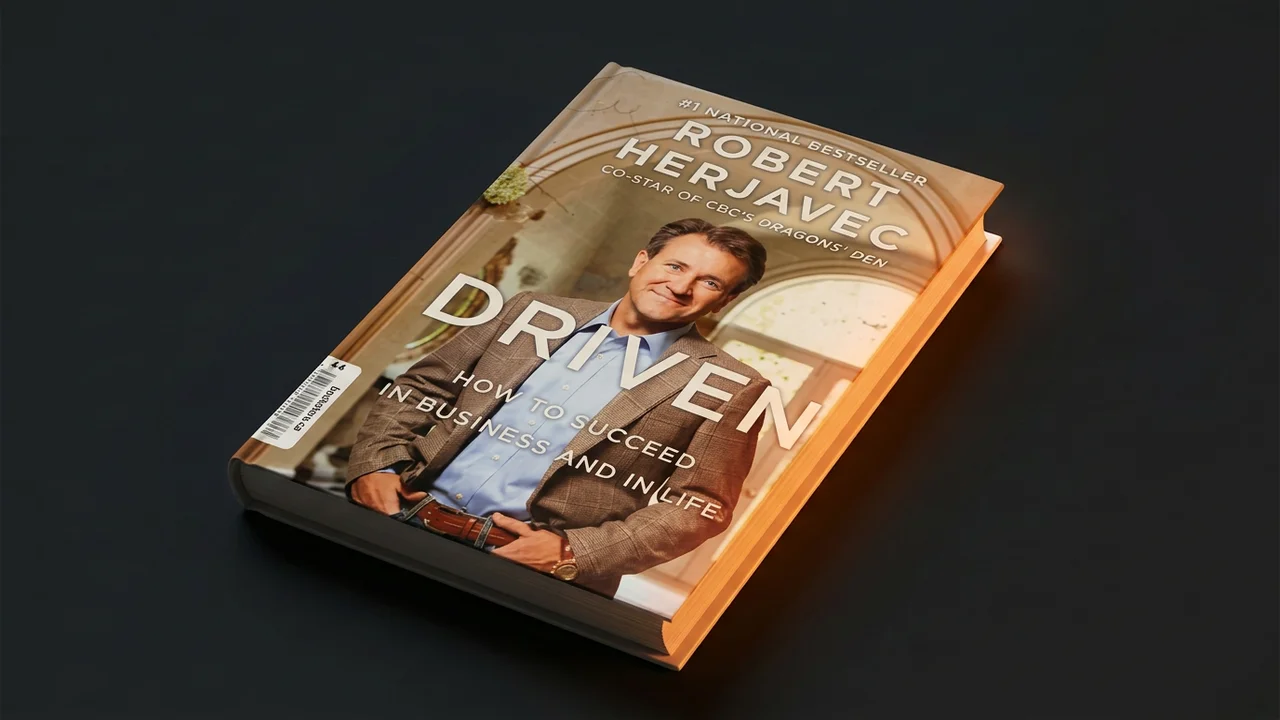
I’ll be honest — when most people hear “Robert Herjavec,” they think of the charming guy on Shark Tank who’s nice to entrepreneurs. The friendly Shark. The one who doesn’t make people cry.
But this book tells a COMPLETELY different story. This is the story of a kid who arrived in Canada from Communist Yugoslavia with his family, carrying almost nothing, barely speaking the language, and living in a basement. And from that basement, he built a technology empire worth hundreds of millions of dollars.
That’s not a TV personality story. That’s a WAR story.
The Immigrant Fire
There’s something about immigrants that most people born into comfort will never understand. When you’ve had nothing — I mean TRULY nothing — you develop a different relationship with work, money, and survival.
Herjavec’s father was imprisoned in Yugoslavia for 22 years for speaking out against communism. When the family finally escaped to Canada, his dad took a factory job making $76 a week. Robert watched his father come home broken and exhausted every single day, never complaining, never quitting.
That image burned into him. He writes about the FEAR of going back to that level of poverty as the single greatest motivator in his life. Not the desire for Ferraris or mansions — the fear of the basement.
I get this on a personal level. When your family came from nothing, when you watched your parents struggle through things that would make most people quit, you carry that with you forever. It’s fuel that never runs out.
Selling and Surviving
Before the tech companies, before the TV shows, Herjavec was a salesman. And not a smooth, silver-tongued one. He was the guy making cold calls, getting doors slammed in his face, and hearing “no” a hundred times a day.
But here’s what separates him from 99% of people who try sales and quit: he didn’t take rejection personally. He treated it like DATA. Every “no” was information. Every rejection was practice. Every failure was one step closer to the “yes” that would change everything.
He literally worked for free at a company just to get his foot in the door. For free. While delivering newspapers on the side to pay rent. Most people won’t even work EXTRA at their salaried job, and this guy was working for zero dollars just to learn.
That’s the immigrant mentality. You don’t negotiate from a position of entitlement. You negotiate from a position of desperation and gratitude. And somehow, that combination is unstoppable.
Building, Losing, and Rebuilding
Here’s where the book gets real. Herjavec built his first tech company, BRAK Systems, into a major internet security firm and sold it for over $30 million in 2000. Right before the dot-com crash.
Perfect timing, right? He was set for life.
Except he wasn’t. Because he didn’t stop. He started another company, and this one nearly destroyed him. The dot-com bubble burst, money dried up, clients disappeared. He went from a $30 million exit to being so broke he couldn’t make payroll. He almost lost everything.
And what did he do? He kept going. He built The Herjavec Group into one of the largest cybersecurity firms in North America. The guy literally went from millionaire to almost bankrupt to building something BIGGER than what he had before.
Most people would have taken the $30 million and retired to a beach somewhere. But that’s the difference between someone who is driven and someone who is comfortable. Driven people don’t stop because they hit their number. They stop when they’re dead.
The Lessons That Hit Hardest
There are a few ideas in this book that genuinely stuck with me.
1. Never be the smartest person in the room. Herjavec constantly surrounded himself with people who knew more than him. His ego didn’t need to be the expert — his wallet needed results.
2. Speed kills the competition. He talks about how being FAST with decisions, fast with execution, and fast with pivoting gave him an edge over larger, slower competitors. While big companies held meetings about meetings, he was already shipping.
3. The deal is everything. Business doesn’t happen without sales. You can have the best product, the best team, the best technology — but if nobody is selling, you’re dead. He never lost sight of this, even as a CEO.
4. Your past doesn’t define you, but it should FUEL you. The poverty, the struggle, the humiliation of being the immigrant kid who didn’t fit in — he used all of it. Every painful memory became ammunition.
5. Risk is not optional. If you want extraordinary results, you have to take extraordinary risks. Playing it safe is the riskiest strategy of all, because you guarantee mediocrity.
Where I Connected
Reading this book felt like reading someone I already understood. The immigrant background. The obsession with self-improvement. The refusal to accept that where you START determines where you FINISH.
That lingering voice that says “you could end up back here” — it never goes away. And honestly? I think it shouldn’t. That voice is what keeps you sharp. That voice is the difference between hungry and comfortable. The moment you lose that fear, you lose your edge.
What Could Be Better
I’ll be fair — the book isn’t perfect. Some sections read more like a motivational speech than a deep dive. Herjavec is great at telling stories, but sometimes you want more of the HOW and less of the “believe in yourself” energy.
But what saves it is the PERSON delivering it. When a guy who escaped communism, lived in a basement, worked for free, lost everything, and rebuilt it tells you not to give up — it carries a different weight than some MBA professor writing from an ivory tower.
Final Thoughts
Driven is not just a business book. It’s an immigrant’s manifesto on what it takes to build something from absolutely nothing. It’s raw, it’s real, and it’s a reminder that the most dangerous person in any room is the one who has nothing to lose.
If you’ve ever felt like you don’t belong, like the deck is stacked against you, like you started ten steps behind everyone else — read this book. Robert Herjavec started even further back, and he turned that disadvantage into rocket fuel.
The drive to never go back is more powerful than the dream of moving forward. And Herjavec proves it on every page.
4/5 — Highly recommended for anyone with an entrepreneurial bone in their body.
Thanks for reading.
— Leonidas
