
“When I took office, only high-energy physicists had ever heard of what is called the worldwide web… Now even my cat has its own page.”
Let me ask you something. How many people in your phone could you call RIGHT NOW and ask for a business favor? Not a friend-favor — a real, professional, career-altering favor. A warm introduction to someone who could change your trajectory.
If that number is less than five, you need to read this book. And honestly, even if it’s more than five, you probably still do.
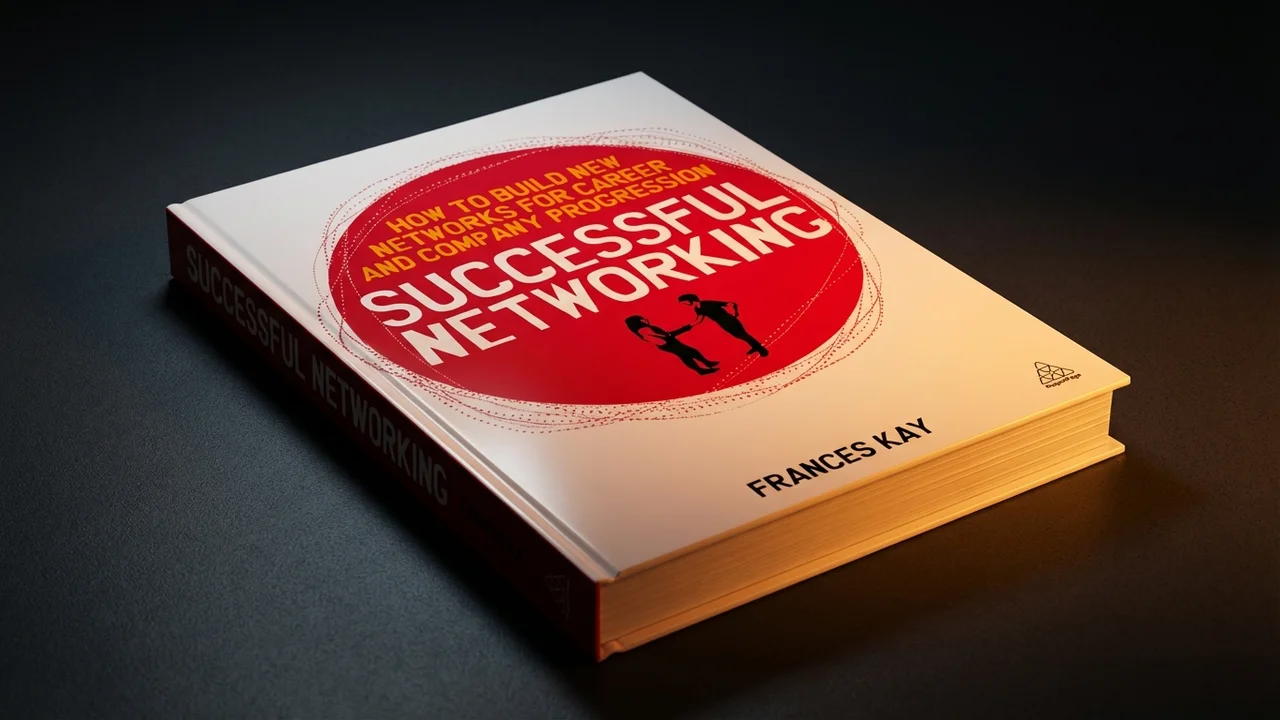
Frances Kay’s Successful Networking is exactly what the title promises — a practical, no-nonsense guide to building professional networks for career and company progression. It won’t blow your mind with groundbreaking ideas. But it WILL give you a solid foundation if you’ve never taken networking seriously.
What It Covers
Although targeted at career progression as the title implies, networking is suggested across the board as a personal lifelong initiative. Kay covers the fundamentals — motivation, selecting the right networks and groups, making first impressions, handling rejection, the 30-second pitch, following up, and sharing your network with others.
She also gets into virtual networking and managing growth beyond a certain point, which was ahead of its time considering when this book was written. Back then, LinkedIn was still a baby and most professionals still thought “networking” meant handing out business cards at a conference.
The structure is clean. Each chapter ends with key points that summarize the essentials, which makes it a quick reference book you can flip back to when needed.
The 30-Second Pitch
One concept I found genuinely useful was the 30-second pitch. Kay breaks down how to introduce yourself in a way that’s memorable without being salesy. You’d think this is obvious, but watch people at any networking event and you’ll see 90% of them either ramble for three minutes or freeze up entirely.
The idea is simple — know who you are, know what you offer, and deliver it with confidence in under 30 seconds. I’ve used variations of this concept in everything from business meetings to casual introductions while traveling. It works.
The problem is that Kay could have gone MUCH deeper here. She gives you the framework but doesn’t provide enough real-world examples to really nail it. You get the theory, but you’re left to figure out the execution on your own.
Rejection and Follow-Up
This was probably the most relatable section for me. Anyone who has ever tried to build a professional network — or really, tried to build ANYTHING — knows that rejection is part of the game. Kay treats it practically. Don’t take it personally. Move on. Follow up with people who do respond, because most people won’t follow up and that’s your competitive advantage.
She makes a good point about consistency. Networking isn’t a one-time event. It’s a habit. You don’t show up to one conference, collect 50 business cards, and call yourself connected. You build relationships over time by providing value, staying in touch, and being genuinely useful to people.
This is where I think most people fail. They network when they NEED something, not before. And by the time you need a favor, it’s too late to start building the relationship. Kay emphasizes this repeatedly, and she’s right.
My Problem With the Book
Here’s where I have to be honest. The chapters themselves consist of multiple large paragraphs that seem drawn out. Kay has a tendency to over-explain concepts that could be communicated in half the words. You find yourself reading a full page only to realize the core point was in the first two sentences.
There is nothing overly innovative here. The advice is fundamental — which isn’t necessarily a bad thing, because fundamentals are timeless. But if you’ve read Dale Carnegie or Keith Ferrazzi, you’ve already absorbed most of what Kay is teaching.
Some images, charts, or graphs would have done wonders. The book is text-heavy in a way that makes it feel like a long lecture rather than an engaging guide. Even a simple flowchart for approaching new contacts would have elevated the reading experience.
Who Should Read This
If you’re an introvert who breaks into a cold sweat at the thought of walking into a room full of strangers — this book is for you. Kay writes with empathy for people who find networking uncomfortable, and she provides enough structure to make it feel manageable.
If you’re already a natural connector who thrives in social situations, you’ll probably find this too basic. The book is clearly aimed at beginners and professionals who know they SHOULD be networking but don’t know where to start.
For entrepreneurs and self-employed people, it’s worth a read but not essential. The corporate angle — career progression, company networking events, internal politics — dominates the book. Those of us building businesses online operate in a different world where your “network” might be a Slack group or a handful of joint-venture partners you’ve never met in person.
The Bigger Lesson
What I took away from Successful Networking isn’t any single technique or strategy. It’s the reminder that your network IS your net worth — and that’s not just a motivational poster quote. It’s reality.
Every major opportunity I’ve had in business came through someone I knew, not through a cold application or a random Google search. The partnerships, the deals, the invitations — all of it came from relationships I built over time. Kay’s book reinforces this in a structured way, even if the delivery could be more engaging.
I also appreciate that she frames networking as a two-way street. You don’t just take — you give. You share your contacts, your knowledge, your time. The best networkers lead with generosity, and Kay makes this point clearly.
Final Thoughts
The main feature for a quick read is the key points provided throughout the chapters, which are brief and theoretically concise. If you’re short on time, you could honestly just read those summaries and walk away with 80% of the value.
It’s not a book that will change your life. But it’s a solid primer on a skill that most people underestimate. Networking is one of those things everyone knows they should do, yet very few do it systematically. Kay gives you the system — even if the packaging could use some work.
3.5/5 — recommended for beginners who want a structured approach to building professional networks. If you’re already well-connected, skip it and go read Never Eat Alone by Keith Ferrazzi instead.
Thanks for reading.
— Leonidas
