

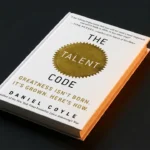
“Greatness isn’t born. It’s grown.”
What is the secret to talent, and can you unlock it? Are highly talented people simply born, and one day they become amazing at something?
The answer is no. How is talent really created? Well, it’s an obvious answer, but also an enlightening one: LOTS AND LOTS OF PRACTICE!
But more specifically, it takes 3 very key elements to GROW talent:
1. Ignition
Why would anyone care to start developing a talent? There are 2 sports players, or musicians, or whoever, who are both equally talented, YET why would one outperform the other?
Well, it’s all about motivation from an outside source, or even an internal one. When a country sees a fellow countrymate succeed at a sport, you are almost guaranteed to see an influx of young people trying their hand at becoming the next great!
When Anna Kournikova almost won a tennis championship for Russia, families in Russia were throwing their kids into tennis. When the Dominican Republic started seeing some success from their baseball players, they basically started breeding them as a main export.
You are basically telling others around you that achievement IS POSSIBLE. Sending a man to the moon IS possible. Skateboarding over a giant pipe IS possible. Getting your kids into the NBA, NFL, or baseball leagues IS possible.
This is something I think about a lot in the context of entrepreneurship. When you see someone from your world — your neighborhood, your country, your social circle — actually make it, something clicks in your brain. It’s not just inspiration. It’s a signal that says, “If THEY can do it, so can I.” That signal is ignition, and without it, most people never even start.
2. Deep Practice
Deep practice entails practice, practice, and more practice! Taking a skill and breaking it down to its finite steps, and then practising those steps until you perfect every note, every angle, every subtle movement or thought.
But what are you doing more specifically? You are building MYELIN SHEATHS between your neurons. These myelin sheaths allow you to move, think, and do things initially. Then as you keep DOING them, the sheaths become thicker, so you can send more electricity and ultimately do things faster and more effortlessly — up to 100 TIMES faster.
That myelin thing is the most important to know. You are practising and breaking down everything SO you can build more connections between neurons, so that these connections can get thicker, so that you can do things better and faster. So you NEED to practise and make LOTS of mistakes, and practise some more. But this takes a LOT of time and energy, so you need to LOVE the process. That’s just how it is.
Coyle makes a great distinction here between deep practice and just going through the motions. You know those people who say they’ve been doing something for 20 years? Yeah, well, if those 20 years were spent on autopilot, the myelin barely grew. Deep practice means operating at the edge of your ability — struggling, failing, correcting, repeating. It’s not comfortable. It’s not supposed to be.
Think about it this way. If you’re learning guitar and you play the same easy song every day for a year, you haven’t really practiced for a year. You’ve practiced for a week and repeated it for 51 more. The myelin doesn’t care about repetition — it cares about EFFORT at the point of failure.
3. Master Coaching
Finally, every person or team that developed outstanding talent had a mentor, a coach, or a teacher. The coach went through their own trials during their learning periods, and over DECADES learned what worked and what didn’t. A coach is able to mentor in the appropriate way to motivate, educate, and develop the correct skills in the correct way.
Teachers are no exception. The proper teaching methods can either accelerate or completely destroy willingness to learn. Different motivation and consequential cues are used to get the student to learn to their utmost ability.
What stood out to me is that the best coaches Coyle profiles aren’t the loud, charismatic motivational types. They’re quiet, precise, and almost surgical in how they deliver feedback. Short bursts of targeted instruction. No long speeches. Just “do this, not that” — repeated a thousand times until the student gets it right.
It reminded me of something I’ve noticed in the online business world. The best mentors I’ve come across aren’t the ones selling you a dream on a webinar. They’re the ones who sit down with you, look at your work, and tell you exactly where you’re messing up. No fluff, no ego — just direct, actionable correction. That’s master coaching, and Coyle nails why it matters so much.
The Talent Hotbed
One of the most fascinating parts of the book is Coyle’s concept of “talent hotbeds” — specific places around the world that produce a disproportionate amount of world-class talent. A tiny tennis club in Moscow. A music school in the Adirondacks. A run-down baseball field in Curaçao.
These places don’t have the best facilities or the most money. What they have is the right combination of ignition, deep practice, and master coaching all happening in the same environment. It’s the SYSTEM that creates talent, not any single ingredient.
And that’s the real insight of the book. Talent isn’t a thing you have — it’s a thing you BUILD. It’s a process, not a gift. The myelin doesn’t care about your genetics, your bank account, or where you were born. It responds to deep practice, period.
Final Thoughts
So for “child prodigies” or “geniuses,” I’ll leave you with this quote:
“Mozart, by his sixth birthday, had studied 3,500 hours of music with his instructor-father, a fact that places his musical memory in the realm of impressive but obtainable skill.”
There are geniuses, but the majority of TALENTED people are simply raised through countless hours of ignition, deep practice, and coaching.
I walked away from this book with a completely different perspective on skill development. It killed the excuse of “I’m just not talented enough” — because talent isn’t something you’re born with. It’s something you earn through thousands of hours of deliberate, painful, focused work. And that’s both terrifying and incredibly empowering.
Highly recommended reading. 5/5
Thanks for reading.
— Leonidas
