Vancouver gets ranked one of the most livable cities in the world basically every year. I had four straight days of sun, which is rare here. The city normally clocks 289 cloudy days a year, so blue-sky photos like the ones below are earned.
The downtown is dense, organized, and absurdly walkable. The city famously cancelled its planned freeway into the core in 1968, which is the single biggest reason Vancouver doesn’t feel like a North American city. The trade-off is the cost: this is the most expensive real estate market in Canada, and West End rents now rival anything in Manhattan.
The dark side shows up too. There are visible homeless and drug-addicted residents around Hastings and Main (the famous Downtown Eastside), and the city has been arguing about how to fix it for 30 years. You can’t miss it if you walk through Gastown.
This album covers the downtown peninsula plus Stanley Park. Outside those, Vancouver sprawls into typical Canadian suburbia. 115 photos below, walked over four days in June 2017.
Downtown Core, Glass Towers & The Financial District
The downtown peninsula is wedged between Coal Harbour to the north and False Creek to the south. The financial district sits in the middle, full of slim glass condo towers built in a style city planners now call Vancouverism: tall, thin towers on low retail podiums, which keeps the streets at human scale while cramming density above. It’s been exported as a planning template to Dubai, San Diego, and Dallas.
Looking up at the glass-and-steel core where Burrard Street meets the financial district. The architecture style here is called Vancouverism, slim towers on retail podiums, and the city has exported it as a planning template to Dubai, San Diego, and Dallas.
Reflections bounce between curtain-wall towers. Vancouver has more high-rises per capita than any other Canadian city.
Trump International Hotel & Tower Vancouver at 1151 West Georgia, opened 2017. The Trump branding was removed in 2020 after the management contract was terminated, and it operates today under different ownership.
Granite plinths and bronze artwork at the base of one of the downtown office towers.
Wide pedestrian boulevards through the central business district. Vancouver famously cancelled its planned freeway into downtown in 1968, which is the single biggest reason the core still feels walkable.
Glass towers on a clear summer day. The city averages 289 cloudy days a year, so the blue sky shots took some patience.
Looking up Burrard Street toward Coal Harbour. The mountains across the inlet are only 4 km north.
Mixed-use podium architecture: retail at street level, condos and offices stacked above.
Canada Place, Coal Harbour & The Olympic Cauldron
Coal Harbour is the calm side of downtown, all yachts, float planes, and the Canada Place cruise ship terminal with its five white sails (built for Expo 86). About a million people a year board Alaska cruises here.
The Olympic Cauldron from the 2010 Winter Olympics still stands on the waterfront at Jack Poole Plaza. They famously had to light the indoor cauldron at BC Place ceremony instead of outdoors because the weather was too warm. The big version on the harbour still gets lit occasionally for events.
Float planes at the Vancouver Harbour Flight Centre. Routes run to Victoria, Nanaimo, and the Gulf Islands, about 35 minutes hop to the island.
Coal Harbour seawall, where the Stanley Park loop trail begins.
Wide-angle of Coal Harbour with the North Shore mountains looming behind.
The Nieuw Amsterdam cruise ship docked at Canada Place. Vancouver is the main embarkation port for Alaska cruises, about a million passengers a year.
Walking the waterfront promenade between Canada Place and the convention centre.
Float planes at the Coal Harbour docks. The orange-and-red ones are Harbour Air, the world's largest seaplane operator.
Public art and seating along the harbour walk.
The Olympic Cauldron from the 2010 Winter Olympics, four crossed glass beams that still get lit for special occasions.
Close-up of the Olympic Cauldron. The 2010 Games famously had to light the indoor cauldron at BC Place instead of the outdoor one because the weather was too warm. This is the bigger outdoor version.
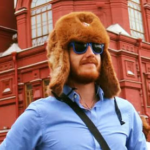
Selfie at Jack Poole Plaza with the Olympic Cauldron behind. Named after Jack Poole, the businessman who led the Vancouver 2010 bid.
Reflection of office towers in the still water of the Olympic Cauldron plaza.
Tall waterfront condos in Coal Harbour, some of the most expensive real estate in Canada.
Inner courtyard pond at one of the Coal Harbour residential blocks. Vancouver perfected the trick of hiding green space inside dense city blocks.
Canada Place from the waterfront promenade, with the Nieuw Amsterdam still docked. The five white sails roof was built for Expo 86 and has become the city's visual signature.
Stanley Park & The Seawall
Stanley Park is 405 hectares of forest right next to downtown, bigger than New York’s Central Park (341 ha). The city leases it from the federal government for $1 a year. It was set aside in 1888 and never logged after that point, though most of what you see is second-growth from earlier 1860s clearing.
The Seawall loop is 9 km, took over 60 years to finish (started 1917, completed 1980), and is the best way to see the park. Renting a bike at Denman Street and riding the loop is the classic Vancouver afternoon.
Posing with two cosplayers near the Stanley Park entrance, mid-afternoon, after they had crossed the park from a comic convention.
Stanley Park is 405 hectares, bigger than New York's Central Park (341 ha), and almost all forest. The city leases it from the federal government for $1 a year.
Panoramic of English Bay from the seawall, with the West End condos curving along the shore.
Horse-drawn tour carriage inside Stanley Park, the only Canadian park where these still operate. The full route is about an hour.
Wide-angle of the seawall. The full loop is 9 km, started in 1917 and finished in 1980 after 60+ years of construction.
Looking across Burrard Inlet from the seawall toward the North Shore.
The Lions Gate Bridge from the seawall. The Guinness family of Irish beer fame paid to build it in 1938 to access their Whytecliff/British Properties real estate development in West Vancouver.
Wide panoramic of the Lions Gate Bridge spanning the First Narrows, with 472 metres of suspension span.
Telephoto compression of the bridge with the West Vancouver hillside behind it.
Bridge deck zoomed in. Three lanes that switch direction with rush hour, a quirk Vancouver commuters live with daily.
The Girl in a Wetsuit statue at Brockton Point, a 1972 bronze by sculptor Elek Imredy. It's the Pacific Northwest answer to Copenhagen's Little Mermaid.
Brockton Point views across to the bulk terminals on the North Shore. Vancouver is Canada's biggest port by tonnage.
Cargo ships at anchor. Freighters often sit here for weeks waiting for berth time at the port.
Looking back at the downtown skyline from the Stanley Park side of the seawall.
Lush rainforest along an interior Stanley Park trail. Most of what you see is second-growth, the original old-growth was logged in the 1860s before the park was set aside.
Forest path through Stanley Park, shared by joggers, cyclists, and the occasional raccoon.
Western red cedars and Douglas firs, the dominant species in coastal BC.
Trail opening into a clearing in the park.
Park bench with a view of the inlet.
Third Beach inside Stanley Park, one of the only two beaches actually inside the park itself.
Looking back from Ferguson Point toward the Stanley Park forest, low-tide flats exposed along the seawall.
Looking out from Prospect Point toward the North Shore mountains and the Lions Gate Bridge.
Forested cliffs above the seawall on the western edge of the park.
Gulls on rocks at Lost Lagoon inside Stanley Park. The lagoon is a freshwater bird sanctuary, originally part of the inlet until the seawall closed it off in 1916.
Kids climbing on a fallen tree along the Coal Harbour seawall, just outside Stanley Park near Devonian Harbour Park.
The Lions Gate Bridge approach causeway, photographed from the pedestrian tunnel where the seawall ducks under Stanley Park Drive.
Wide panoramic of the downtown skyline rising over the Stanley Park treeline. The Harbour Centre tower (with the UFO disc on top) is just left of centre.
The North Shore mountains rising behind West Vancouver's hillside neighbourhoods. The peak is part of the Cypress Provincial Park range.
Looking down at a chemical tanker passing through First Narrows, photographed from the pedestrian walkway on Lions Gate Bridge. The bridge has a narrow sidewalk on each side, and on a clear day the walk across to North Vancouver is one of the best in the city.
Public sculpture in a park between English Bay and the West End, with West End apartment blocks behind.
Granville Island, False Creek & Yaletown
False Creek is the inlet that splits downtown from the rest of the peninsula. The north shore (Yaletown) was an industrial railyard until Expo 86, then became Canada’s first big inner-city densification project. BC Place stadium sits on the eastern end with its 2011 cable-supported retractable roof, the largest of its kind in the world.
Granville Island, on the south shore under the Granville Bridge, was an industrial site until the 1970s when it was reborn as a public market and arts hub. The working concrete plant stayed, and in 2014 Brazilian street artists Os Gemeos painted the six 22-metre silos with cartoonish giants.
Kitsilano Beach packed on a summer afternoon. The 1932 Burrard Bridge in the background is Vancouver's most architecturally distinct, art-deco towers on the approaches.
Driftwood logs lining Kitsilano Beach. The Pacific dumps them year-round and the city leaves them in place as seating.
Walking along the Yaletown seawall, where waterfront condos meet the False Creek marina.
George Wainborn Park in Yaletown. The grass-and-boulders design is by landscape architect Cornelia Hahn Oberlander, who shaped much of postwar Vancouver.
The marina under Granville Island Bridge (1954), with the old industrial outline of Granville Island poking out behind.
Yaletown high-rises, the densest cluster of residential towers in Canada. Yaletown was an industrial railyard until Expo 86, then became the country's first big inner-city densification project.
Science World on False Creek, the geodesic dome built for Expo 86. 766 triangular panels, opened in 1985 as the Expo Centre and now Vancouver's science museum.
BC Place stadium with its 2011 retractable cable-supported roof, the largest of its kind in the world. The flat-roofed building to the right is Rogers Arena where the Canucks play.
Wide panoramic of BC Place and Rogers Arena across False Creek. The stadium roof originally inflated like a giant pillow until it deflated in a snowstorm in 2007 and was replaced.
Dragon boat practice on False Creek with BC Place and the Edgewater Casino glass dome behind. The Vancouver Dragon Boat Festival in June is one of the city's signature events.
Yaletown skyline across False Creek. Almost everything you see here was built between 1995 and 2010.
The Pirates of the Caribbean tour boat coming into Heritage Harbour, with Yaletown's skyline behind.
Tourist pirate boat near Vanier Park.
The pirate tour coming alongside another vessel near Heritage Harbour.
Canada goose with her brood on the False Creek shoreline. The wetland restoration along the seawall has made these birds basically locals.
The Granville Island concrete plant with the six painted silos, a 2014 mural by Brazilian street artists Os Gemeos. Three storeys tall, called <em>Giants</em>.
Granville Island's public plaza with the maple-leaf flag. The island was an industrial site until the 1970s when it was reborn as a public market and arts hub.
Pond inside one of the Yaletown residential blocks. The townhouses are part of the Concord Pacific master plan that turned the old Expo 86 lands into the densest neighbourhood in Canada.
Coast Salish-style totem pole in Vanier Park. Vancouver sits on the unceded territory of the Musqueam, Squamish, and Tsleil-Waututh nations, a fact the city now formally acknowledges at every public event.
Heritage Harbour at Vanier Park, with the West End apartments and the North Shore mountains behind.
Granville Street looking south, the Sun Tower's green dome and the Regal Hotel red sign on the right. Granville used to be Vancouver's seedy strip and is now half cleaned-up nightlife.
Granville Island concrete trucks lined up at the working cement plant. The plant stayed when the rest of the island became a market in the 70s, and the murals were added in 2014.
BC Place and Rogers Arena from the stadium parking lot side. The Whitecaps play soccer at BC Place too, and the place hosted the 2015 Women's World Cup final.
Gastown, Granville & Downtown Streets
Gastown is the original 1867 neighbourhood, named after the chatty saloon-keeper John ‘Gassy Jack’ Deighton who opened the first bar here. The brick-and-cast-iron blocks were nearly demolished in the 1960s for a planned freeway, then saved and gentrified into restaurants and boutiques.
Granville Street is the downtown spine: theatre district at the south end (Orpheum, Vogue, Commodore), retail core in the middle (Robson + Pacific Centre), and Waterfront Station at the harbour. The Sun Tower (1912) and Hotel Europe (1909) are two of the buildings worth slowing down for.
Robson Street with Nordstrom on the left, the main downtown shopping spine. Robson is named after John Robson, an 1880s BC premier.
Granville Street at Robson, with the overhead trolley wires. Vancouver still runs one of North America's last electric trolley bus systems.
CIBC Centre at the corner of Robson and Howe, with the covered shopping arcade. The black-and-white striped canopies extend along most of Robson's retail core.
Sidewalk patios in Gastown, the original 1867 neighbourhood. The brick-and-cast-iron Victorian buildings here were nearly demolished in the 1960s for a freeway, then saved and gentrified.
Hotel Europe in Gastown (1909), Vancouver's flatiron building. It was the first reinforced concrete structure in Canada and one of the first fireproof hotels on the continent.
The Gassy Jack statue in Maple Tree Square. John 'Gassy Jack' Deighton was the English saloon-keeper who opened Vancouver's first bar here in 1867. The statue was removed in 2022 after Indigenous activists pointed out he married a 12-year-old, so this is a historical photo of a monument that no longer exists in the city.
Maple Tree Square in Gastown, with the Vancouver Lookout / Harbour Centre tower (1977) visible above the tree line. The 1977 first ceremonial visitor was Neil Armstrong.
The Angel of Victory war memorial outside Waterfront Station, a 1922 Coeur de Lion MacCarthy bronze. Three identical castings stand at CPR stations in Vancouver, Winnipeg, and Montreal, honouring the railway employees killed in WWI.
Downtown street near Hornby and Smithe, with the old red Royal Bank building on the right and a 1960s-era public parking garage on the left.
The Evergreen Building (Arthur Erickson, 1980), a stepped terrace office building on West Pender. Every level has a planted balcony, a green-architecture experiment from before that was a fashionable phrase.
Coal Harbour residential towers along West Cordova, with the bronze-glass Living Shangri-La (Vancouver's tallest, 201 metres) just left of centre.
Tight aerial of a cargo ship deck, taken from the Vancouver Lookout. The freighters anchor in Burrard Inlet waiting for berth at the port.
Suburban East Vancouver / Burnaby from a high vantage. Most of Greater Vancouver lives in tracts like this, not the postcard high-rises.
Vancouver Lookout, Aerial Views From Harbour Centre
The Vancouver Lookout at Harbour Centre is a 168-metre observation deck opened in 1977. Neil Armstrong was the first ceremonial visitor (he’d done quite a bit of higher-up sightseeing before, of course). From up here you see the full peninsula at golden hour, Stanley Park curving north, port traffic in Burrard Inlet, Holy Rosary Cathedral’s twin Gothic spires, and on clear days the Mount Baker volcano 130 km away in Washington State.
Stadium-Chinatown SkyTrain station at street level, the entrance you take to get up to the Vancouver Lookout from the south side of downtown.
Vancouver Lookout at Harbour Centre, the UFO-on-a-stick observation deck. Built 1977, 168 metres tall, opened ceremonially by Neil Armstrong.
The Sun Tower (1912) on Beatty Street, 17 storeys with a green copper Beaux-Arts dome. Briefly the tallest building in the British Empire when it opened, built as the Vancouver World newspaper headquarters.
Tanker passing through Burrard Inlet, viewed from the Vancouver Lookout.
Cargo ship inbound. Vancouver port handles about $300 billion of trade a year, mostly to and from Asia.
Container terminal across the inlet on the North Shore.
Looking straight down at the Stanley Park seawall and the Brockton Point lighthouse from the Lookout.
Aerial of the financial district: the red Scotiabank logo on top of Scotia Tower, the dome-topped Marine Building (1930, Art Deco) below it just left of centre.
Holy Rosary Cathedral on Richards Street, seat of the Catholic Archdiocese of Vancouver. Built 1899-1900 in French Gothic Revival, twin spires of 66 metres.
Bird's-eye of the downtown grid from the Lookout. Vancouver was platted by the CPR railway in the 1880s, you can see the diagonal break where Gastown's original streets meet the newer 1890s grid.
Sunset Beach and English Bay from the Lookout. The West End is one of the densest residential neighbourhoods in North America, almost all built between the 60s and 80s.
Looking west toward English Bay at golden hour, the freighters parked offshore and Stanley Park's forest filling the right side of the frame.
Photo of a large aerial photograph on display inside the Lookout, showing all of downtown Vancouver lit up at night. A nice reference for the actual aerials below.
Coal Harbour from the Lookout at golden hour, with the cylindrical white tower on the right being Granville Square / SeaBus Terminal.
Aerial of Coal Harbour with the float plane base, Stanley Park stretching across the inlet, and the Trump (now Vancouver House) tower in the foreground.
Lions Gate Bridge and the Stanley Park peninsula from the Lookout, with the Lions twin peaks just visible above the bridge cables (the bridge takes its name from them).
Looking across to the North Shore: Lonsdale waterfront on the left, the bulk terminals stretching east. SeaBus connects downtown to Lonsdale in 12 minutes.
Centerm container terminal from the Lookout. The red gantry cranes load Asia-bound ships day and night.
The CN Rail intermodal yard between downtown and the port, where containers are swapped between ships and trains for the trip east.
Aerial of the Sun Tower copper dome from the Lookout, surrounded by Yaletown highrises that all outgrew it after 2000.
Aerial of historic Gastown rooftops with the Harbour Centre tower at top. The 322 Water Street warehouse, just visible on the left, sits in the heart of the original 1867 settlement.
Yaletown aerial with the Sun Tower's green copper dome just left of centre, and BC Place's roof masts in the upper-right corner.
Mount Baker (3,286 m, in Washington State, USA) floating above the East Van suburbs. On clear days the volcano is visible 130 km away.
Closer aerial of the Sun Tower copper dome and the Beatty Street warehouse district, now mostly condo conversions.
Yaletown looking south toward BC Place and the Cambie Bridge, the False Creek inlet on the right.
Detail of Gastown rooftops with the Harbour Centre observation deck cone at top. The 1977 deck still operates, ride a glass elevator straight up the outside of the building.
Tight overhead of a cargo ship deck from the Lookout, the crew's containers and equipment laid out like a model. Vancouver port turns over about 3,500 ships a year.
Since 2010, Leonidas has been an incredible Web Developer, and amazing Digital Marketer. He is the author of various exciting case studies in digital marketing, most notably in Pay Per Call Marketing.
Make sure to read the case studies to make your life so much better!