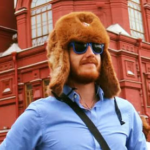

Adventures in Vilnius, Lithuania
After blowing through Western Europe in just a month (Portugal, Spain, Andorra, Southern France), I decided to stay in Vilnius (pronounced ‘VIL-nee-us’) for a month.
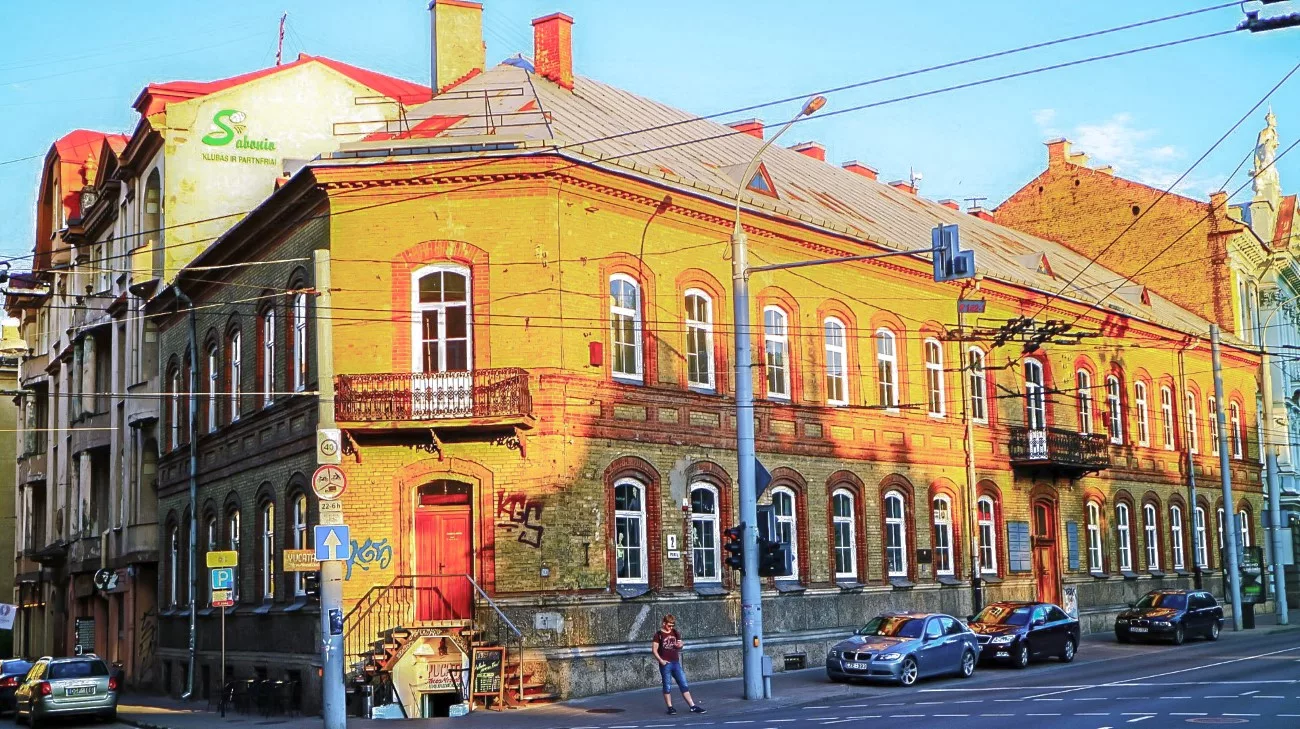
Vilnius was my first post-soviet era country to live in (I stayed in the old town of Tallinn, Estonia the year before, but that didn’t feel very soviet-era). Vilnius, on the other hand, still had that raw, unpolished energy — crumbling facades next to refurbished cafes, trolleybuses rattling through wide Soviet-era boulevards, and a cost of living that made it easy to stay longer than planned.
Walking Through the Old Town
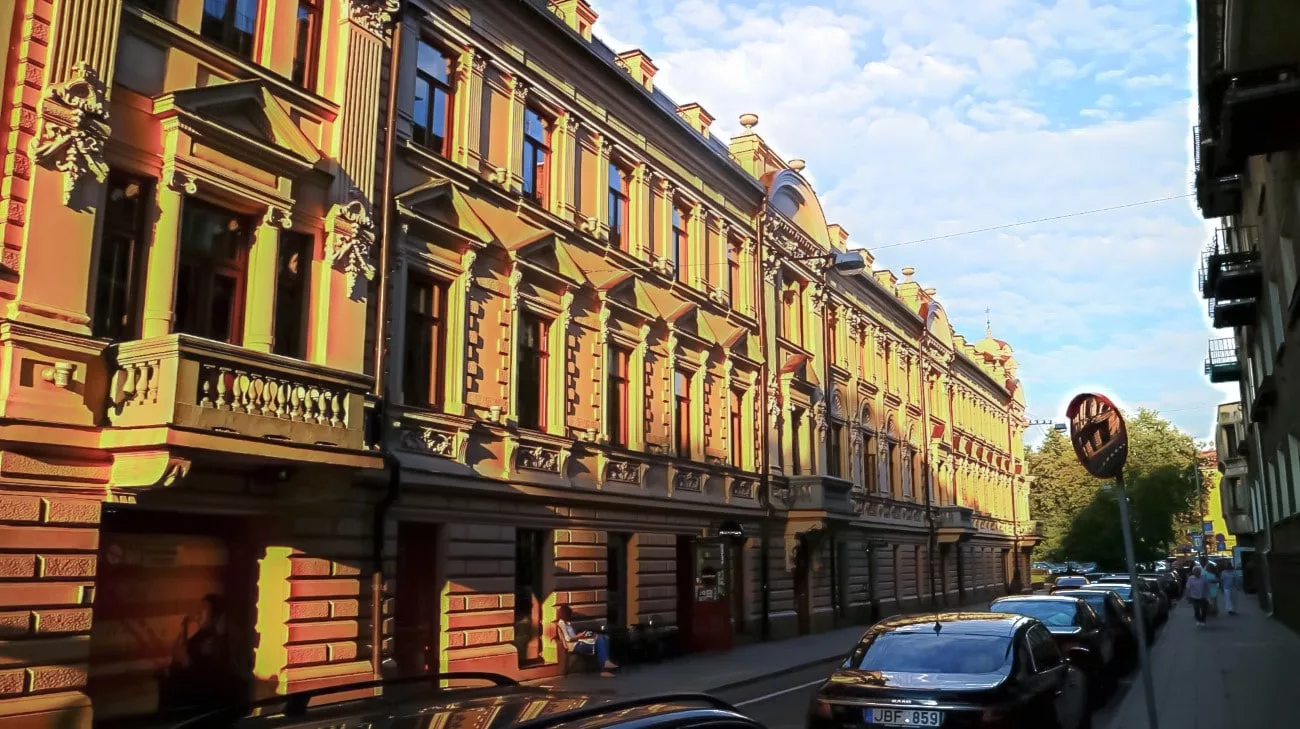
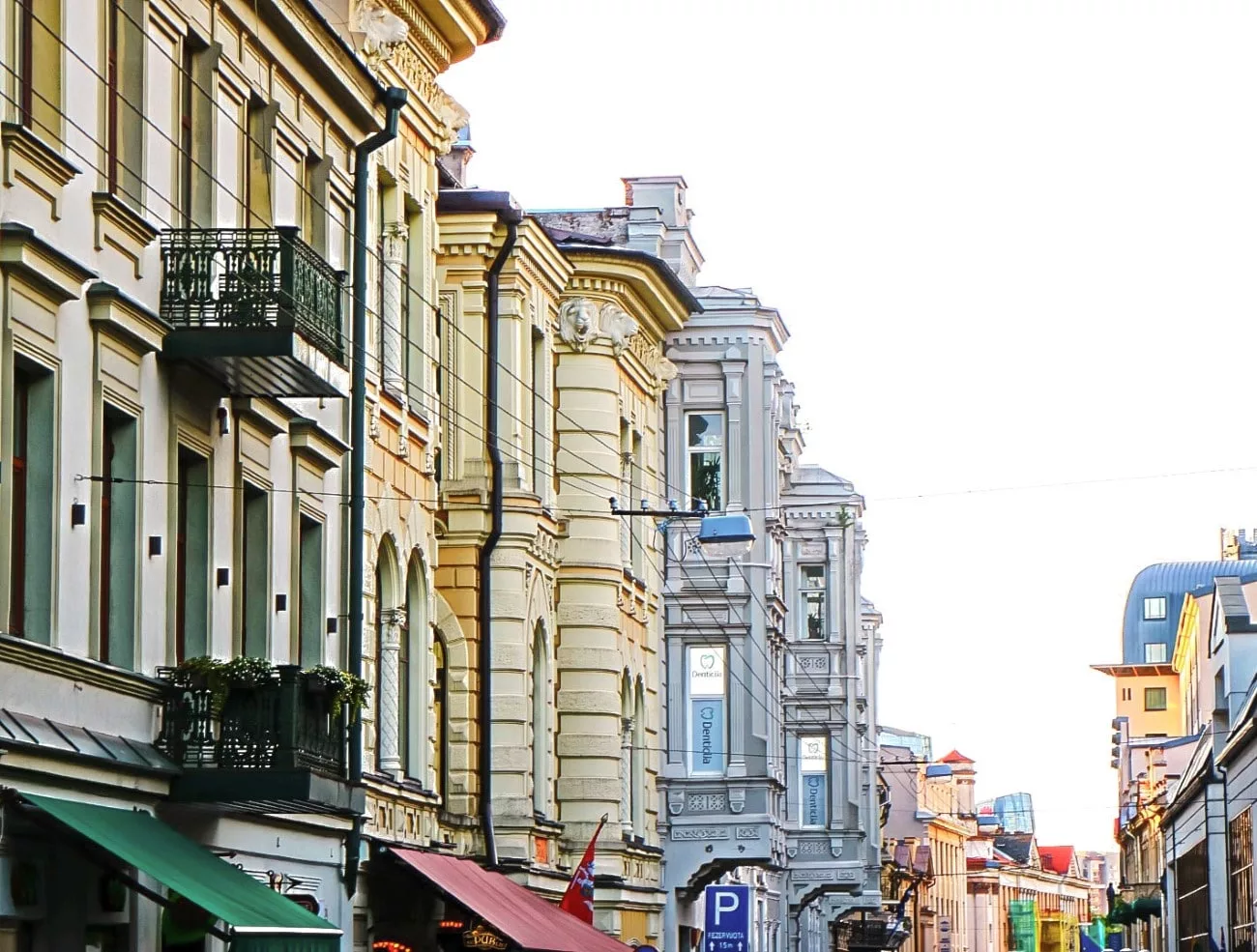
Most of my adventures took place in the old town. If you manage to find a place in, or near the old city, you’ll have nightlife almost every night. Walking around, you can feel that some buildings haven’t been repaired since their soviet-era days — while others have been refurbished for tourism. Unlike some old towns in the Baltics (looking at you, Tallinn), Vilnius doesn’t feel like a theme park.







A Brief History of Vilnius
Vilnius was first mentioned in writing on January 25, 1323, in a letter by Grand Duke Gediminas — the founder of the city and the first ruling dynasty of Lithuania (the Gediminids). According to legend, Gediminas had a dream about an iron wolf howling on a hilltop, which a pagan priest interpreted as a sign to build a great city on that spot. Whether the legend is true or not, the city that Gediminas built went on to become the capital of one of the largest empires in medieval Europe — the Grand Duchy of Lithuania — stretching from the Baltic Sea all the way down to the Black Sea.
For centuries, Vilnius was a melting pot of cultures: Lithuanian pagans, Polish Catholics, Orthodox Christians, Jews (Vilnius was once called the “Jerusalem of the North”), Tatars, and German merchants all coexisted within its walls. The city absorbed Gothic, Renaissance, and Baroque architectural styles, with the unique “Vilnius Baroque” school — founded by architect Johann Christoph Glaubitz — leaving a mark that has no analogue in European architecture. Today, Vilnius Old Town covers about 3.59 square kilometers, making it one of the largest surviving medieval old towns in Northern Europe, and it was recognized as a UNESCO World Heritage Site in 1994.
But the history didn’t end there. Lithuania was absorbed into the Russian Empire in 1795, occupied by Germany in WWI, claimed by Poland between the wars (1920-1939), and then swallowed by the Soviet Union in 1940. The Soviet occupation lasted 50 years — and you can still see its fingerprints all over the city, from the massive housing blocks on the outskirts to the TV Tower that became a symbol of resistance. On March 11, 1990, Lithuania became the first Soviet republic to declare independence. The Soviets didn’t take it well — on January 13, 1991, Soviet troops stormed the Vilnius TV Tower, killing 14 unarmed civilians. Lithuania held firm, and the rest of the Soviet republics eventually followed.
Monuments & National Pride
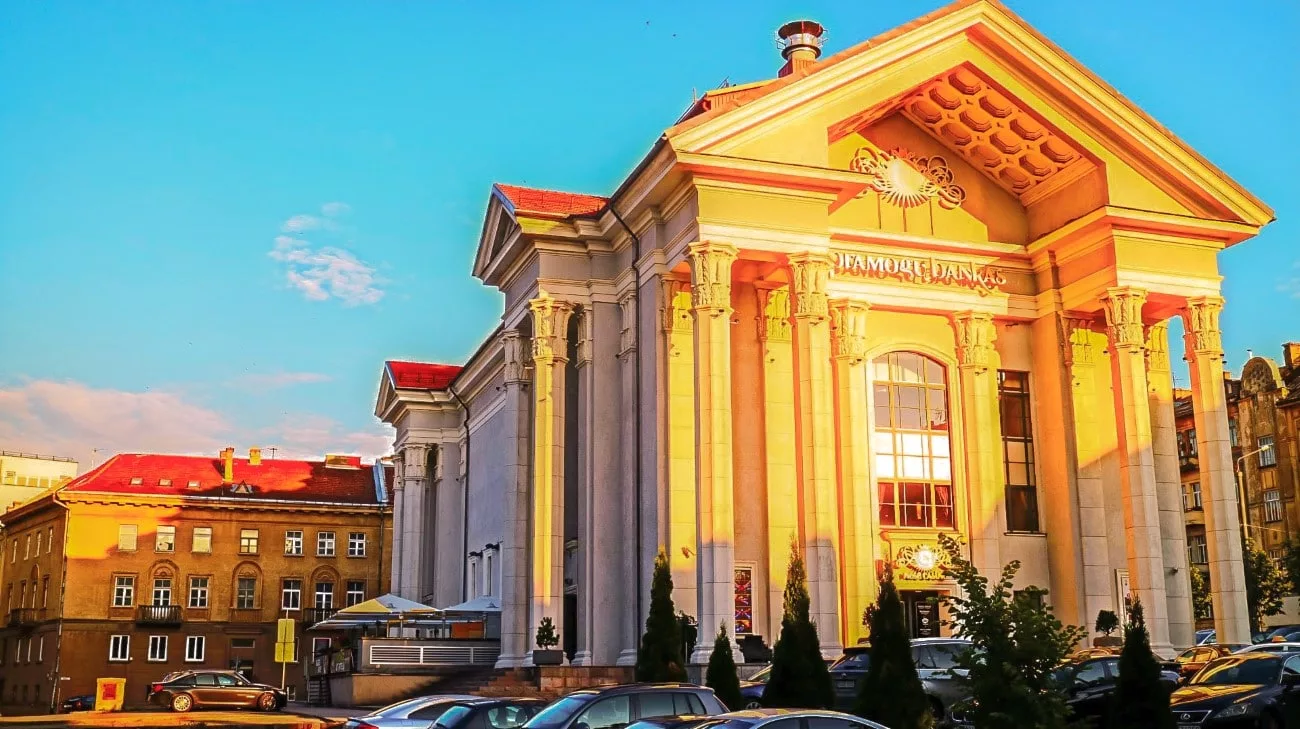
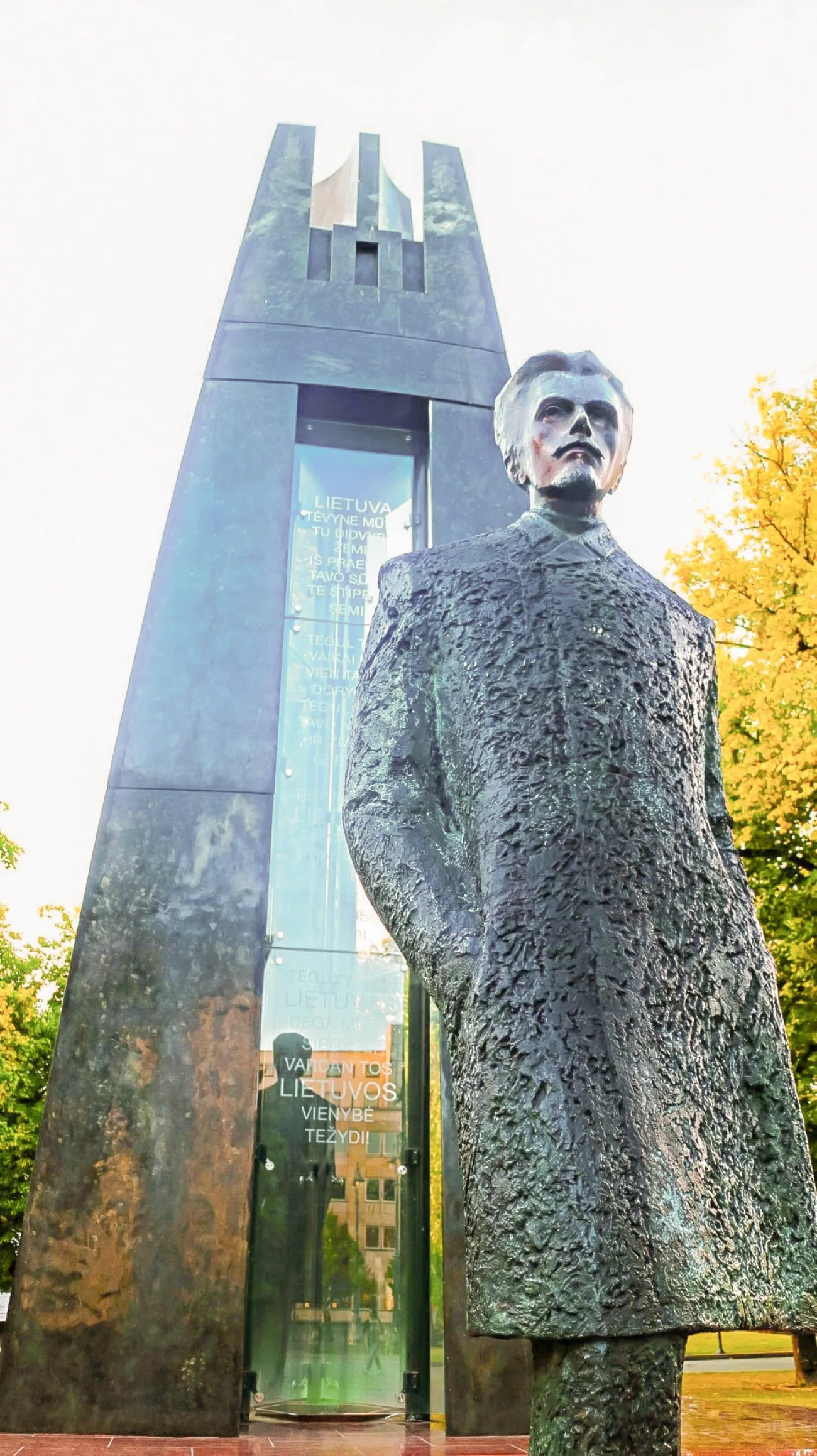
Lithuania only regained its independence in 1990, so national identity is a big deal here. You see it everywhere — Lithuanian and EU flags hanging from wrought-iron balconies, monuments to national heroes in every square, and the Three Muses sculpture guarding the entrance to the National Drama Theatre. Vincas Kudirka, the author of the Lithuanian national anthem, has a prominent statue in a central square with the lyrics inscribed on a stone obelisk behind him.


Old Meets New
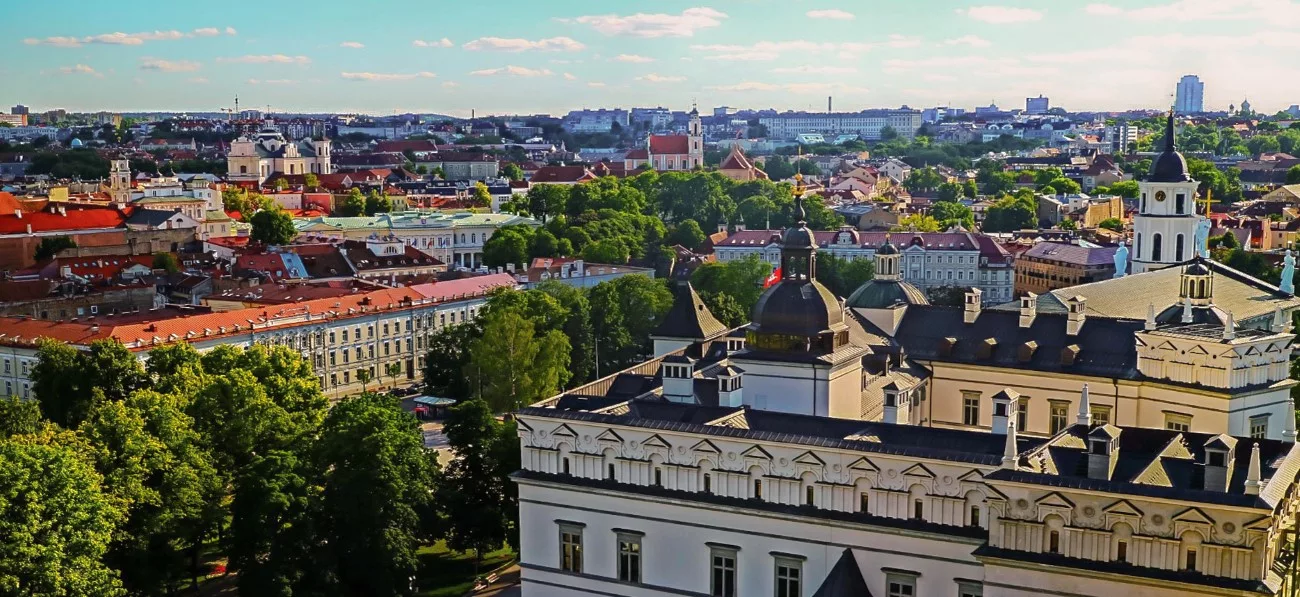
One of the things that struck me about Vilnius was how the old and the new sit right next to each other. You’ll be looking at a 19th-century palace and directly behind it are glass office towers. The Neris River cuts through the city, and along its banks you can see this contrast clearly — historic buildings on one side, modern apartments and business districts on the other. Even the advertisements feel like a collision of old and new — Lithuanian tech brands plastered across buildings that predate the Soviet era.


Cathedral Square & the Churches of Vilnius
Cathedral Square is the heart of Vilnius. The neoclassical Vilnius Cathedral, with its massive columns, green dome, and separate bell tower, dominates the plaza. Right next to it stands the equestrian statue of Grand Duke Gediminas — the man who started it all back in 1323. This is where the city’s major events and celebrations happen.


What surprised me about Vilnius was the sheer number of churches. There are over 40 churches in the old town alone, spanning every architectural style — Gothic, Baroque, neoclassical, and Orthodox. The Baroque towers of St. Philip and St. James rise above the squares. The Church of St. Peter and St. Paul has one of the most ornate interiors I’ve ever seen — over 2,000 white stucco figures and reliefs covering every surface, all from the 17th century. And then there are the Orthodox churches — the Cathedral of the Theotokos with its distinctive red domes, and a colorful Byzantine-style church with pink detailing that looks completely different from anything else in the city.


Gediminas Tower & the Hilltop Views
Gediminas Tower sits on top of the hill where the grand duke supposedly had his iron wolf dream. It’s a short but steep climb to the top, and from up there you get the best panoramic views of the entire city — the red rooftops of the old town, the church spires poking through the tree canopy, the modern skyline in the distance, and the Neris River snaking its way through.
The tower itself is the last remaining part of the Upper Castle, and it flies the Lithuanian flag. For Lithuanians, this is basically their national symbol — the flag was first raised here in 1919 during their initial declaration of independence.




The Three Crosses
On the neighboring hilltop stands the monument of the Three Crosses — one of the most recognizable symbols of Vilnius. The original wooden crosses were placed here in the 17th century to commemorate Franciscan monks who were martyred by pagan Lithuanians centuries earlier (according to legend, seven monks were crucified and thrown into the river). The Soviets destroyed the concrete monument in 1950, but it was rebuilt in 1989 — just before independence — as an act of defiance. The 12-meter tall white crosses overlooking the old town have since become a symbol of Lithuanian national identity and resistance.

The Republic of Užupis
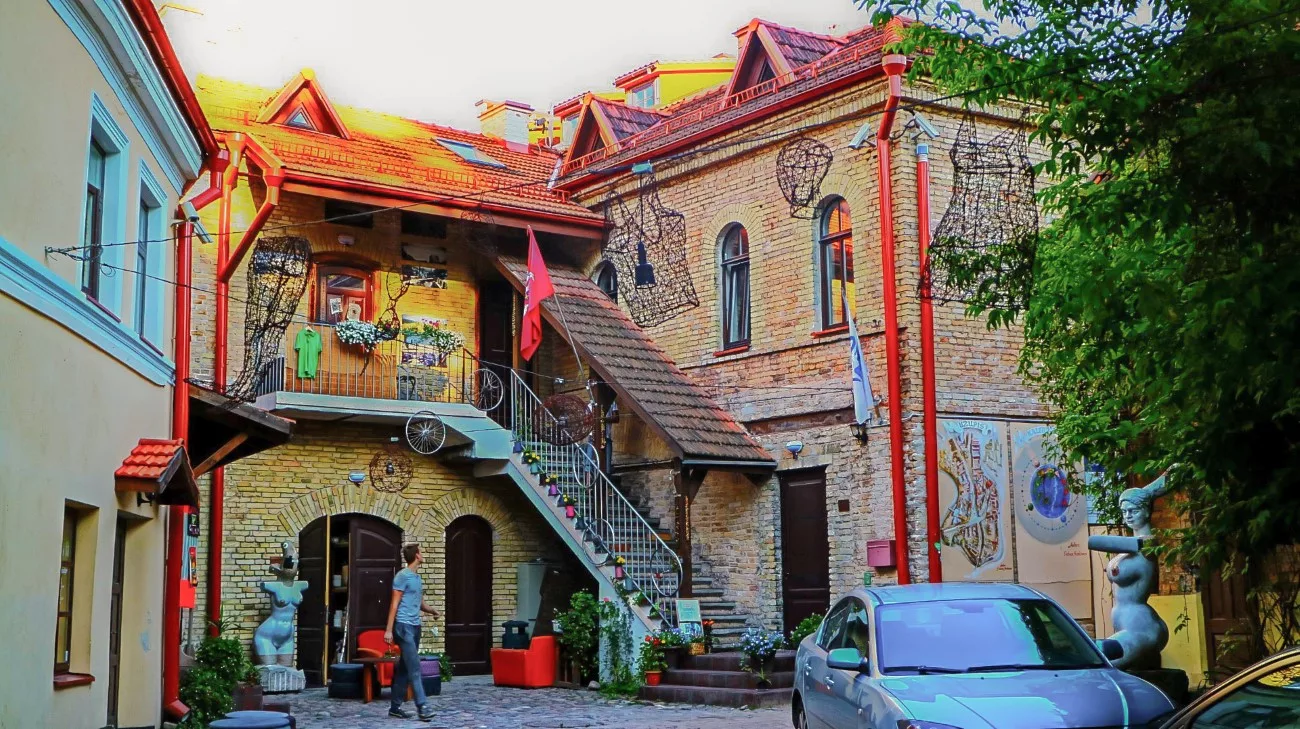
Užupis (‘OO-zhoo-pis’) is probably the most unique neighborhood in Vilnius. During the Soviet era, it was one of the most neglected and rundown areas of the city. After independence in 1990, artists and bohemians moved in because of the cheap rent (sound familiar? Same thing happened in Williamsburg, Kreuzberg, and every other gentrified artist neighborhood). On April 1, 1997, Užupis declared itself an independent republic — complete with its own constitution, president, an army of about 12 people, and a flag that changes with each season.
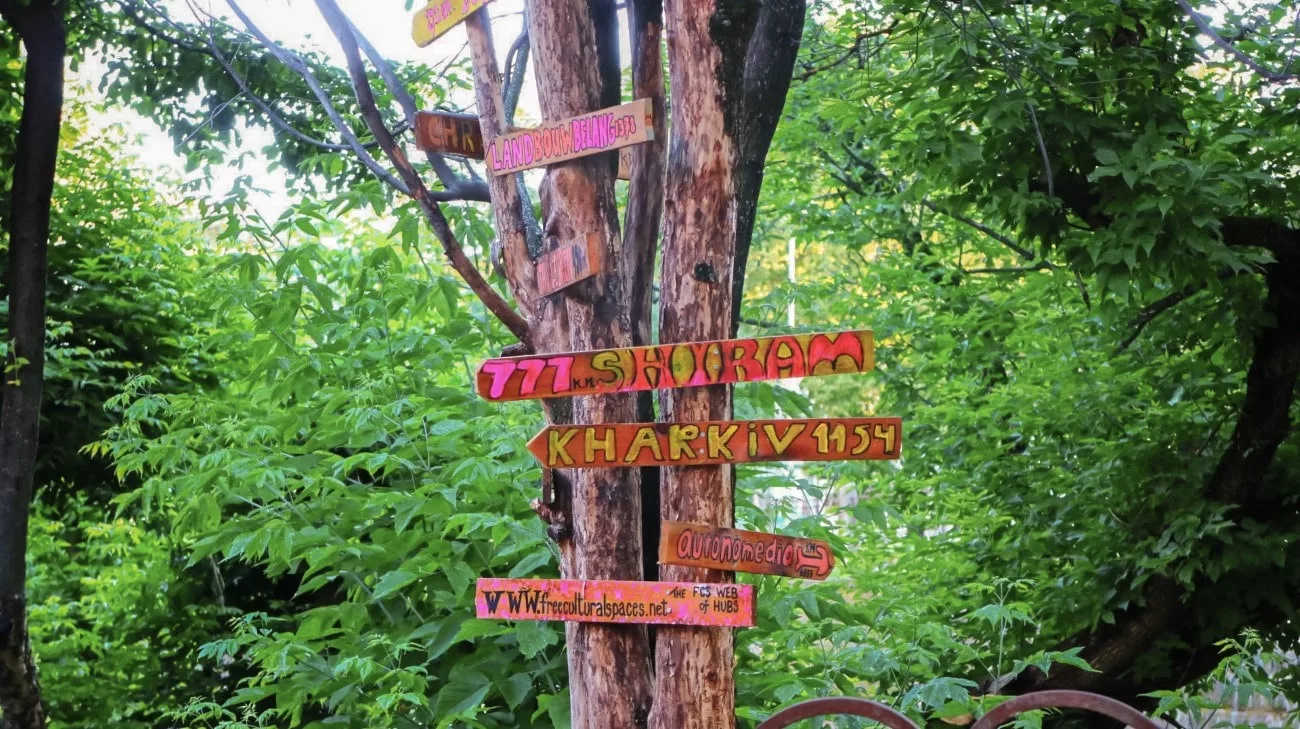
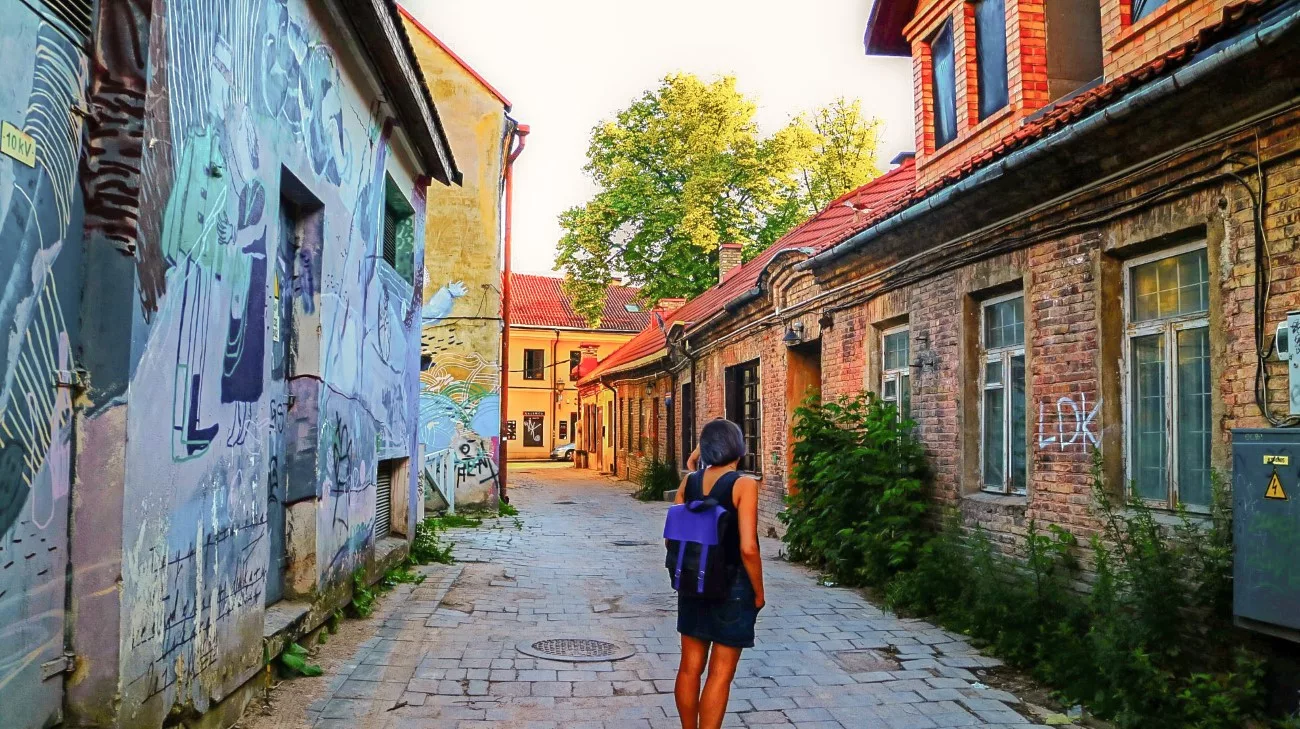
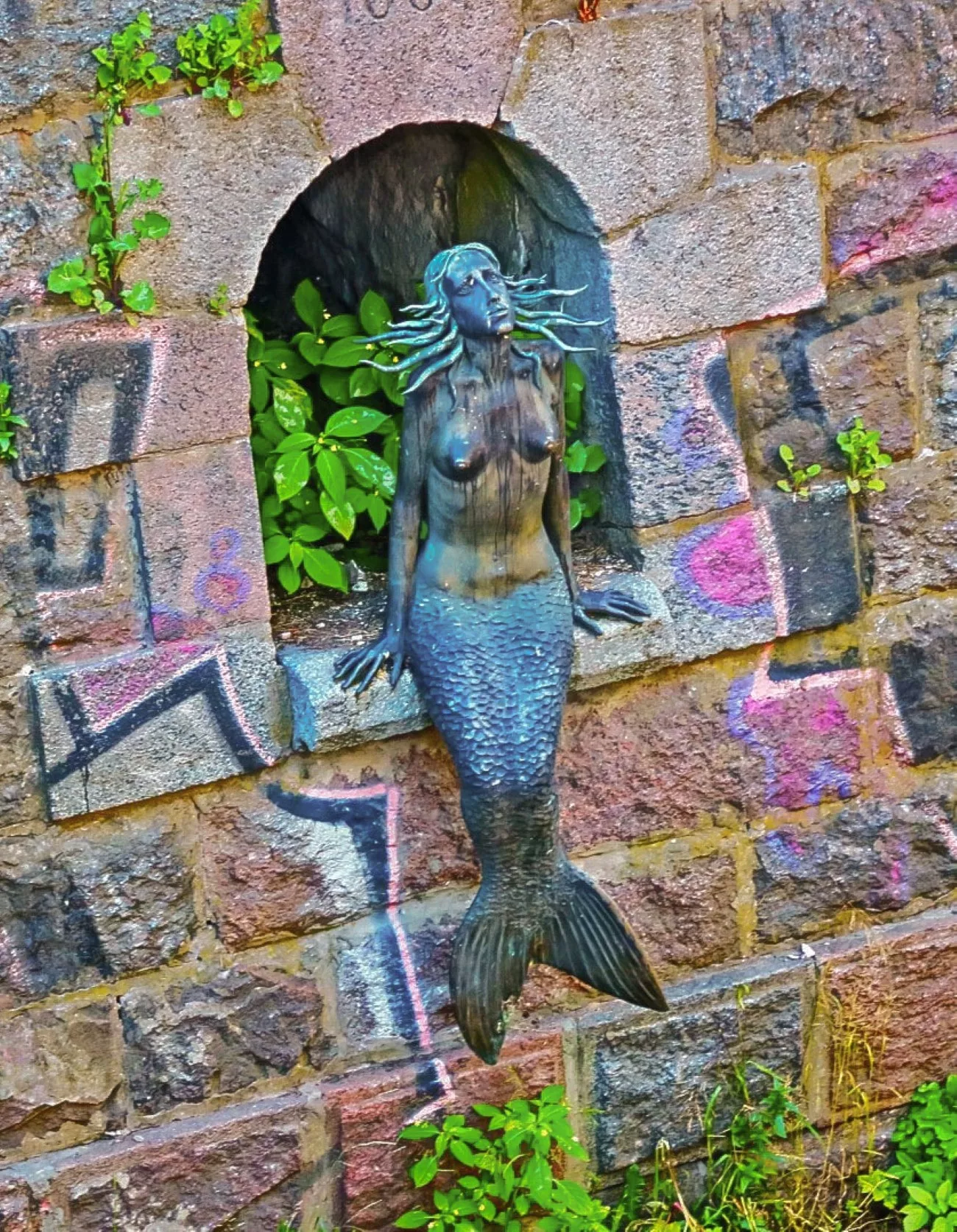
The constitution is posted on a wall in 20+ languages, and includes gems like “A cat is not obliged to love its owner, but must help in times of need” and “Everyone has the right to be happy.” Walking through Užupis felt like walking through an open-air art gallery — graffiti, sculptures, quirky signs pointing to faraway cities, and random installations tucked into every corner. Even the mermaid sculpture embedded in a stone wall niche feels right at home here.

The Soviet Legacy
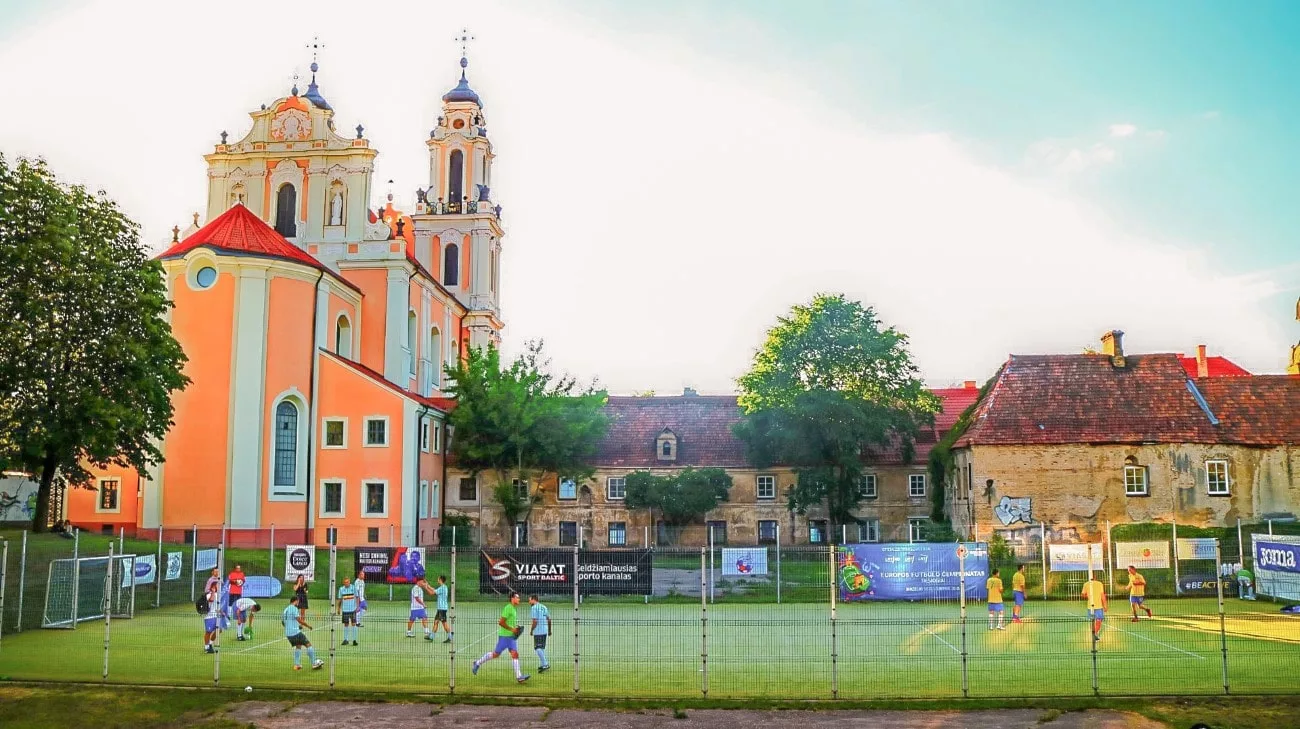
And then there’s the other side of Vilnius — the parts that haven’t been refurbished for tourists. Crumbling Soviet-era buildings with exposed brick and graffiti, bricked-up doorways, and the kind of post-Soviet decay that reminds you this country was under occupation for half a century. A church bell tower rises above a decaying facade. A football match unfolds on a pitch with the Baroque Church of St. Catherine towering in the background. The contrast between the polished tourist areas and these untouched remnants is one of the most striking things about the city.



Vilnius at Night
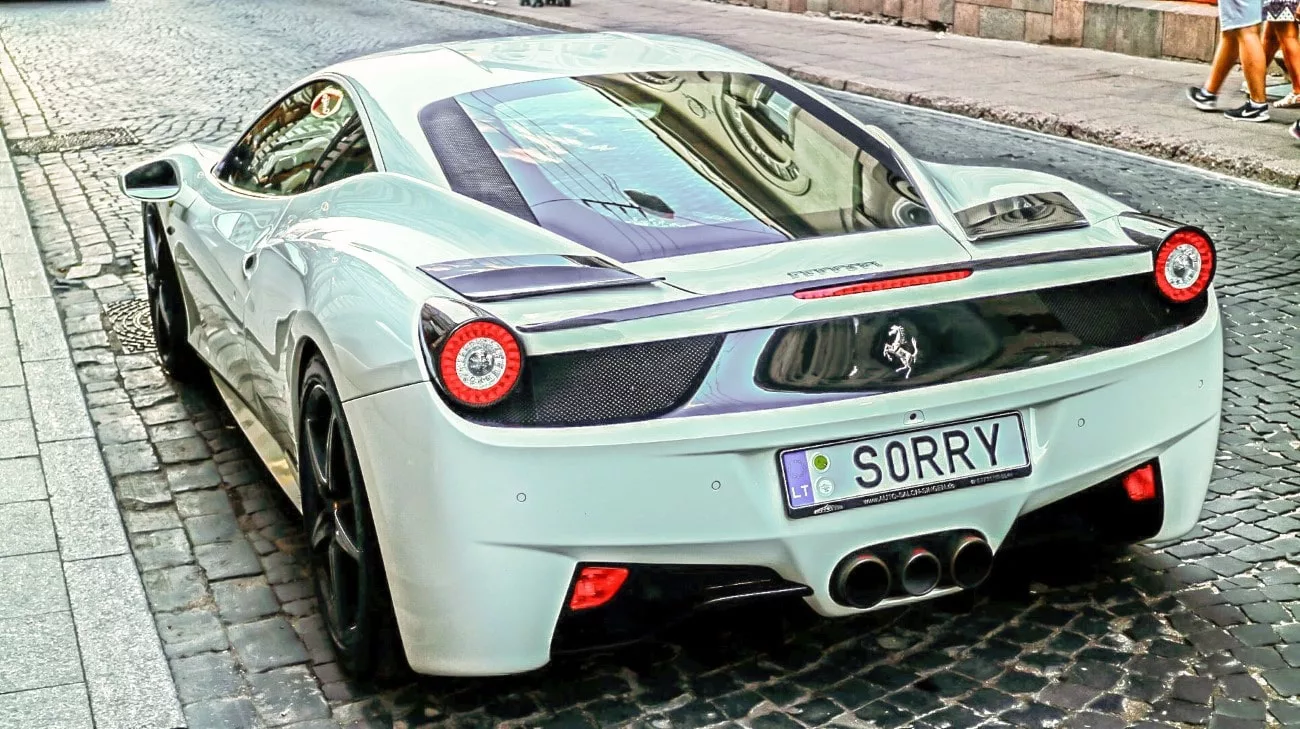
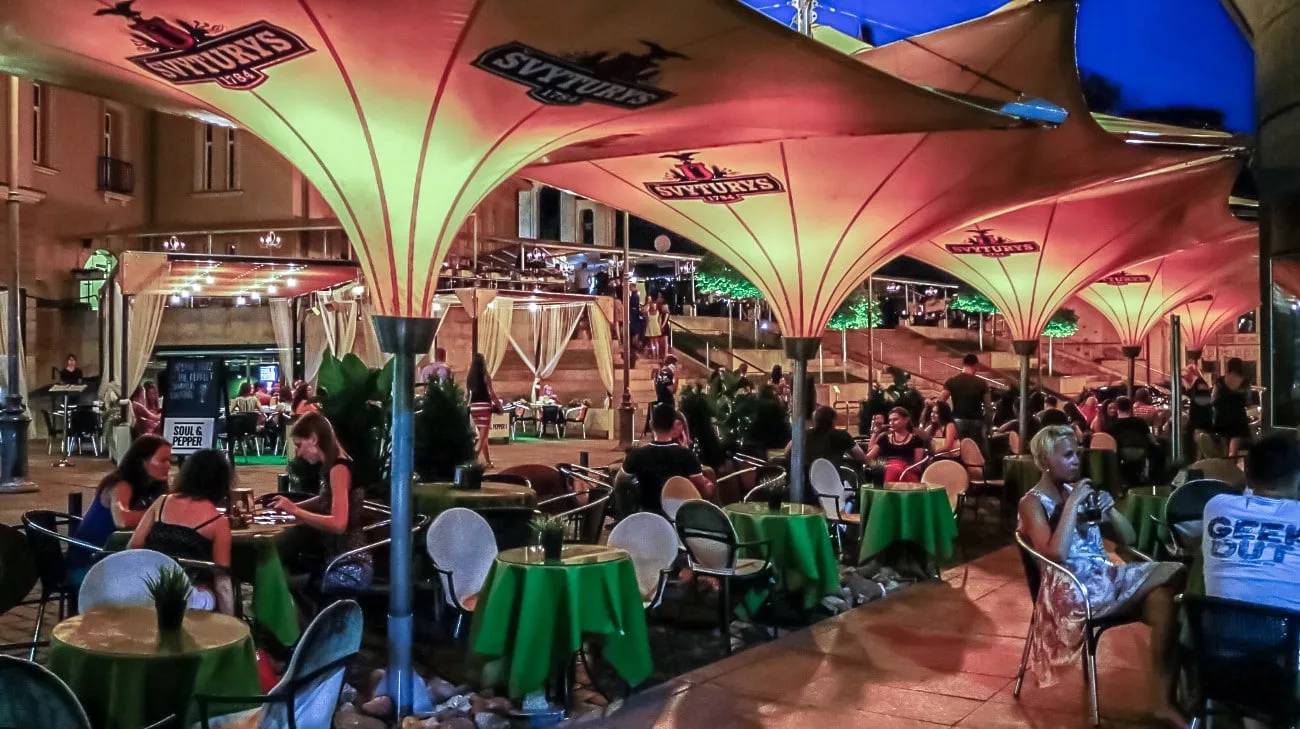
The nightlife in Vilnius was better than I expected. The old town comes alive after dark — outdoor bars with Svyturys beer (the local favorite), cobblestone streets filled with people, cozy sidewalk cafes tucked into brick-walled courtyards. A white Ferrari with a “SORRY” vanity plate parked on the cobblestones pretty much sums up the vibe. The Town Hall gets lit up in the Lithuanian national colors (yellow, green, and red), and the Art Nouveau facades of buildings like the Astoria hotel look even better at night.


Evening Panoramas
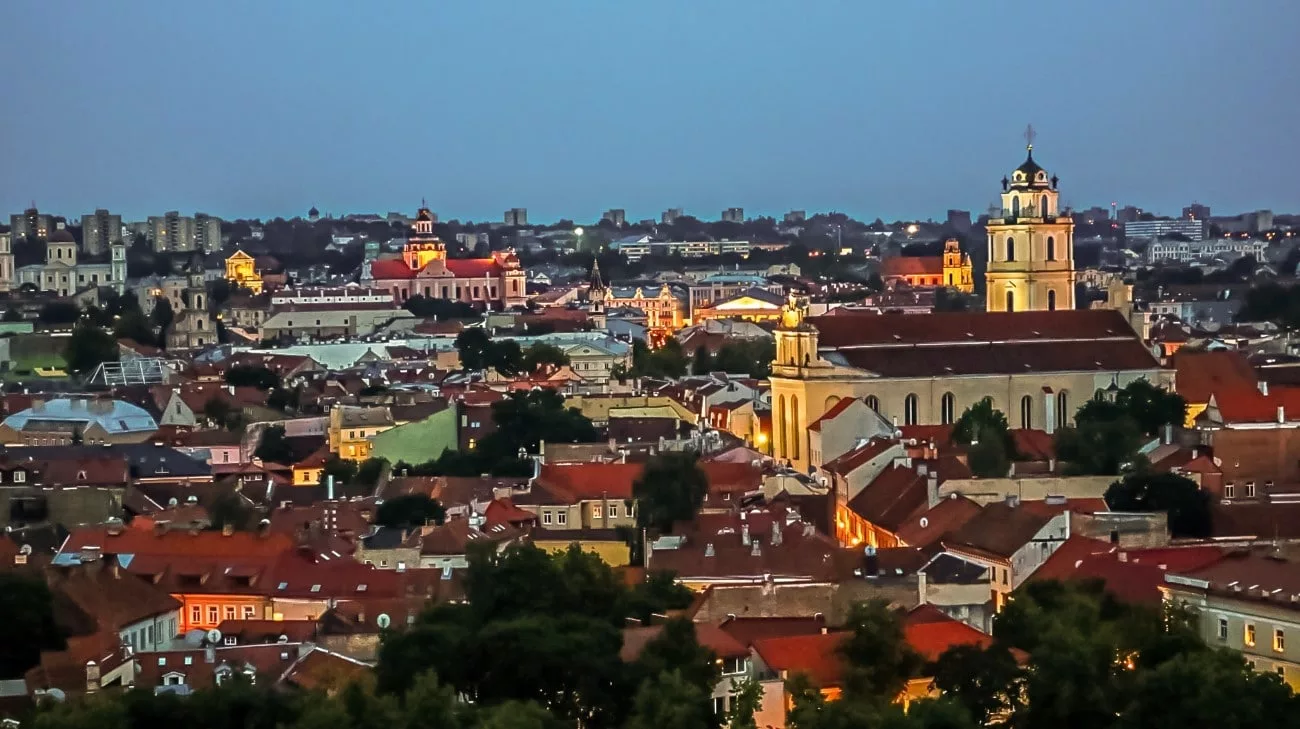
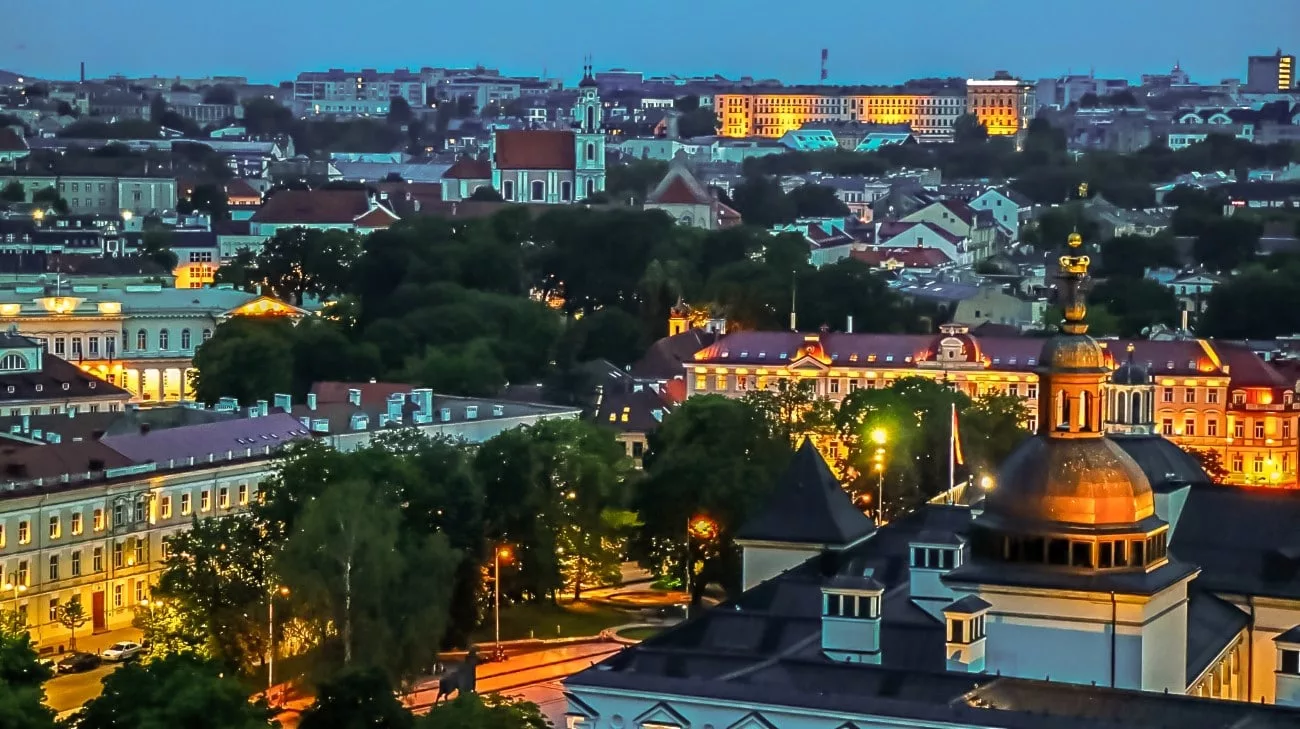
From the hilltops and riverbanks, the evening panoramas of the city are incredible — warm street lights, glowing church domes, and the Neris River reflecting the city lights. The blue-hour view from Gediminas Tower, with illuminated towers glowing above the rooftops, is probably the single best view in the city.

Vingis Park & Lithuanian Folk Art
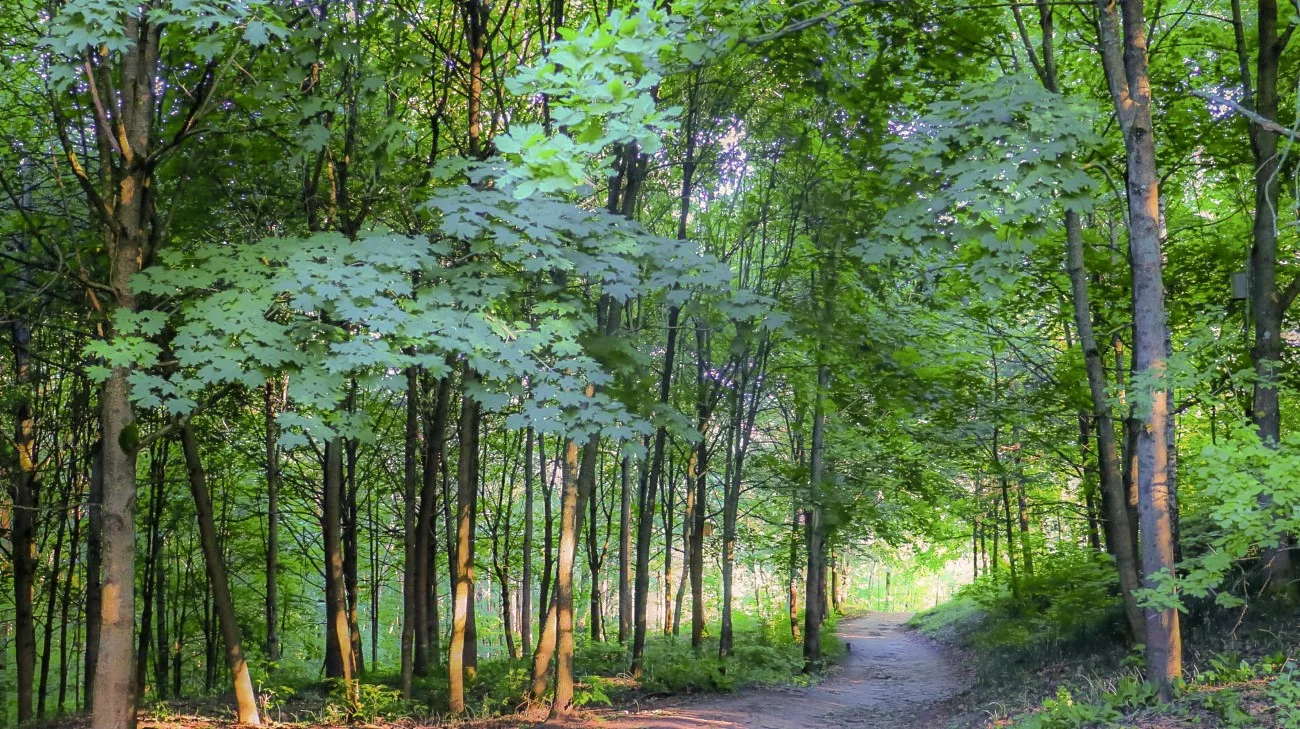
On the way to the TV Tower, the area around Vingis Park has some genuinely interesting Lithuanian folk art — tall painted wooden sculptures standing among the pine trees, and traditional carved crosses (‘kryžiai’) that are a distinctive part of Lithuanian culture. The Vingis Park amphitheatre is also out here — a massive open-air stage that hosts the country’s biggest music festivals and cultural events, with the TV Tower looming in the background.


The TV Tower
The Vilnius TV Tower is the tallest structure in Lithuania at 326.5 meters (about 1,071 feet). It was built during the Soviet era between 1974 and 1980, and it became infamous on January 13, 1991, when Soviet troops stormed it during Lithuania’s fight for independence, killing 14 civilians.
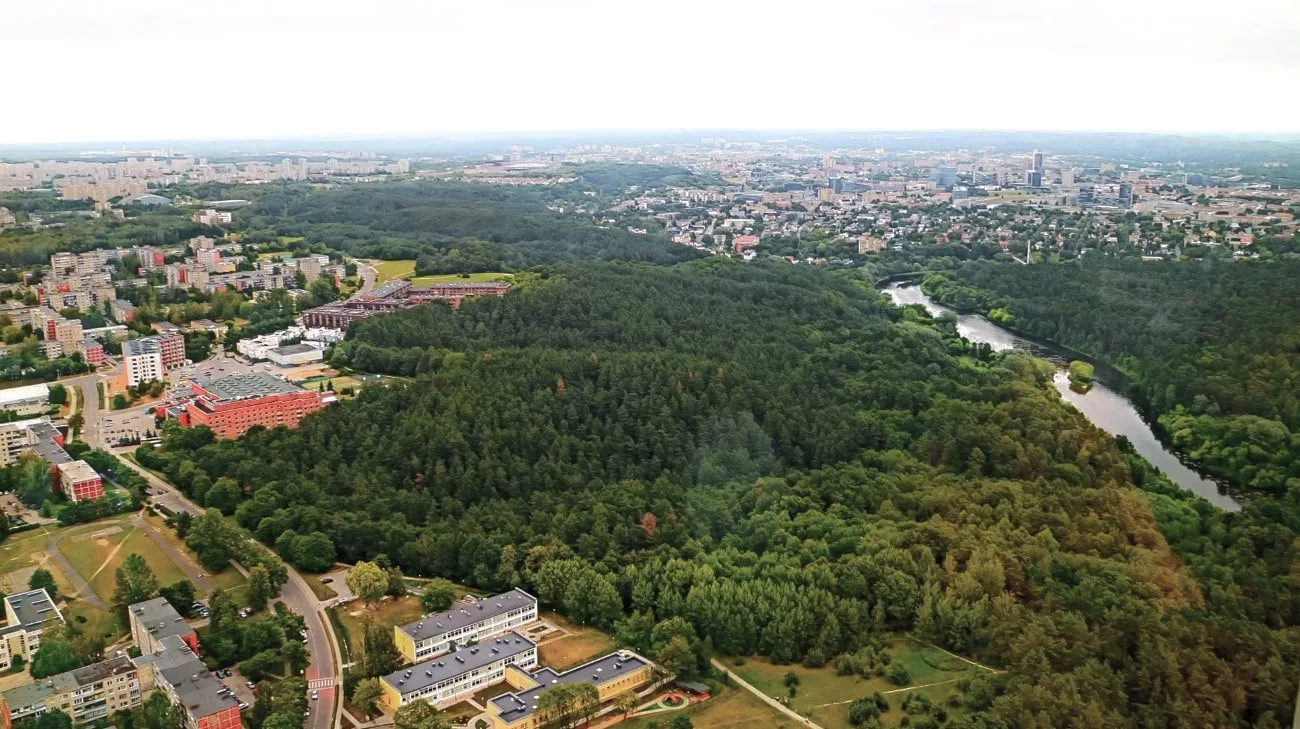
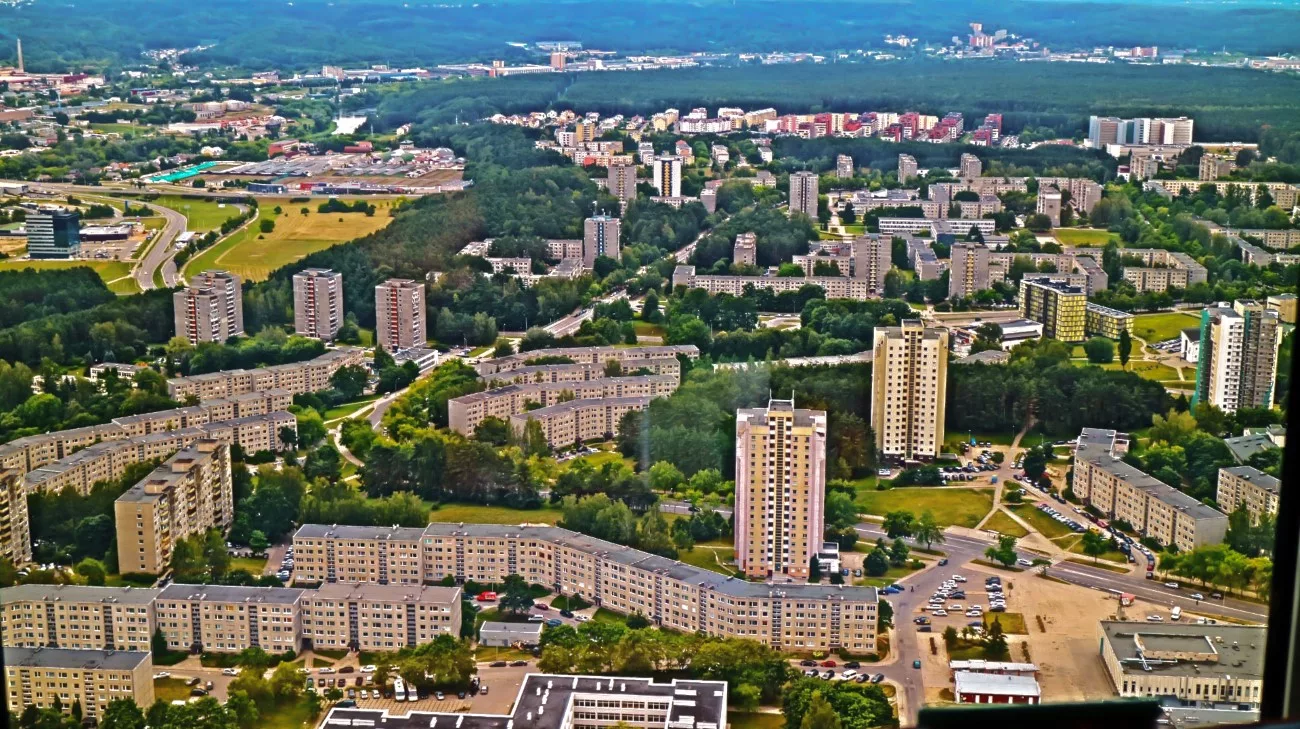
Today, the observation deck at 165 meters houses a revolving restaurant called “Paukščių takas” (Milky Way), which completes one full rotation every 45 minutes. The views from up there are wild — you can see the sprawling Soviet-era apartment blocks and housing estates stretching to the horizon in every direction, surrounded by dense forests. It’s a completely different perspective of Vilnius compared to the old town at ground level. We ended the visit with cake and coffee in the revolving restaurant, which was a solid way to close out the trip.



Final Verdict
Vilnius was one of those cities that exceeded expectations. It’s not on most travelers’ radar — and that’s exactly why it’s so good. The people are friendly, the old town is stunning, the history runs deep, and the cost of living makes it easy to stay for a while. I spent a full month there, and it wasn’t enough.
If you’re looking for a European city that hasn’t been completely overrun by tourists, where you can still find affordable accommodation in the old town, and where the nightlife is genuinely fun without being overpriced — Vilnius is it.
I definitely recommend Vilnius, Lithuania.
Quick side note about the photos: I took these photos when I first had my Canon M3 in 2016. As such, I was actively using the built-in filters in the camera. This was ultimately a bad idea, because, looking back, they look over-filtered. For 2018, I re-edited them in Lightroom, to decrease the strong contrasting lines. But lesson learned: don’t use the built-in filters on your camera.


cool