

“It is not death that the very old tell me they fear. It is what happens short of death — losing their hearing, their memory, their best friends, their way of life.”
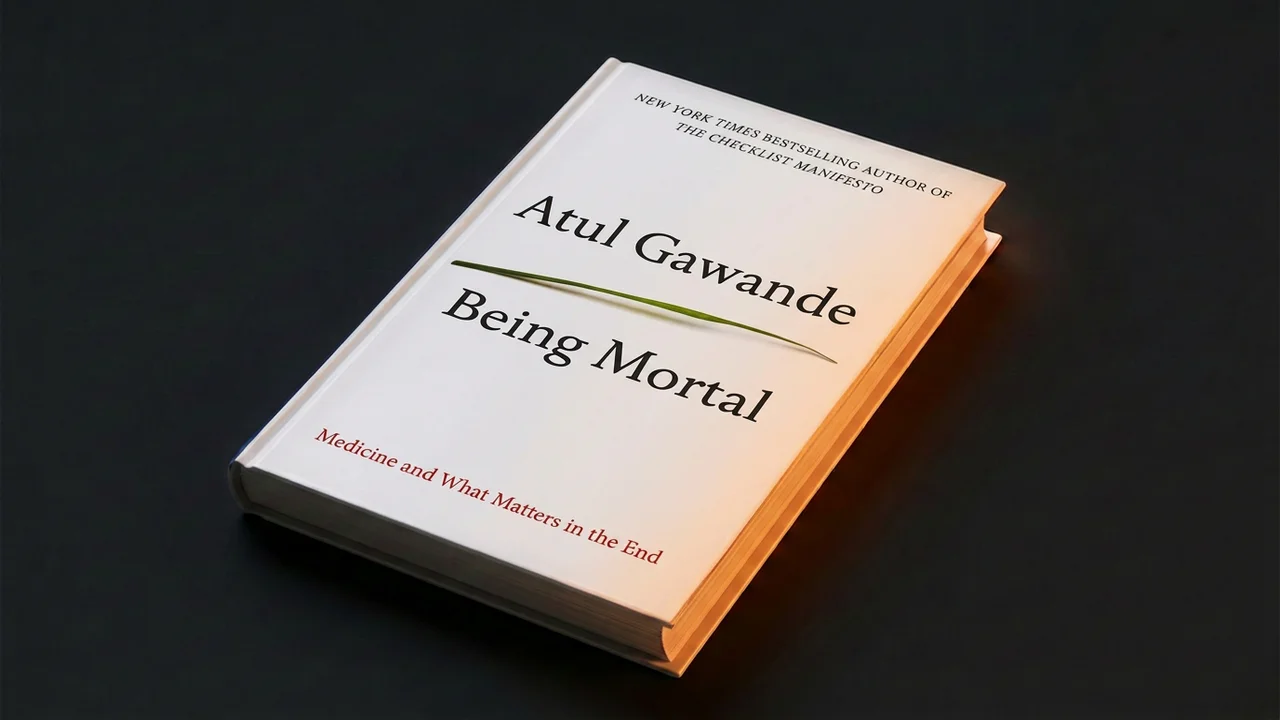
I passively listened to the audiobook while going about my day. And yet, despite the casual consumption, this book managed to creep into my thoughts in ways I didn’t expect. It’s one of those reads — or listens — that quietly rewires how you see something you’ve never really thought about.
We don’t think about getting old. Not seriously. When you’re in your twenties or thirties, death and aging are abstract concepts — things that happen to other people. But Atul Gawande, a surgeon who has spent decades watching people at the end of their lives, forces you to confront the reality. And he does it not with statistics and fear, but with STORIES.
In decades past, when a person became elderly, they would be adopted by their community or children and taken care of. In some Eastern societies such as in India and China, this is still the case. The elderly lived with their families, contributed what they could, and were respected for their experience. There was no “what do we do with grandma?” question — the answer was obvious.
Being Old Is Not That Fun
Yet, in Western societies, the elderly are sent to retirement homes, live by themselves, or reside in hospitals on constant medications and operations. We’ve essentially outsourced the care of our aging population to institutions — and those institutions, more often than not, prioritize SAFETY over quality of life.
Think about that for a second. You’ve lived 80 years as a free, autonomous human being. You’ve built a career, raised kids, traveled, made your own choices every single day. And then one fall or one diagnosis later, you’re in a facility where someone else decides when you eat, when you sleep, and whether you’re allowed to walk to the garden by yourself.
Furthermore, being a doctor who takes care of the elderly is not an amazing profession, since the elderly come with an assortment of problems, rather than just one or two. It’s not glamorous. There’s no dramatic surgery that saves the day. It’s slow, incremental, and often thankless work.
As a result, doctors will prescribe many treatments, medications, and solutions, which on average (according to the author) haven’t fixed the issues or made things slightly better, at the expense of making things worse elsewhere. You fix the hip, but the medication wrecks the kidneys. You manage the heart condition, but the side effects destroy any remaining independence. It becomes this cascade of interventions that no one steps back to question.
So Why Would I Care?
The author explains these predicaments through stories from his many years as a doctor. That is most of the book. You get a personal, emotional, human feel to the issues, rather than a data-driven, objective appeal.
My assumption with the first few chapters was that this book aims to deconstruct the benefits and rapid development of medicine and technology. I was expecting a critique of modern healthcare — something dry and policy-driven.
But rather, its aim (from my interpretation) is to humanize the issues facing old people. It gives you a clear picture of what it’s like being old and unable to take care of yourself. Gawande shares stories of his own patients and even his own FATHER, who was himself a doctor facing the slow decline of aging. That part hit different — watching a physician who spent his life treating others suddenly become the one in need of care.
The Conversation No One Wants to Have
One of the most important ideas in the book is about the conversations we AVOID. When someone is terminally ill or declining rapidly, doctors tend to default to “let’s try one more treatment.” Families go along with it because no one wants to be the person who says, “Maybe we should stop.”
Gawande argues that asking the right questions — What does the patient actually WANT from the time they have left? What are they willing to endure, and what aren’t they? — leads to dramatically better outcomes. Not necessarily more time, but better time. More meaningful time.
This is the part that really stuck with me. We’re so obsessed with extending life that we forget to ask whether the life we’re extending is one worth living from the patient’s perspective. It’s a question that requires real courage to ask — and even more courage to answer honestly.
What This Means for the Rest of Us
We will all become old one day, and it will be interesting to see if we simply end up in a retirement home, live by ourselves, live in a hospital under strict control, or continue living a healthy, fulfilling life.
I think about my own grandparents when I read stuff like this. I think about the choices my parents will face, and eventually, the choices I’LL face. It’s uncomfortable, but that’s precisely why it’s important. The worst time to think about end-of-life care is when you’re already in the middle of it.
Gawande isn’t saying medicine is bad. He’s saying medicine has become so focused on the biological problem that it forgot about the PERSON attached to the problem. And that distinction matters more than any drug or surgery.
Final Thoughts
I think the author has written a compelling book about being old, but at the same time, it’s very heavily sensationalized and story-driven. That said, the stories are what give this book its power. Data and research alone wouldn’t have made me think about my own mortality during a random Tuesday afternoon walk.
If you have aging parents or grandparents — or if you simply want to understand the healthcare system’s blind spots — this is essential reading. It won’t give you a step-by-step guide to aging well, but it will change the questions you ask. And sometimes, asking better questions is more valuable than having all the answers.
4/5 Stars
Thanks for reading.
— Leonidas
