
“The single greatest predictor of a healthy gut microbiome is the diversity of plants in one’s diet.”
I’ll be honest — if you told me five years ago that I’d be reading a book about fiber and gut bacteria, I would’ve laughed at you. Fiber? That’s the boring stuff on cereal boxes that old people worry about. Right?
Wrong. So incredibly wrong.
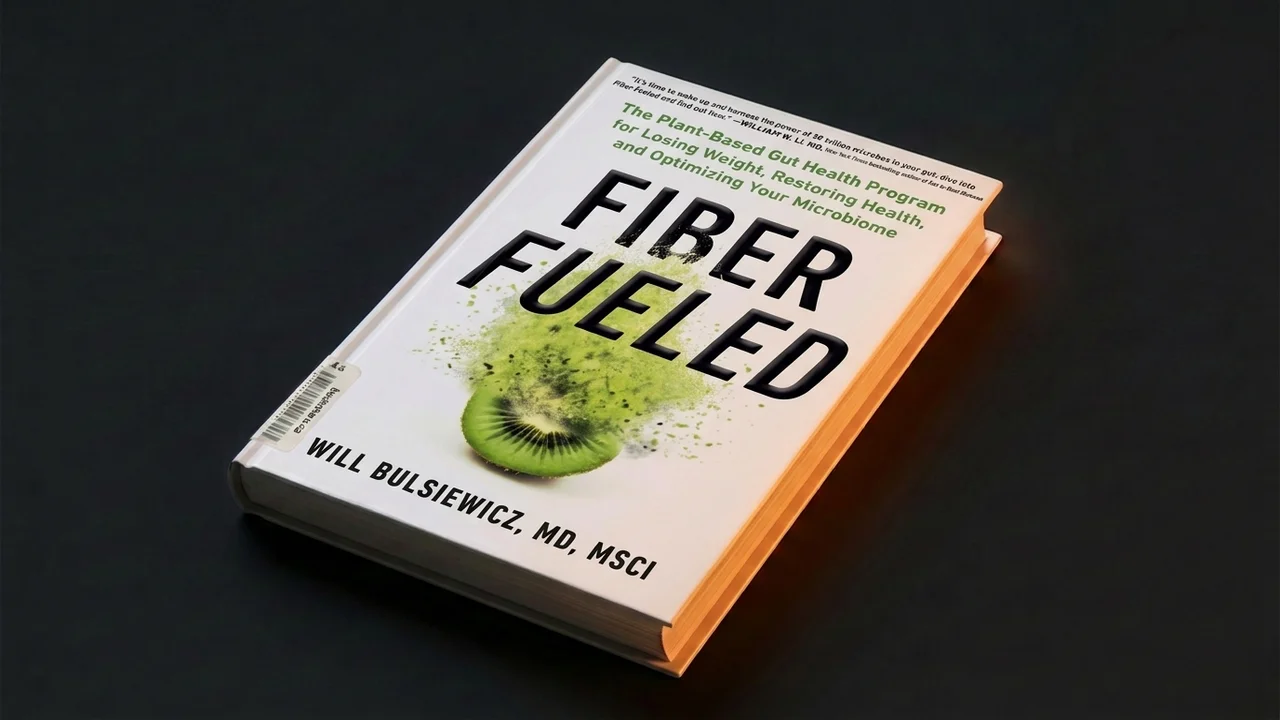
Dr. Will Bulsiewicz — “Dr. B” as he goes by — wrote Fiber Fueled to make one thing abundantly clear: your gut microbiome is not just about digestion. It affects your immune system, your mood, your weight, your energy levels, your skin, and potentially even your risk of chronic disease. And the single most important thing you can do for it is eat MORE PLANTS.
Not exclusively plants. Just more of them. And more VARIETY of them.
The Microbiome — Your Second Brain
Here’s the part that genuinely fascinated me. You have roughly 38 trillion bacteria living inside your gut. That’s more bacterial cells than human cells in your body. These aren’t parasites or invaders — they’re collaborators. They help you digest food, produce vitamins, regulate your immune system, and even communicate with your brain through the gut-brain axis.
Your gut produces about 90% of your body’s serotonin — the “feel good” neurotransmitter. So when people say “trust your gut,” there’s actual neuroscience behind it. Your gut is literally influencing your mood, your anxiety levels, and your mental clarity.
Dr. B explains that the DIVERSITY of your gut bacteria is the key metric. It’s not about having one magical strain — it’s about having a thriving ecosystem with hundreds of different species, each performing specialized functions. And the way you build that diversity? You eat a diverse range of plant foods.
Why Fiber Is the Fuel
Most people think of fiber as the stuff that keeps you “regular.” And sure, it does that. But Dr. B reframes fiber as the PRIMARY food source for your gut bacteria. When you eat fiber, you can’t actually digest it — but your gut bacteria CAN. They ferment it and produce short-chain fatty acids, which are essentially the fuel that keeps your gut lining healthy, reduces inflammation, and supports your immune system.
Without enough fiber, your gut bacteria start to starve. And when they starve, they begin eating the mucus lining of your gut wall. That leads to a condition called “leaky gut” — where your intestinal barrier weakens and allows bacteria and toxins to enter your bloodstream. This triggers chronic inflammation, which is linked to pretty much EVERY modern disease: obesity, diabetes, heart disease, autoimmune conditions, depression, and more.
The average American eats about 15 grams of fiber per day. The recommended amount is 25 to 38 grams. Our ancestors were eating upwards of 100 grams daily. We’re not even close.
The Plant Diversity Challenge
One concept from this book that stuck with me is the idea of eating 30 different plants per week. Not 30 servings — 30 different TYPES. Fruits, vegetables, whole grains, legumes, nuts, seeds, herbs, and spices all count.
When I first heard that number, I thought it was insane. But then I started counting. An apple, a banana, spinach, garlic, onion, rice, black beans, almonds, oats, cinnamon — that’s already 10, and I haven’t even had lunch yet. Once you start thinking about it, 30 is actually very achievable if you make a conscious effort to vary your meals.
The key insight is that each type of plant feeds DIFFERENT bacterial species. So eating the same salad every day is better than eating no vegetables, but it’s not as good as rotating your ingredients. Your gut bacteria thrive on novelty and variety — just like your brain does.
The Processed Food Problem
Dr. B doesn’t spend too much time bashing processed food — he’s not preachy about it. But the implication is clear. Ultra-processed foods are essentially pre-digested. They’re broken down so thoroughly that your gut bacteria barely get anything to work with. It’s like feeding your internal ecosystem empty calories.
And here’s the kicker — artificial sweeteners, emulsifiers, and preservatives can actively DAMAGE your gut microbiome. Some of these additives kill beneficial bacteria or disrupt the gut lining. So it’s not just that processed food lacks fiber. It’s that it actively harms the bacteria you already have.
This was the part that made me re-evaluate my own eating habits. I eat relatively healthy, but I realized I was leaning heavily on the same five or six ingredients day after day. Chicken, rice, broccoli, eggs — the classic “healthy” rotation. Nutritionally fine, but from a microbiome perspective, pathetically limited.
Practical Application
What I appreciate about Dr. B is that he’s not dogmatic. He’s not telling you to go vegan overnight. He’s saying: wherever you are right now, just add more plants. If you’re eating zero vegetables, start with one serving a day. If you’re already eating well, challenge yourself to hit that 30-plant target each week.
The book includes recipes and a step-by-step plan, but honestly, the principles are simple enough that you don’t need to follow a rigid program. Buy a wider variety of produce. Throw some beans into your meals. Add seeds to your morning oats. Use herbs and spices generously — they count too.
I started implementing this gradually, and the difference was noticeable within a few weeks. Better digestion, more consistent energy throughout the day, and — this one surprised me — fewer afternoon crashes. Whether that’s placebo or genuine microbiome improvement, I honestly don’t care. It works.
Final Thoughts
This is one of those books that makes you feel slightly dumb for not knowing this stuff sooner. The science is accessible, the writing is clear, and the practical advice is immediately actionable. Dr. B takes a topic that sounds boring on paper — fiber and gut bacteria — and makes it genuinely compelling.
If you care about your health at ALL, read this. It won’t convert you into a raw vegan or make you afraid of a steak. It’ll just make you think twice before skipping the vegetables on your plate.
4/5 — highly recommended for anyone interested in nutrition, health, or understanding why your gut might be running the show more than your brain.
Thanks for reading.
— Leonidas
