I drove all the way from Puebla, Mexico, to get to the colonial-era city of Morelia (city), Michoacán (state), Mexico.
This was about 5-6 hours of non-stop highway driving, and toll-booths (almost $50 USD in tolls).
Most Mexicans know of Michoacán as the most dangerous state in Mexico.
Luckily, I was there just long enough to only experience the rich colonial architecture of Morelia, the more peasant-like representation of Patzcuaro, and one of the strangest sights in the world; the Island-town called Janitzio.
The journey from Puebla City to Morelia and then to Patzcuaro
Driving through the hills of Mexico
Hundreds of thousands of these little villages and towns exist within Mexico
A car traverses the clear-cut roads in Mexico, with a tiny christian memorial to the left
As sunset arrives in the deserts of Mexico
The highways in Mexico are like snakes that run up and down the hill-sides and plains.
The actual colour of the sunset in Mexico
Where is Morelia?
Rich Colonialism in Morelia, Michoacán, Mexico
I arrived in Morelia at night, and immediately checked into my hotel, and went to sleep.
Settlements in this area date back to the 600’s CE, with some cultural influence from Teotihuacan.
By the 1100’s, the Purepecha arrived in the area, followed by the Matlatzincas, but no major cities were built in the area.
The Fuente De Flor in Morelia
The Fuente De Flor in Morelia
A close-up of the Fuente De Flor in Morelia
An interesting residence in Morelia
Afraid of a city rivalry, ‘Vasco De Quiroga’ went to spain to ensure his city of ‘Patzcuaro’ would get the title of city, while ‘Nuevo Ciudad De Mechuacan’ was forcefully renamed to ‘Guayangareo’.
Yet, by 1545, ‘Guayangareo’ also gained city status, and was renamed to ‘Valladolid’ after the hometown of Antonio de Mendoza.
An old aquaduct that passes through the outside of Morelias center
Walking towards the center of Morelia. Small crusader flags on the sides of the walls
A look into an upper-class residence in Morelia
Walking down the colonial streets of Morelia
The Temple of the Monks (Templo Las Monjas) overshadows the street towards the center of Morelia
Crossing the streets in Morelia
Vasco De Quiroga maintained political and religious power of the state of Michoacan in his city of Patzcuaro, until his death in 1565. By 1580, all powers were transfered to Valladolid.
The 1600’s saw the construction of most of the religious, residential, and palatial structures along with the aquaduct in Valladolid.
One of many churches (Templo de la Cruz) located in Morelia
The Morelia Cathedral, made of pink stones
Looking at the Morelia Cathedral from Benito Juarez Street
By 1809, the city was home to about 20,000 residents, including ‘Jose Maria Morelos y Pavon’, who was heavily involved in ideas of national independence, a democracy, and abolishing slavery as seen in France and the USA.
The exterior of the Morelia Cathedral
The interior of the Morelia Cathedral
Worshiping in the Morelia Cathedral
Melchor Ocampo, lawyer, scientist and liberal politician (1814-1861)
By 1810, Morelos came with an army to Morelia to try to remove ‘royalist’ forces (those aligned with keeping Mexico as a Spanish colony), but failed.
By 1821, Morelia was free from royalists with the victory of the Mexican Independence, and by 1828, it was renamed to ‘Morelia’ in honor of Jose Maria Morelos.
Another angle of the complex architecture of the Morelia Cathedral made of pink stone
Selling balloons in the center of Morelia
One of the central plazas in Morelia
A genetically indigenous woman samples free food in Morelia
Cowboys and Native Americans in Morelia
The Palace of Justice in Morelia
A little girl performs something indigenous in Morelia
Michoacan (the state) is in you
A map of historical buildings in Morelia
A memorial to Don Vasco De Quiroga – the first bishop of Michoacan (1531-1535)
Jardin De Las Rosas in Morelia
Miguel de Cervantes Saavedra (1547-1616), one of the worlds most famous authors, wrote Don Quixote
A memorial to the drunkards? of Morelia
A Cinema sits inside a historic building in the center of Morelia
A restaurant features a ‘Day of the Dead’ statue in Morelia
Ideas of communism still pervade the fringes of Mexican ideologues
Walking down the streets of Morelia
Cars now stuff the narrow streets of central Morelia
Streets in the center are mostly one-way in Morelia, and most other historic cities in Mexico
Mountains overlook the city of Morelia
Walking through the Alley of Romance
A woman sits and texts in the Alley of Romance
The Volkswagen Polo that I rented to drive around Mexico. Very reliable, fuel efficient, and overall amazing drive
A view of Morelia and the pink Morelia Cathedral from the mountain sides
A mountain-side view of Morelia
The mountains that surround Morelia
A close-up of the historic center in Morelia
Pátzcuaro, Michoacán, Mexico
Originally, Patzcuaro was the capital of the ‘Tarascan State’ (pre-Colombian Michoacan) in 1320.
During this time, the area had 3 indigenous groups who were in a perpetual state of war.
Looking into the ultra-colonial style city of Pátzcuaro
Walking around Pátzcuaro
Some residents decide to tear down their old homes and build up new ones in Pátzcuaro
An old 2-door charger? in Pátzcuaro
The colonial-era rooftops in Pátzcuaro
The colonial-era rooftops of Pátzcuaro
More colonial-era rooftops of Pátzcuaro
By the 1520’s, the Spanish sent ‘Cristobal de Olid’ to the city, alied with the nobility, and forced the monarch ‘Emperor Tanganxoan II’ to kneel.
By 1526, the Spanish empire sent Nuño de Guzmán to control Hernan Cortez. But as a result, Nuño de Guzmán came to Patzcuaro, and slaughtered the indigenous nobility, causing chaos.
Residents walking around the center of Patzcuaro
A church dome towers over the city of Patzcuaro
A mural representing oppression in Patzcuaro
A man plays an accordion in Patzcuaro.
The streets of Patzcuaro offer a very colonial-feel to Mexico
Entering the central plaza of Patzcuaro
Bishop Vasco De Quiroga stands on a fountain in the center of Patzcuaro
After the Spanish government arrested Nuño de Guzmán, ‘Vasco De Quiroga’ came and resolved the issues with the indigenous, ultimately making Patzcuaro the capital of Michoacan, but only until his death in 1565.
The city is now commemorated as a ‘Magical City’ by the Mexican government due to its well-preserved colonial and indigenous feel.
A painter sells his painting in the city center of Patzcuaro
The name ‘Patzcuaro’ has several potential translations, including ‘place dyed in black’, ‘place of foundations’, ‘place of bullrushes (type of plant)’.
Garfield takes a break in Pátzcuaro
A view of the main plaza in Pátzcuaro
A little girl rides a pony in Pátzcuaro
Due to the rapidly increasing tourism industry, renovations are underway
Pátzcuaro climbs the hills around it
Little biscuit-type snacks with different fruits and meats inside them in Pátzcuaro
A dedication to a purple-inspired saint in the center of Pátzcuaro
Walking through the palatial building surround Pátzcuaro’s center
Figurines for the day of the dead
A figurine for the ‘Day of the Dead’ in Mexico
More colourful figurines for the ‘day of the dead’ in Mexico
A cross sits on a rooftop in Pátzcuaro
Farmers from outside the city drive in, and sell their fruits on the streets and in local markets in Pátzcuaro
Instead of using signs in Pátzcuaro, letters are drawn onto buildings instead to highlight directions and businesses.
Women sell their wares outside of a church in Pátzcuaro (Parroquia del Santuario de Guadalupe)
The exterior of the Parroquia del Santuario de Guadalupe in Patzcuaro
The dome of the Parroquia del Santuario de Guadalupe in Patzcuaro
Inside the Parroquia del Santuario de Guadalupe in Patzcuaro
Entering the market place before closing in Patzcuaro
Shoppers looking for fruits and veggies in the market place in Patzcuaro
Shoppers looking for fruits and veggies in the market place in Patzcuaro
Indigenous women selling their goods in the marketplace in Patzcuaro
Yellow crab apples for sale. They are not that delicious.
Plaza de San Francisco in Patzcuaro
Walking down the streets of Patzcuaro. The sun is setting
Walking down the streets of Patzcuaro. Orange rooftops, white walls, and red doors are a great representation of colonialism in this city.
Fried anchovies and other fish for sale by the docks of Patzcuaro
Our next destination involves taking a boat
The docks of Patzcuaro
The docks of Patzcuaro feature restaurants and shops (as usual)
The docks of Patzcuaro. It costs only $3 to take a boat (with return) to the islands.
Inside the boat that will take us to our next destination: Janitzio
Janitzio, Michoacán, Mexico
From Morelia (1), to Janitzio (3), and off to Guadalajara (4)
There isn’t much information about this island, other than the statue of General Morelos was built at the top in 1933.
For several hundred years now, the island is actively being used as a fishing village.
A view of Janitzio from the Boat
The boats that go to, and from Janitzio
At the top of Janitzio sits a giant statue to General José Maria Morelos
The island of Tecuena
Entering the docks at Janitzio
The large array of boats that operate every day to bring tourists and locals to the island of Janitzio
Our objective is to get to the top of Janitzio
A woman sells various local food items from her shop in Janitzio
When I visited the island, I mostly saw tourists trinkets and souvenirs for sale, with very few cultural events or representations.
But as a note, this island is very popular during the ‘Day of the dead’ festival in Mexico (October 31 to November 2nd).
Each year, thousands of Mexicans pay tribute to their dead relatives in the cemetery on the island, as well as lighting candles on boats in the lake.
Restaurants line the docks of Janitzio
Cups and memorabilia are the main source of revenue on the island of Janitzio, apparently
Climbing the slow incline of Janitzio, up to the top
Every single corner of Janitzio is lined with souvenirs for sale
The art-work featured in Janitzio
A representation of Janitzio, from at least 1933 (when the statue was built)
Walking around the corners of Janitzio
Residents or tourists rest in the town of Janitzio
Locals awaiting customers in Janitzio
A view of the sides of Janitzio
A view of the sides of Janitzio. The stairs at the bottom are how you go up
Right beside the statue of Jose Maria Morelos, hero of the Mexican Independence
The rooftops of the homes of Janitzio
A boat carrying passengers travels back to Patzcuaro
The sheer scale of the lake, the boat, mountains, and shadow of the statue
A woman does something in her home in Janitzio
Men connect cables in Janitzio
They keep saying, “you NEED to order the… mezcal, pulque, tequila, agave, pozol, tejuino, michelada…” So I did
Making friends in Janitzio
Looking out at the other islands in Patzcuaro Lake
A closer look at Tecuena
A look at Yunuén island
Washrooms/Bathrooms in the sunset of Janitzio
The cemetery in Janitzio
During the day of the dead, thousands of people come to pay respects to their loved ones here.
Looking through the rooftops of Janitzio
A view of the cathedral on Janitzio
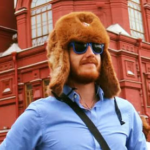
A selfie portrait on Janitzio
Walking back down past the millions of souvenirs for sale on Janitzio
Goodbye Janitzio
Conclusion
Do I recommend doing this roadtrip? Absolutely!
While it is nice driving around long distances in Mexico (and probably any country), after a while, the hills and roads and sight of trucks and cars just becomes monotonous.
But for a few hours at a time, it’s really beautiful.
Morelia, Patzcuaro, and Janitzio all offer an amazing view of Mexico that most foreign tourists will almost always pass up.
After our boat returned at the docks, I spent the rest of the night driving to the city of Ocotlan (towards Guadalajara), where I checked into my hotel, and passed out 🙂
Since 2010, Leonidas has been an incredible Web Developer, and amazing Digital Marketer. He is the author of various exciting case studies in digital marketing, most notably in Pay Per Call Marketing.
Make sure to read the case studies to make your life so much better!