
“Your mind is for having ideas, not holding them.”
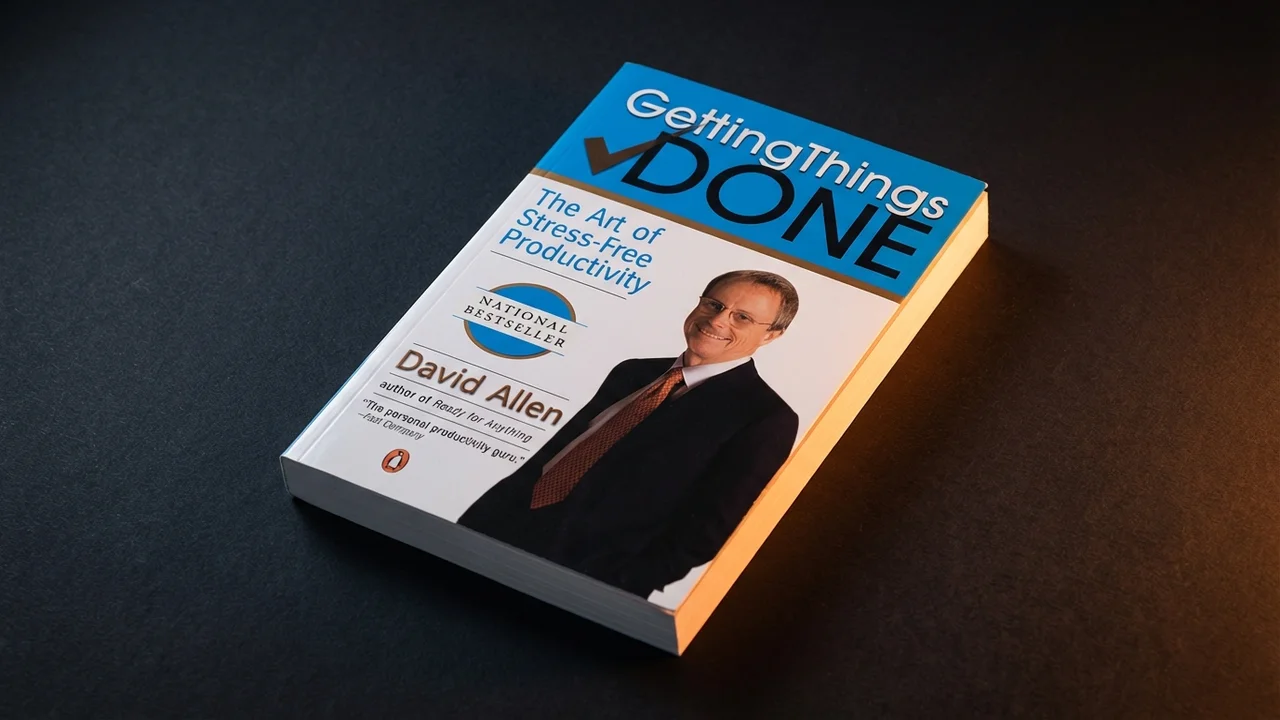
This book is fluffy like a cloud. It’s full of fluff content that could be condensed into a much smaller book. The author needed to fill 280+ pages, so this is what you get.
Furthermore, Getting Things Done was not an easy book to “get done” at all. In fact, I started reading it twice, and both times could only crawl up to 30% of it before moving onto more interesting books. I’m not alone in this, with two other friends barely getting through the first 20% of Getting Things Done.
As a book, it’s boring, and like I said, fluffy.
So why am I even reviewing it? Because the IDEAS inside are genuinely useful. The problem is that David Allen took a brilliant system and wrapped it in the most tedious delivery imaginable. It’s like getting a Ferrari engine inside a cardboard box — you have to dig through a lot of packing material to find the good stuff.
Why GTD Became a Thing
Here’s the thing — before Getting Things Done came along, there really wasn’t a widely adopted personal productivity framework. Sure, people had to-do lists and Franklin planners, but nobody had built a COMPLETE system for capturing and organizing everything in your life.
David Allen did. And that’s why this book has sold millions of copies since 2001 and created an almost cult-like following. The “GTD community” is a real thing — forums, apps, podcasts, all dedicated to this one methodology.
I get it. The core principles are powerful. But the book itself? It reads like a corporate training manual that desperately needed an editor with a red pen.
The Concept
But as a concept and guideline, it’s very good. Concepts such as completely dumping (from the mind) all of the things you need to do (or want to do) onto paper is quite useful. Along with mandatory weekly reviews and reorganizations, prioritizing tasks more efficiently, and the two-minute rule (if you can do it in two minutes, do it now!).
The brain dump is the part that stuck with me the most. Allen argues that your brain is terrible at remembering things — and he’s right. I used to keep dozens of tasks, ideas, and commitments floating around in my head, and the mental load was EXHAUSTING. Writing everything down — every single thing, no matter how small — was genuinely liberating.
The two-minute rule is the other gem. If something takes less than two minutes to complete, just do it immediately. Don’t file it, don’t schedule it, don’t add it to a list. Just knock it out. This alone probably saved me hours of mental overhead from constantly reorganizing tiny tasks.
What I Actually Applied
I’ll be honest — I didn’t implement the full GTD system. Not even close. The complete methodology involves multiple lists, contexts, reference files, a tickler system (yes, that’s what it’s called), and weekly reviews that feel like a part-time job.
What I DID take away was a handful of principles that genuinely improved how I work:
1. Get it out of your head. ALL of it. Every project, every task, every “I should probably do that someday” thought — write it down in one trusted system.
2. The two-minute rule. Game changer for clearing small stuff.
3. Define the next physical action. Don’t write “plan vacation” on your to-do list. Write “search flights to Lisbon for October.” Make it concrete and actionable.
4. Weekly reviews. Even if you don’t do the full GTD version, sitting down once a week to review your commitments keeps things from falling through the cracks.
These four principles are probably worth the price of the book. The problem is you have to wade through 250 pages of corporate jargon and repetitive examples to extract them.
The Delivery Problem
Yet in book format, you feel like you are falling asleep reading a boring school textbook. This should be taught in a video product or from seminars, with help from people.
And that’s not just my opinion — GTD actually WORKS better as a seminar or workshop. Allen built a massive consulting business around teaching this system in person, and I suspect that’s where the magic really happens. In a live setting, someone can walk you through the setup, answer your questions, and hold you accountable. In book form, it’s just walls of text describing a process that desperately needs to be SHOWN, not told.
It’s a similar problem I’ve noticed with other systems-based books. Some ideas are inherently practical — they need demonstration, not description. You wouldn’t learn to cook by reading a textbook with no pictures, would you?
Is It Still Relevant?
The original Getting Things Done was published in 2001, and a lot of the specific examples feel dated. Allen talks about physical inboxes, paper filing systems, and office workflows that belong to a pre-smartphone era.
There’s a revised edition from 2015 that supposedly updates things for the digital age, but the core system was designed around physical paper and folders. Today we have apps like Todoist, Notion, and Obsidian that handle most of the organizational heavy lifting automatically. The PRINCIPLES are timeless, but the implementation details need a serious modernization.
Final Thoughts
If you want to learn the concepts, look for videos on GTD on YouTube, or simply find a summary of the book. I bought Cheatsheet: Master Getting Things Done in 2 Minutes, and got all of the concepts needed from there.
The irony of Getting Things Done is thick — a book about productivity that is itself incredibly unproductive with the reader’s time. The concepts are A-tier. The execution is a slog. If Allen had written this as a 60-page handbook instead of a 280-page tome, it would be on every entrepreneur’s must-read list.
Instead, it’s the kind of book everyone recommends but few actually finish. Including me — twice.
Book: 2/5
Thanks for reading.
— Leonidas

I agree , I felt the same way too, I couldn’t get into it without falling asleep. But last year, I heard good things about another version called “Getting Things Done Fast”, and I found that it very interesting. In it, he goes into the psychological reasoning behind the method.. I had some a-ha moments which increased my understanding of why the book seems so anal. Unfortunately the GTD Fast book is out of print and apparently the remaining copies are very expensive…. you should be able to find the audiobook “somewhere” lol …. give it a try.
Hey Andrew, I’ll try to find the ‘GTD:Fast’ material somewhere.
I couldn’t find the audiobook, but did find this 6 minute summary of GTD on youtube: https://www.youtube.com/watch?v=JhmZhTXN4as
Thanks again Andrew 🙂