

“The Net Generation has arrived. And they’re transforming every institution of modern life — from the workplace to the marketplace, from politics to education.”
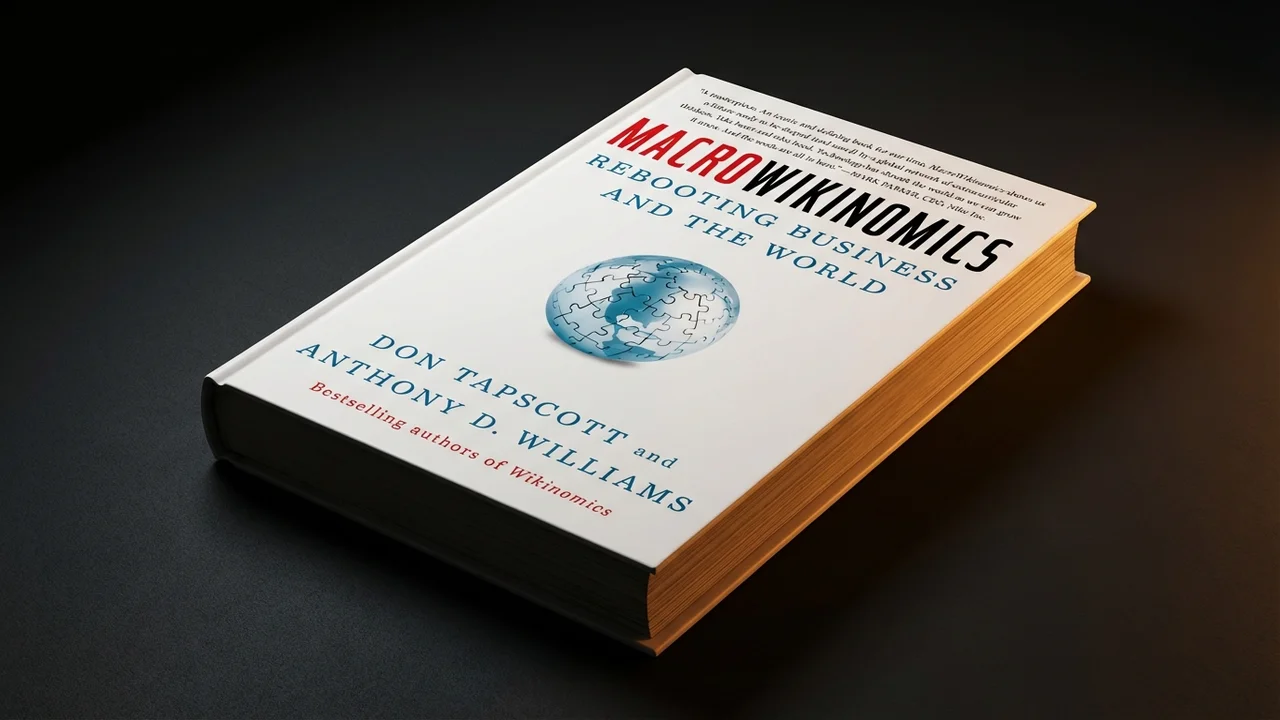
Can you build a billion-dollar business by letting OTHER people do the innovating? That’s essentially the thesis of Macrowikinomics — and Don Tapscott and Anthony Williams make a surprisingly convincing case for it.
If you’ve read their first book, Wikinomics, this is the expanded sequel. The original focused on how mass collaboration was reshaping business. Macrowikinomics takes that idea and applies it to EVERYTHING — healthcare, education, government, energy, media, and the global economy. The scope is ambitious, and for the most part, it delivers.
The core argument is straightforward. The old industrial-era model of closed, hierarchical institutions is dying. In its place, a new model built on transparency, openness, and collaboration is emerging — powered by the internet and fueled by a generation that grew up with it.
The New Business Model
This is where the book really clicked for me. Tapscott and Williams propose that the smartest businesses aren’t trying to do everything in-house. Instead, they’re building open-ended innovative platforms for human capital to develop ideas for them.
The best example? Apple and the App Store. Apple didn’t build a million apps. They built the PLATFORM, and then let external developers create the products. Apple takes a cut, developers get distribution, and customers get an insane variety of tools. Everyone wins.
But it goes way beyond Apple. Think about how YouTube lets creators build entire media empires on Google’s infrastructure. Think about how Amazon’s marketplace lets third-party sellers move billions in products. The pattern is the same — build the stage, let the world perform on it, and collect the ticket revenue.
As someone who has spent years building businesses online, this resonated deeply. The most scalable thing you can do is create a system where OTHER people add value to your platform. That’s not laziness — it’s leverage.
Beyond Business — Fixing the World
Where Macrowikinomics gets really ambitious is when it moves beyond the corporate world. Tapscott and Williams argue that the same principles of openness and collaboration can help solve some of humanity’s most stubborn problems — third-world violence, pollution, energy demand, failing education systems, and broken healthcare.
Bold claims? Absolutely. But they back them up with real examples.
They talk about open-source scientific research where thousands of researchers worldwide collaborate on problems that no single institution could tackle alone. They discuss how transparent government data can reduce corruption and empower citizens. They show how collaborative platforms are being used to coordinate disaster relief faster than any bureaucracy ever could.
The idea is that when you remove the barriers — when you let information flow freely and let people self-organize around problems — you unlock a kind of collective intelligence that no top-down institution can match.
Do I think openness alone will fix the world’s biggest problems? Not entirely. But I do think the authors are onto something fundamental about how solutions will SCALE in the 21st century.
Collaboration Is the New Competition
One of my favorite concepts in the book is the idea that collaboration is becoming more valuable than competition. This sounds counterintuitive, especially if you’re an entrepreneur trained to think in terms of market share and competitive advantage.
But think about it. The companies dominating today aren’t the ones hoarding secrets — they’re the ones building ecosystems. They’re inviting the outside world in. They’re letting the intellectual capital of external contributors develop products and solutions that their internal teams never would have imagined.
Tapscott and Williams put it plainly: let the outside world collaborate together on solving problems, and your organization becomes the hub that benefits from all that activity. Transparency, openness, collaboration — these aren’t just nice values. They’re a STRATEGY.
I’ve seen this play out in the internet marketing world too. The marketers who share their knowledge freely — through blogs, YouTube channels, podcasts — end up building the biggest audiences and the most trust. The ones who guard every tactic like a trade secret? They get left behind.
Where It Falls Short
Now, the book isn’t perfect. It leans heavily optimistic — almost utopian at times. Tapscott and Williams genuinely believe that if we just open things up, the crowd will deliver better outcomes than the old guard. And sometimes that’s true. But they gloss over some real complications.
What about misinformation spreading through open platforms? What about the exploitation of free labor disguised as “collaboration”? What about the fact that most people DON’T contribute to open platforms — they just consume? The 1% rule is a real thing, and the authors barely address it.
The book also feels dated in spots. It was written in 2010, and some of the examples and predictions haven’t aged well. The optimism about social media as a force for democratic participation looks a lot more complicated now than it did then.
That said, the core framework still holds up. The shift toward openness and collaboration is REAL — it just comes with more trade-offs than the authors were willing to admit.
The Limitations Are Endless
Here’s what I kept coming back to while reading this. The opportunities that Tapscott and Williams describe are genuinely limitless. Open innovation, crowd-sourced problem solving, platform-based business models — the potential applications expand every year as more of the world comes online.
But the limitations are also endless. Not every problem can be crowd-sourced. Not every organization can or should be transparent. And not every collaboration produces something useful. The real skill isn’t just opening the doors — it’s knowing WHICH doors to open and how to curate what comes through them.
Final Thoughts
Despite its flaws, Macrowikinomics expanded my perspective on what the new socially-inventive collaboration between people and organizations can offer. It made me think differently about how businesses scale, how governments could operate, and how global problems might actually get solved.
If you’re interested in innovation, technology, or how the internet is reshaping society, this is worth your time. It’s not a perfect book, but it’s an important one — especially if you’re building anything online.
4/5 — a thought-provoking read that gets the big picture right, even if it oversimplifies some of the details.
Thanks for reading.
— Leonidas
