
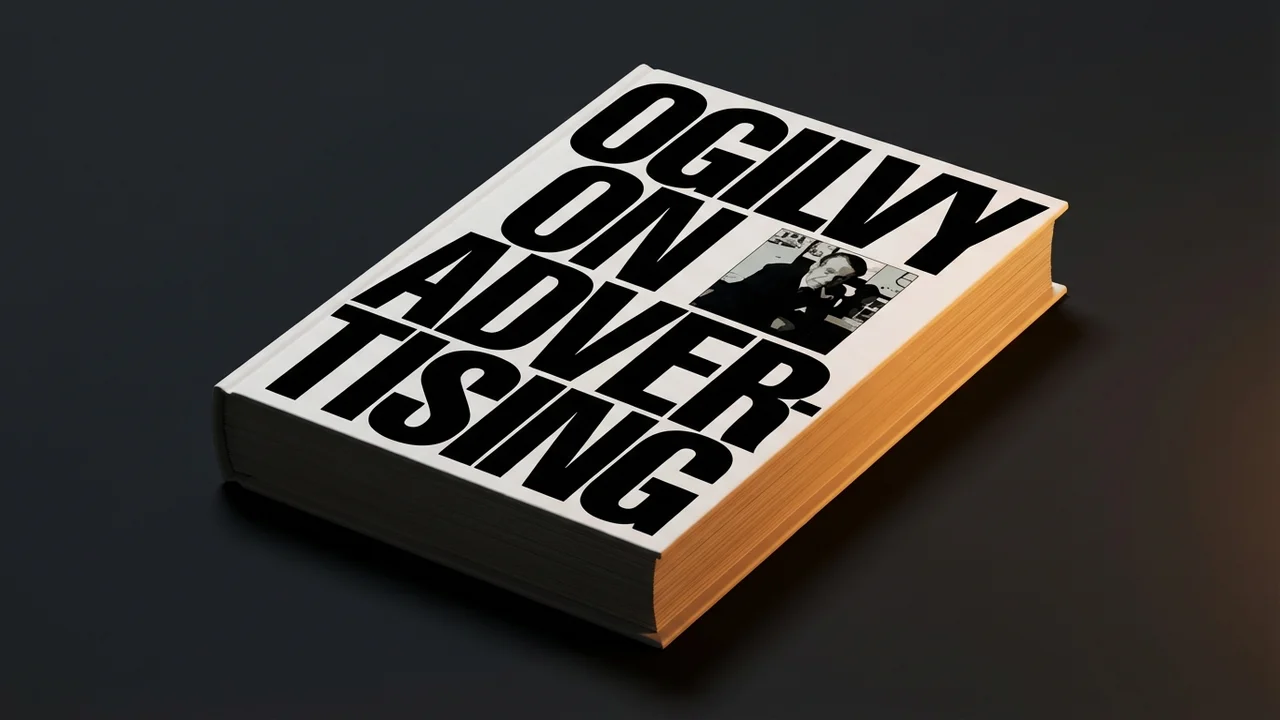

“The consumer isn’t a moron. She is your wife.”
This dude is one of the inspirations for the show Mad Men. Mad Men was a show about the advertising geniuses who had offices on Madison Avenue in New York City.
Nonetheless, this book isn’t a fictional tale, but rather some of the most in-depth knowledge learned from over 40 years of being in the advertising business, circa 1940–1983 (I believe).
The main focus of this book? How to reach your audience and SELL!
What I love about Ogilvy is that he doesn’t theorize. He speaks from DECADES of running one of the most successful ad agencies in the world. This isn’t some marketing professor lecturing from a textbook — this is a guy who built campaigns that moved millions of dollars in product and lived to tell you exactly how he did it.
On Big Ideas
Here are some tips from Ogilvy on big ideas:
1. Did it make me gasp when I first saw it?
2. Do I wish I had thought of it myself?
3. Is it unique?
4. Does it fit the strategy to perfection?
5. Could it be used for 30 years?
Essentially, make the product the hero. If you can’t make it the hero, that means your writing or content sucks. The writer must be personally interested in the product to promote it.
Your message should be to a moving market. Meaning, your message should apply to the customers now, and to the customers in the future.
Also, rarely trust someone who bases their judgements and decisions on intuition. Unless they are educated, have experience, and know something you don’t, intuition is rarely a good medium to go by. Look at the data.
That last point is one I’ve come back to again and again. When I first got into internet marketing, I ran campaigns based on gut feeling — and lost money on most of them. It wasn’t until I started obsessing over the numbers that things clicked. Ogilvy was preaching data-driven marketing before the term even existed.
On Visuals and Headlines
Always include an image to back your product. People are very visual. Once you do, make sure to include a caption to your image. Ensure the caption is BELOW the image. Always know the triggers that get your audience.
“Do you want masterpieces? Do you want glowing things that can be framed by copywriters? Or do you want to see the god-damned sales curve stop moving down and start moving up? If it doesn’t sell, it isn’t creative.”
You don’t need to be creative. Mozart said, “I have never made the slightest effort to compose anything original.”
While advertising, ensure your HEADLINE sells. Give the reader the benefit in the headline. Provide the reader with helpful information. Use LONG headlines, and put them in quotes. Asking a question in your headline increases engagement. Also, do NOT put a period in your headline.
Think about how relevant this still is. Every landing page, every email subject line, every YouTube thumbnail — the headline does the heavy lifting. Ogilvy figured this out in the 1950s, and it hasn’t changed one bit.
On Illustrations
1. Focus on the subject or story of your image.
2. Build curiosity with your image.
3. If there is no story to tell, the packaging must be amazing.
4. Before and after imagery works well.
5. Drawings are effective.
6. Use of known characters to your audience boosts recall.
7. Focus on one person.
8. Faces bigger than life repel readers.
9. Historical topics are boring to most people.
10. Subjects that interest you may not interest consumers.
11. Movie-goers are more interested in characters of the same gender than of the opposite gender.
12. Colour ads are more memorable.
13. For cooking ads, show the end result, rather than the ingredients.
On Copywriting
When writing copy, write it on a 1-to-1 basis, rather than a 1-to-many. Second person, singular (you). Also, focus on short sentences and short paragraphs.
Avoid analogies (something is like something else), because most people will not get them. And don’t boast “our product is the best in the world.”
Testimonials from EXPERTS provide major social proof, but avoid celebrity testimonials. Readers remember the celebrity, but not the product.
Include the price of your product when appropriate.
If you HIRE someone to make your ads for you, get the ad agency to sign their name on the ad. This will ensure TOP quality from the advertiser.
I remember reading this section and immediately thinking about every ad I’d ever written. How many times did I write “we’re the best” instead of showing PROOF? How many times did I skip the price because I was scared it would drive people away? Ogilvy’s advice here is uncomfortable because it forces you to confront your own lazy habits.
On Keeping Prospects Engaged
Here are 4 ways to keep your prospects engaged and willing to buy using ad copy:
1. Limited edition
2. Limited supply
3. Last time at this price
4. Special price for promptness
When making a commercial, 20 seconds must be dedicated to telling the prospect HOW to order. TV techniques that have been proven to sell include: slices of life, user testimonials, and talking heads. Most importantly, include the BENEFITS!
Ultimately, build the most “sharply defined” image of your company. Niche yourself.
If you’ve ever studied Cialdini’s work on scarcity and urgency — which I reviewed in my write-up on Influence — you’ll see that Ogilvy was already applying those principles decades before they had a name. Limited supply, time pressure, exclusivity. These aren’t tricks that expire. They work because they tap into how humans are WIRED.
“There is an inherent drama in every product. Our #1 job is to dig for it and capitalize on it.”
“Steep yourself in your subject, work like hell, and love, honor, and obey your hunches.”
Final Thoughts
Ogilvy makes numerous references to the time of writing this book, which includes communism in Eastern Europe, the just-growing Asian markets, and other dated references, which clearly indicates it’s an old book.
NONETHELESS, experience trumps age a lot of the time, and this book is a classic for all individuals in the marketing game.
If the person you hire hasn’t read marketing books, then you should avoid them altogether.
What struck me most is how little the fundamentals have changed. The platforms are different — Ogilvy was writing about magazine spreads and TV spots, and we’re dealing with Facebook ads and YouTube pre-rolls — but the psychology underneath is IDENTICAL. Write a killer headline. Lead with benefits. Use proof. Respect your audience’s intelligence. That’s the whole game.
If you’re in marketing or any form of persuasion-based business, this is required reading. Period.
Recommended for marketing majors. 4/5
Thanks for reading.
— Leonidas
