

“The Internet is among the few things humans have built that they don’t truly understand. What began as a means of electronic information transmission has transformed into an omnipresent and endlessly multifaceted outlet for human energy and expression.”
Apparently, it is more universally transparent, blazing fast, and overloaded with information. Among other things.
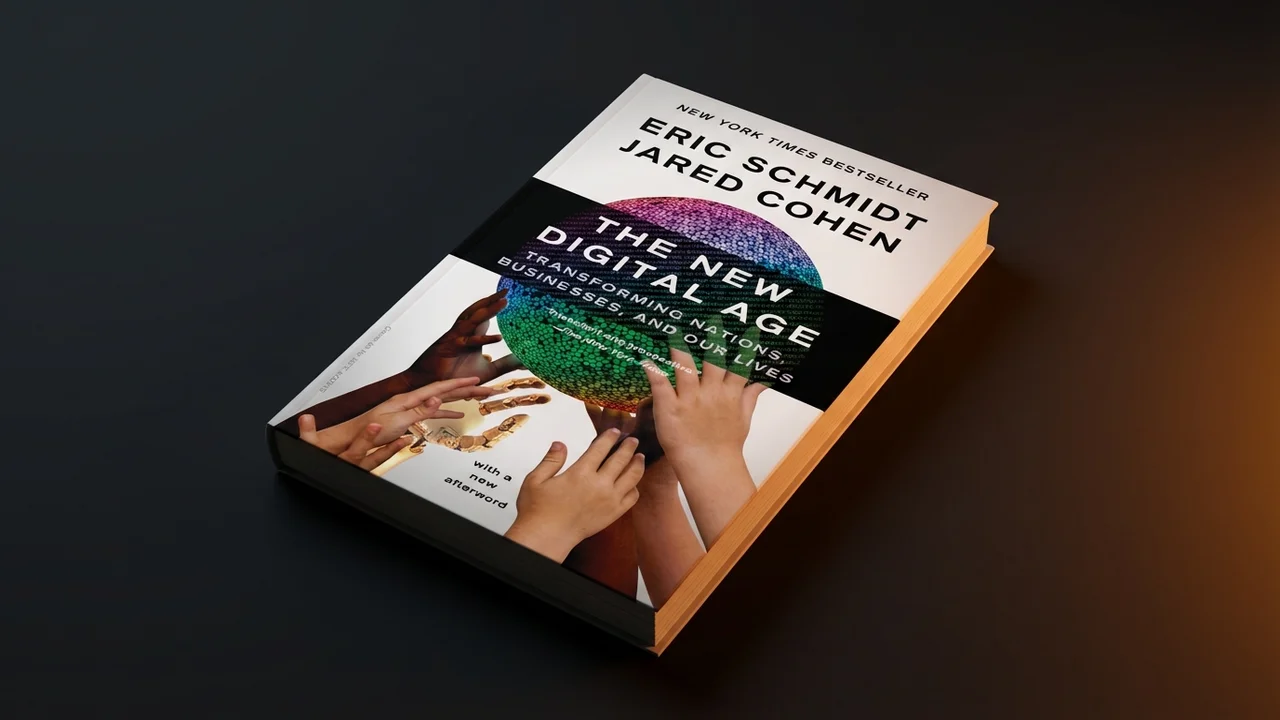
The New Digital Age doesn’t focus on gadgets and gizmos, but rather on how the internet is shaping our reality, the reality of our friends, cities, governments, nations, and even the bad guys.
This book was written by the executive chairman of Google and the director of Google Ideas. These are two people who sit at the absolute CENTER of the digital universe — they don’t just observe the internet, they help build and steer it. So when they make predictions about where technology is headed, it carries a bit more weight than your average futurist pundit on a TED stage.
Identity in the Cloud
We delve deep into how our personal identities are now on the cloud, being tracked, documented, and archived practically 24/7. We are forever in the cloud. Couple that with government agencies, companies, and various other institutions having access to our private information, and nothing is absolutely private anymore. In some cases, governments can request full access to our online information.
But this lack of anonymity from the government is paradoxical, because the internet also provides anonymity in other degrees — such as sharing information under various aliases to our fellow peers, as well as inciting groups to enroll in certain political or social causes, such as saving the dolphins or “humanizing” animal skinning.
Think about that for a second. The same technology that lets a government track your every move ALSO lets a dissident organize a protest under a fake name from a coffee shop. The internet gives and takes privacy in equal measure — it just depends on who’s using it and why.
What struck me most about this section is how relevant it still is. We’re living in an era where your digital footprint is essentially permanent. Every tweet, every search, every photo — it’s all archived somewhere. Schmidt and Cohen saw this coming years ago, and their analysis of the tension between transparency and anonymity is one of the strongest parts of the book.
Speed and Crisis Response
The speed at which information is sent and received allows logistics during a crisis situation to be asserted almost the following day. After the Haiti earthquake, internet companies quickly set up cell towers, allowing the entire nation free calls so people could contact relatives or even request emergency support from under rubble.
This is the kind of stuff that genuinely gives me hope about technology. Forget the latest social media drama — when an earthquake levels a city and people are LITERALLY trapped underground, the internet becomes a lifeline. Not a distraction, not an advertising platform — an actual tool for survival.
The authors give several examples like this, where connectivity during natural disasters and humanitarian crises made the difference between life and death. A powerful reminder that our most trivial technology can also coordinate rescue operations across entire nations.
Cyber Security and Cyber Warfare
On the plus side, terrorism is quickly being subverted due to the mistakes terrorists make online. Cyber security can track a lot of these individuals relatively quickly and very efficiently. Hence, one of the reasons Osama bin Laden was tracked down.
On the downside, the threat of disabling infrastructure is a reality we face.
This level of threat comes from international governments, such as the collaboration between the U.S. and Israel to create the Stuxnet virus, which took down one of Iran’s nuclear plants. Cyber attacks from nations such as China to steal money and corporate/government secrets are quickly on the rise. They are not holding back from stealing valuable information while avoiding actual physical warfare.
The war in cyberspace can potentially affect even financial institutions, as well as the financial markets.
This chapter was eye-opening. We tend to think of war as tanks and soldiers, but Schmidt and Cohen make a compelling case that the NEXT major conflict between world powers might not involve a single bullet. Why invade a country when you can shut down its power grid, drain its banks, and cripple its communications from a server room thousands of miles away?
And here’s the scary part — this isn’t science fiction. Stuxnet ACTUALLY happened. Nation-states are already engaged in cyber warfare. The battleground has shifted, and most people don’t realize it.
The Internet for the Betterment of Mankind
Ultimately, with increased regulations, security measures, and various ethical controls, the internet is here for the betterment of mankind. We will be able to more quickly catch the bad people, spread awareness of worthy causes, and educate the masses. The speed at which this is happening is revolutionary, and The New Digital Age makes some very calculated predictions.
After all, Google knows everything you and I, and everyone else, is thinking. So they can predict where things will go, relatively speaking.
I appreciate the optimism here, and for the most part, I share it. The internet has connected BILLIONS of people who previously had no voice. A kid in a village in Kenya can access the same information as a student at Harvard. That’s unprecedented in human history. Schmidt and Cohen understand this deeply, and their enthusiasm for the democratization of knowledge is contagious.
Final Thoughts
Now, is this book perfect? No. There are moments where it reads more like a Google PR document than an objective analysis. Schmidt and Cohen are clearly bullish on tech companies being a force for good, and they sometimes gloss over the darker implications of corporate surveillance and data monopolies. Given who they work for, that’s not exactly surprising.
The writing can also get a bit dry in places — this isn’t Michael Lewis making you laugh while explaining complex systems. It’s more academic in tone, which may lose some readers in the middle chapters.
But as a big-picture overview of how the internet is reshaping EVERYTHING — from personal identity to geopolitics to warfare — it’s genuinely valuable. The predictions about cyber warfare, digital identity, and the role of connectivity in crisis response were ahead of their time, and many have already come true.
If you’re interested in technology, geopolitics, or just want to understand the forces shaping the world you live in, The New Digital Age is worth your time. 3.5/5
Thanks for reading.
— Leonidas
