I had already been to Moscow and St. Petersburg, but Russia is so absurdly large that the western capitals barely count as “Russia” when you stand on the Pacific. The flight from Manila took a full day with two layovers in China (Guangzhou, then Changchun), which is part of the point: Vladivostok is closer to Tokyo and Pyongyang than to Moscow. Time-zone-wise it sits seven hours ahead of the capital.
The city feels like San Francisco crossed with a Russian naval base. Steep hills drop straight into the harbor, military ships are parked downtown, and every street sign is in Cyrillic. You walk a lot, and your quads pay for it.
A Very Quick History
The Russians took this spot from Qing China in 1860, two years after Count Nikolay Muravyov-Amursky negotiated the Treaty of Aigun (which transferred the entire Russian Far East from China). Before that it was a small harbor used by Korean, Chinese, Japanese, and Indigenous traders. The Russians named it Vladivostok, “Ruler of the East”.
For the next sixty years the city grew as the Pacific terminus of the Trans-Siberian Railway, completed all the way to here in 1916. During the Russian Civil War (1918-1922), Vladivostok was the last city to fall to the Bolsheviks. American, British, Japanese, and other Allied forces actually occupied the port, supplying the White Tsarists against the Reds, before pulling out and leaving the Communists to win.
Stalin then deported most of the Asian population (Koreans especially, in 1937) to flatten the city’s demographics. Vladivostok was completely closed to foreigners from 1958 until 1991 because of its naval base. The 1990s brought mafia chaos. Then in 2012 Russia hosted the APEC summit here, dumping roughly $20 billion in federal money into new bridges, the rebuilt airport, a new university campus on Russky Island, and a coat of paint over everything visible from the bay. Most of the photos below are from that post-APEC city.
Arriving and Walking Around
Arrival at Vladivostok International Airport, opened in this current form in 2012 for the APEC summit
The Rodina cinema rotunda watches traffic crawl through the downtown intersection
Pigeons gather on a quiet square framed by 19th century merchant houses
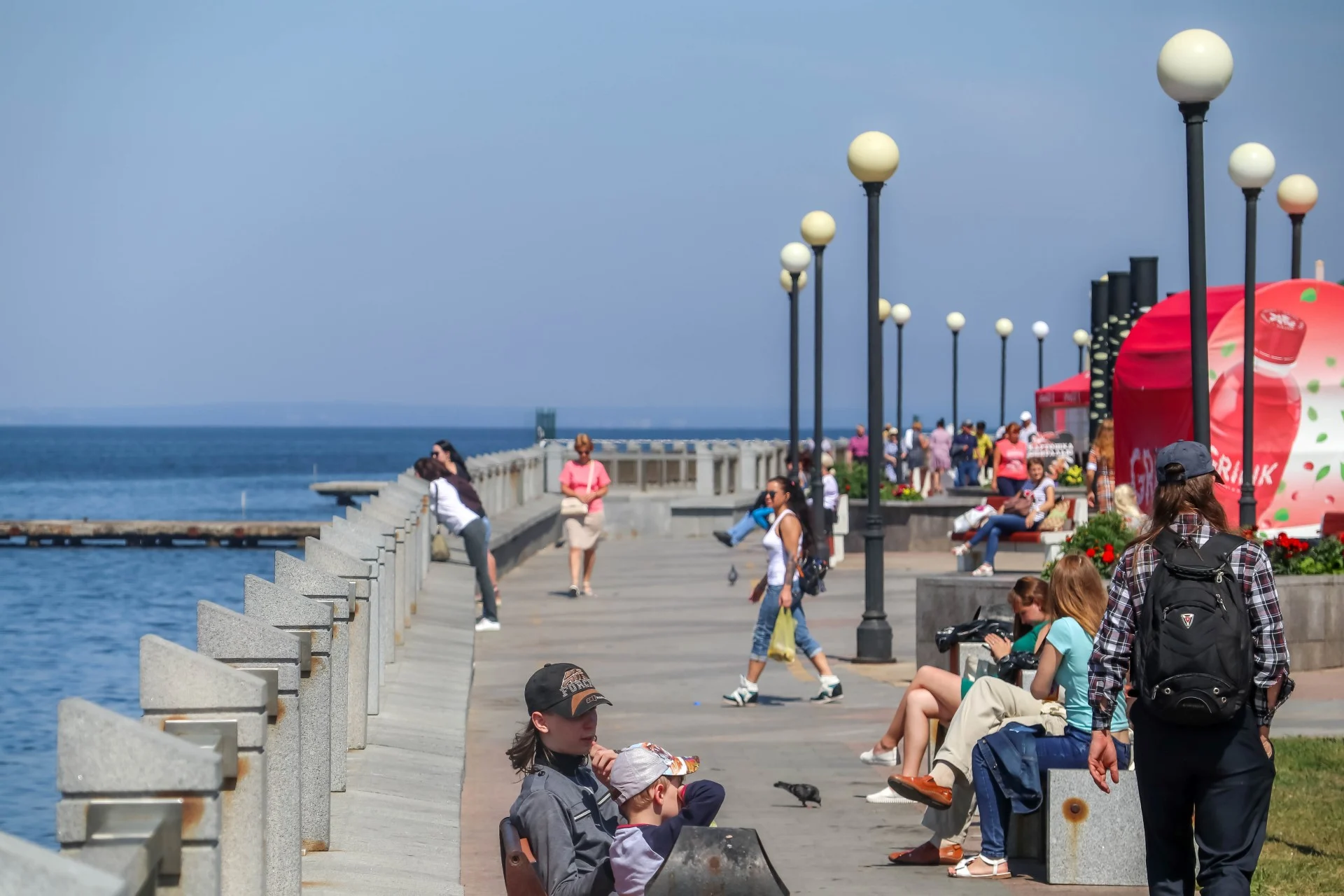
Sport Harbor promenade on a Sunday afternoon, locals out for the rare warm weather
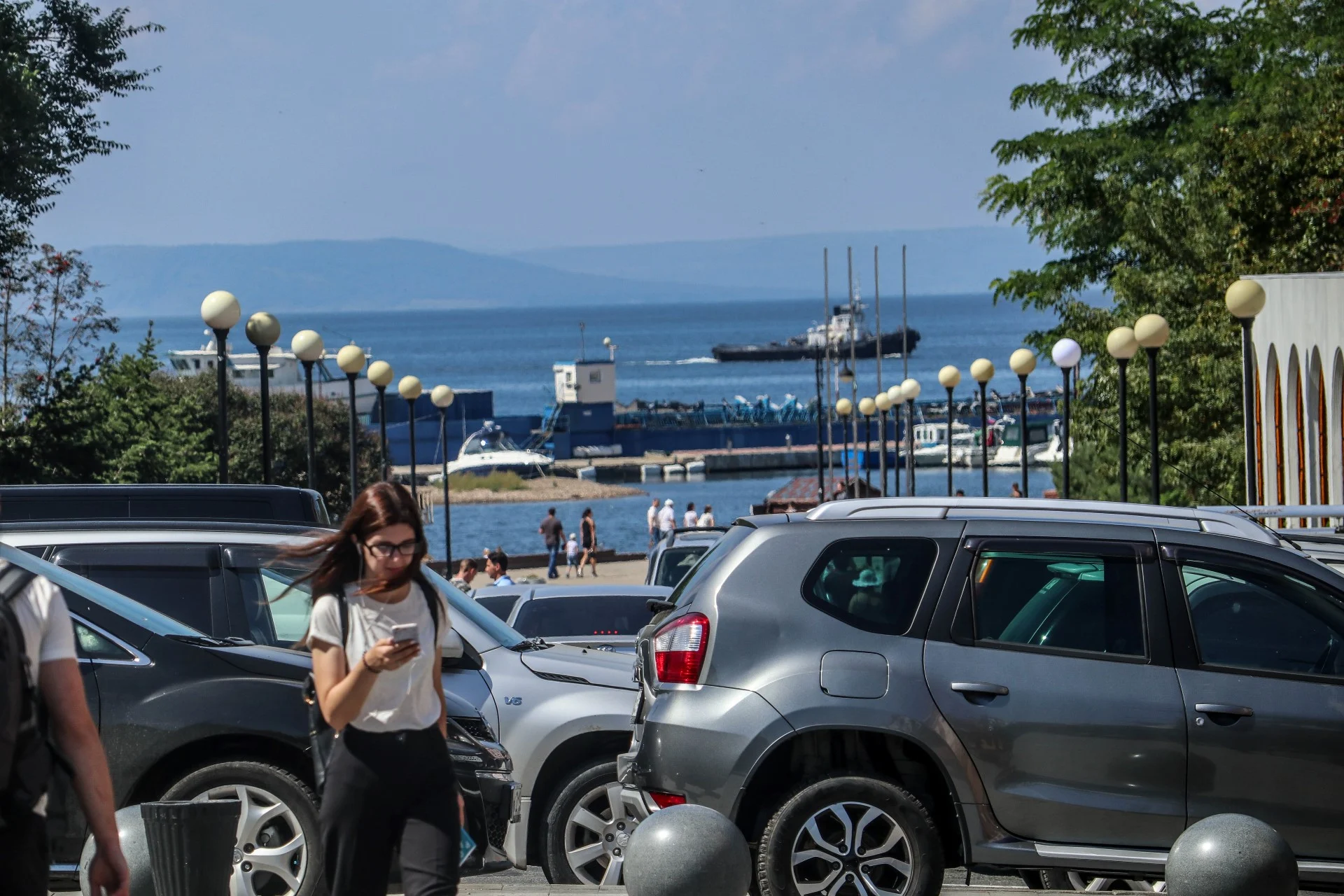
One of the city’s notoriously steep harborfront streets, San Francisco of the Far East
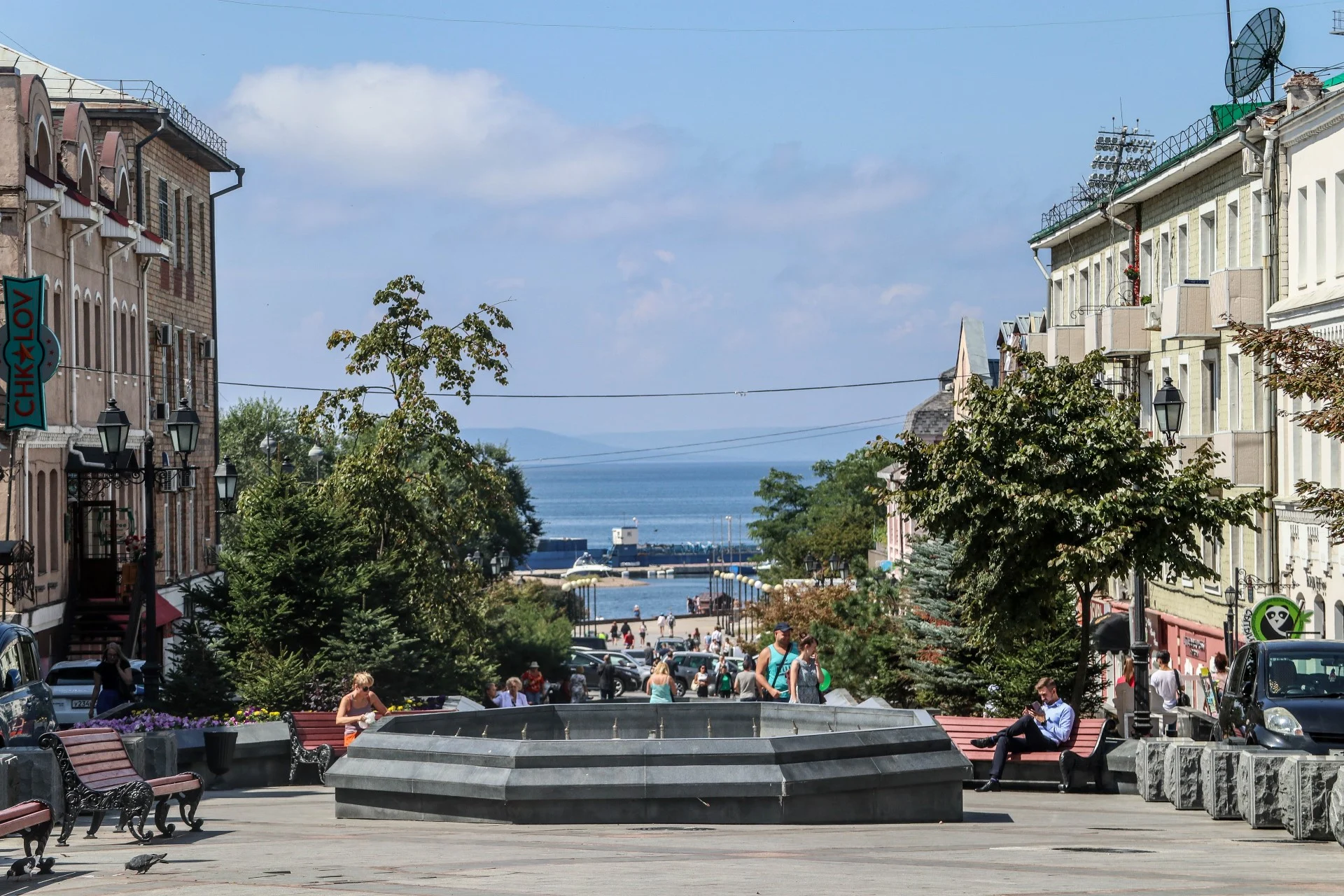
Admiral Fokin Street, the main pedestrian drag, runs down toward the bay
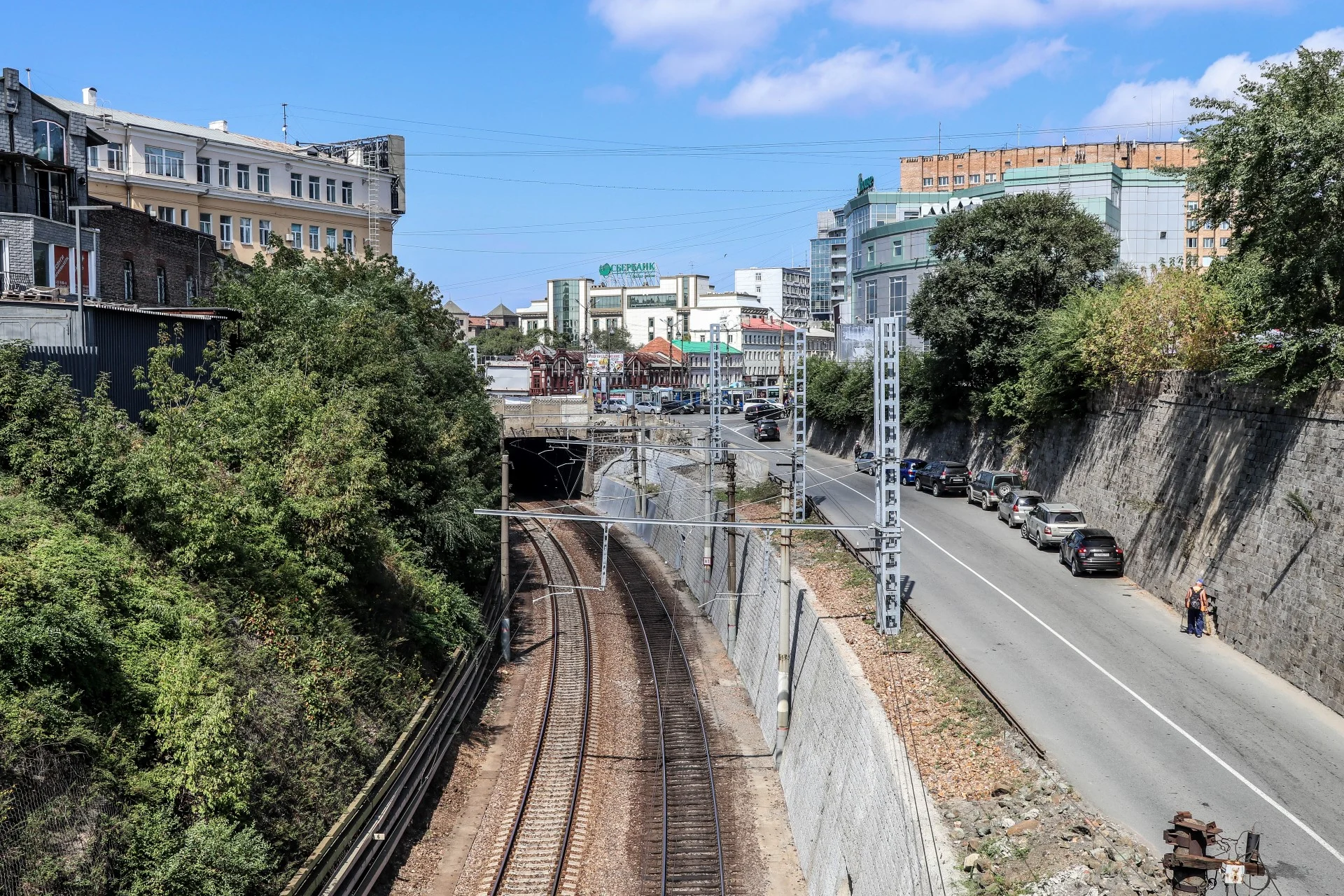
Trans-Siberian tracks emerge from a tunnel cut through the city’s hills
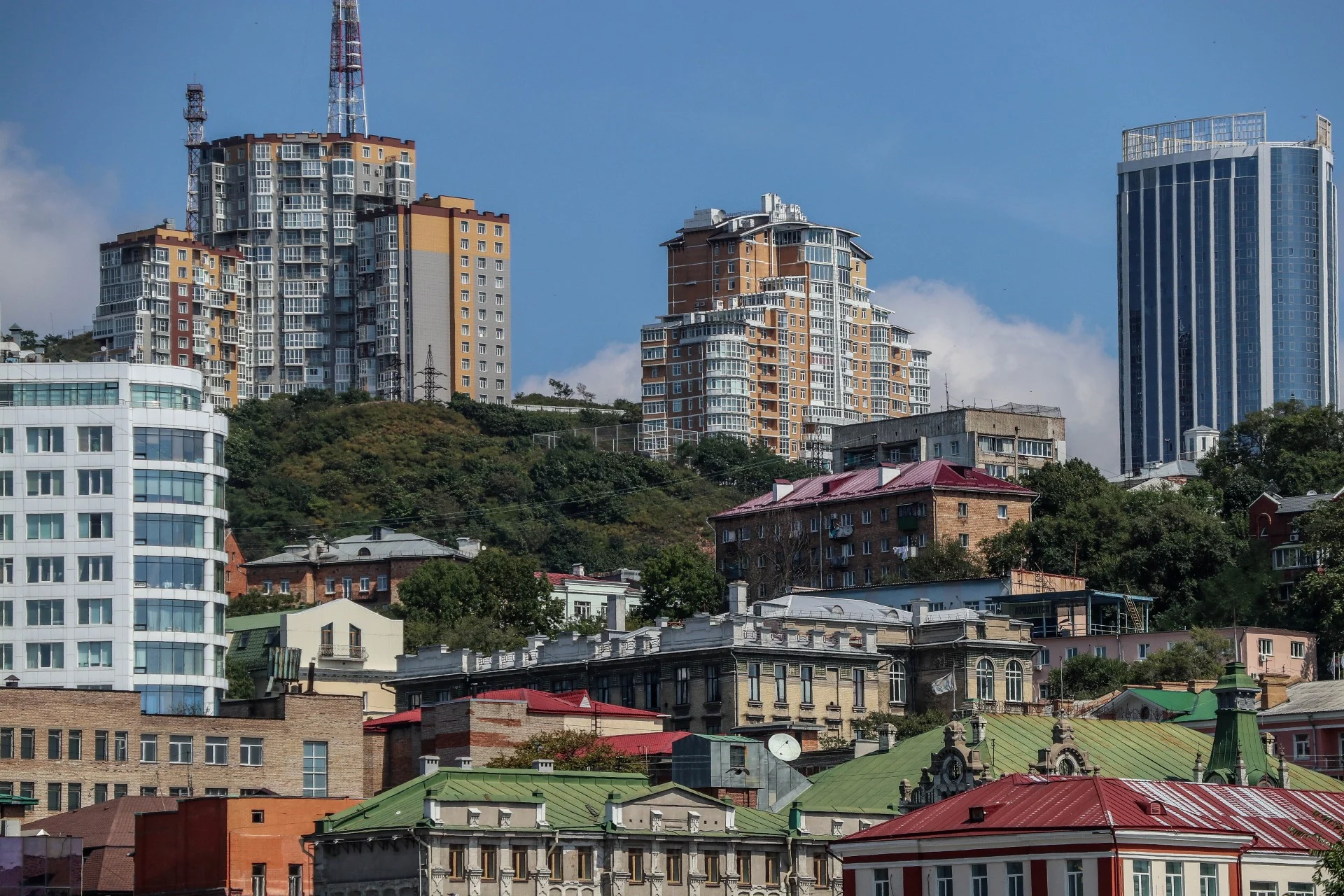
Soviet-era apartment blocks rise behind the city’s modernist forms
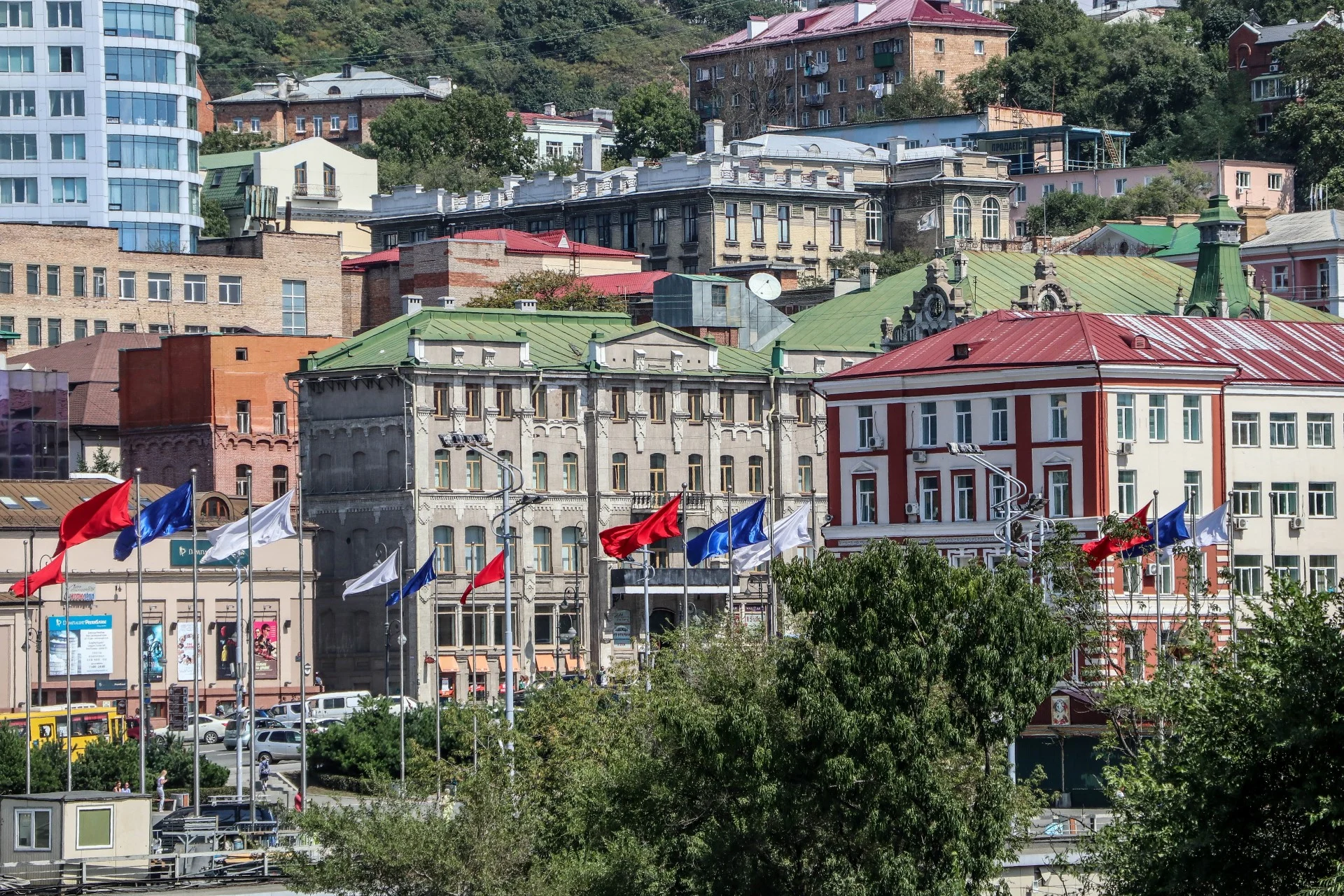
Ornate 19th-century facades along the lower town, with houses climbing the hill above
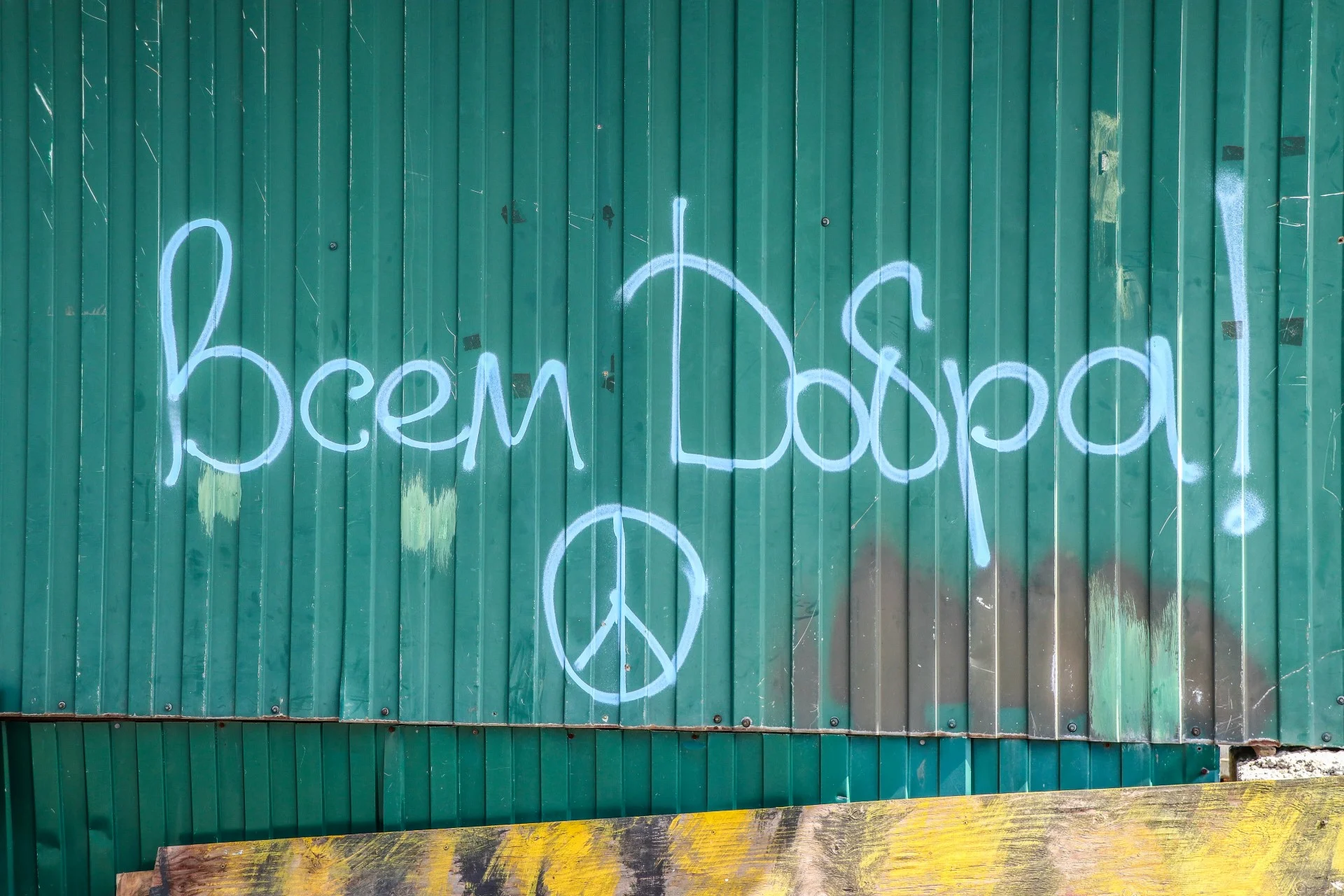
Street graffiti reading ‘Goodness to all’ with a peace sign
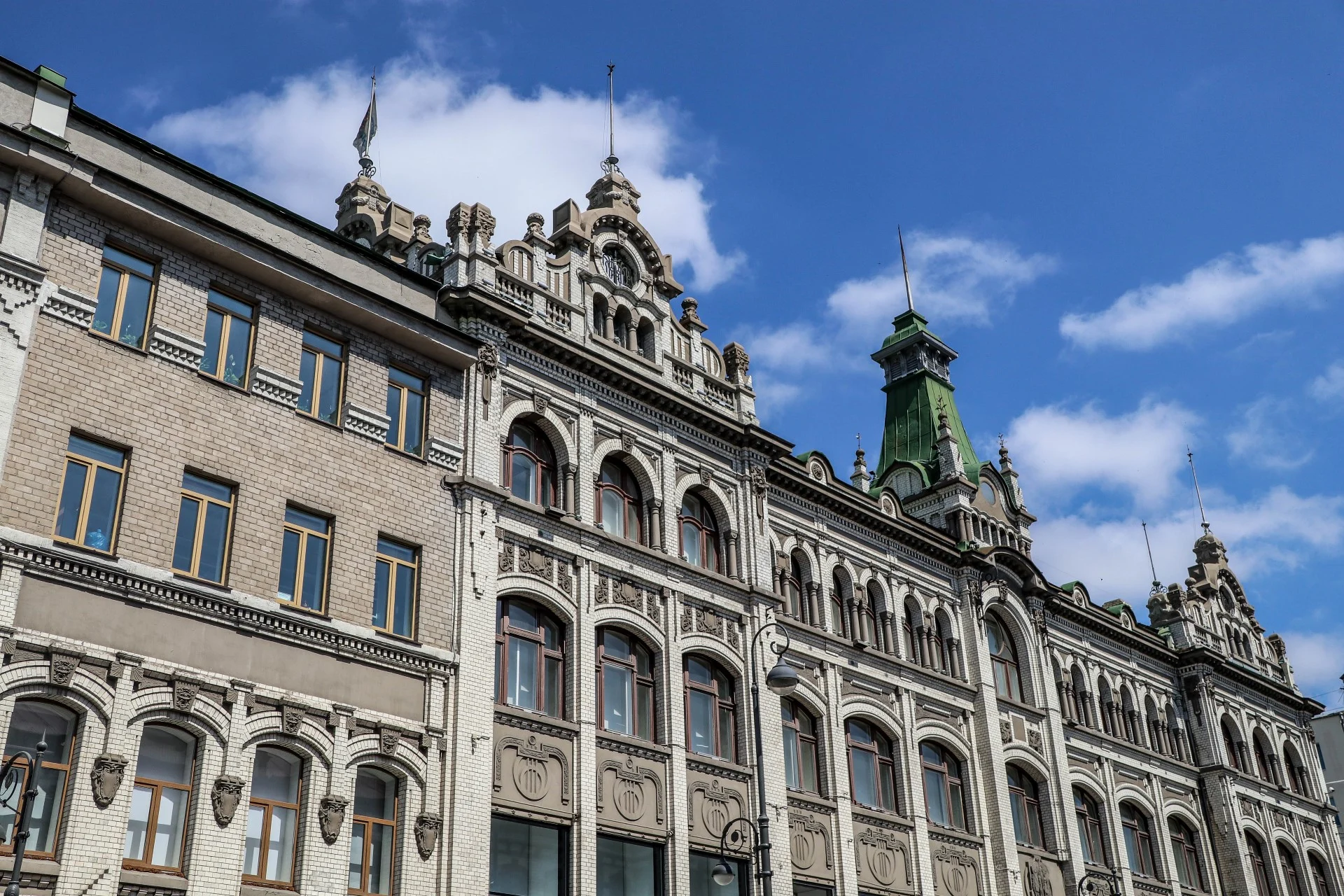
An ornate 19th century commercial building in the downtown core
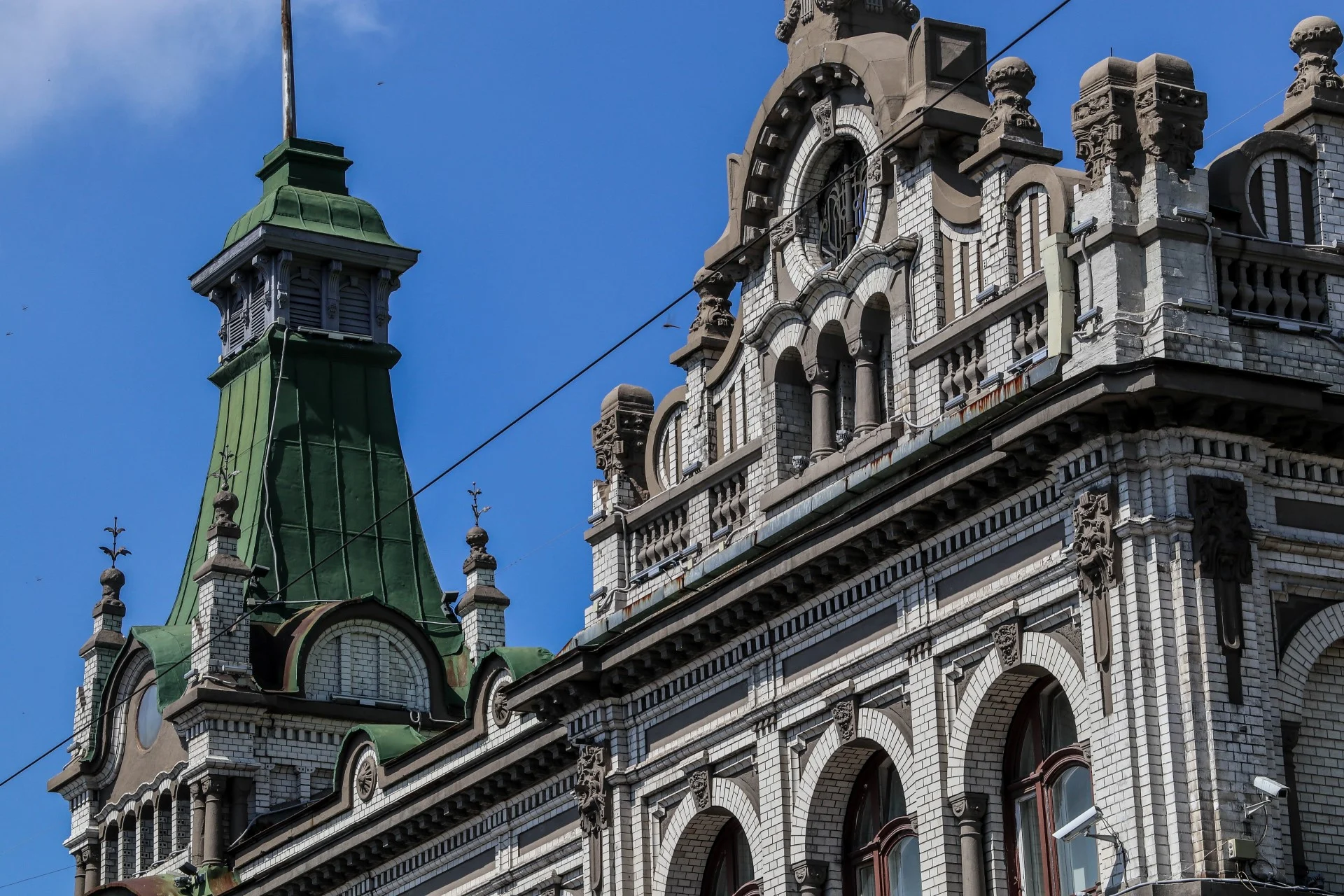
Green spire and corner turret of a pre-revolution merchant building
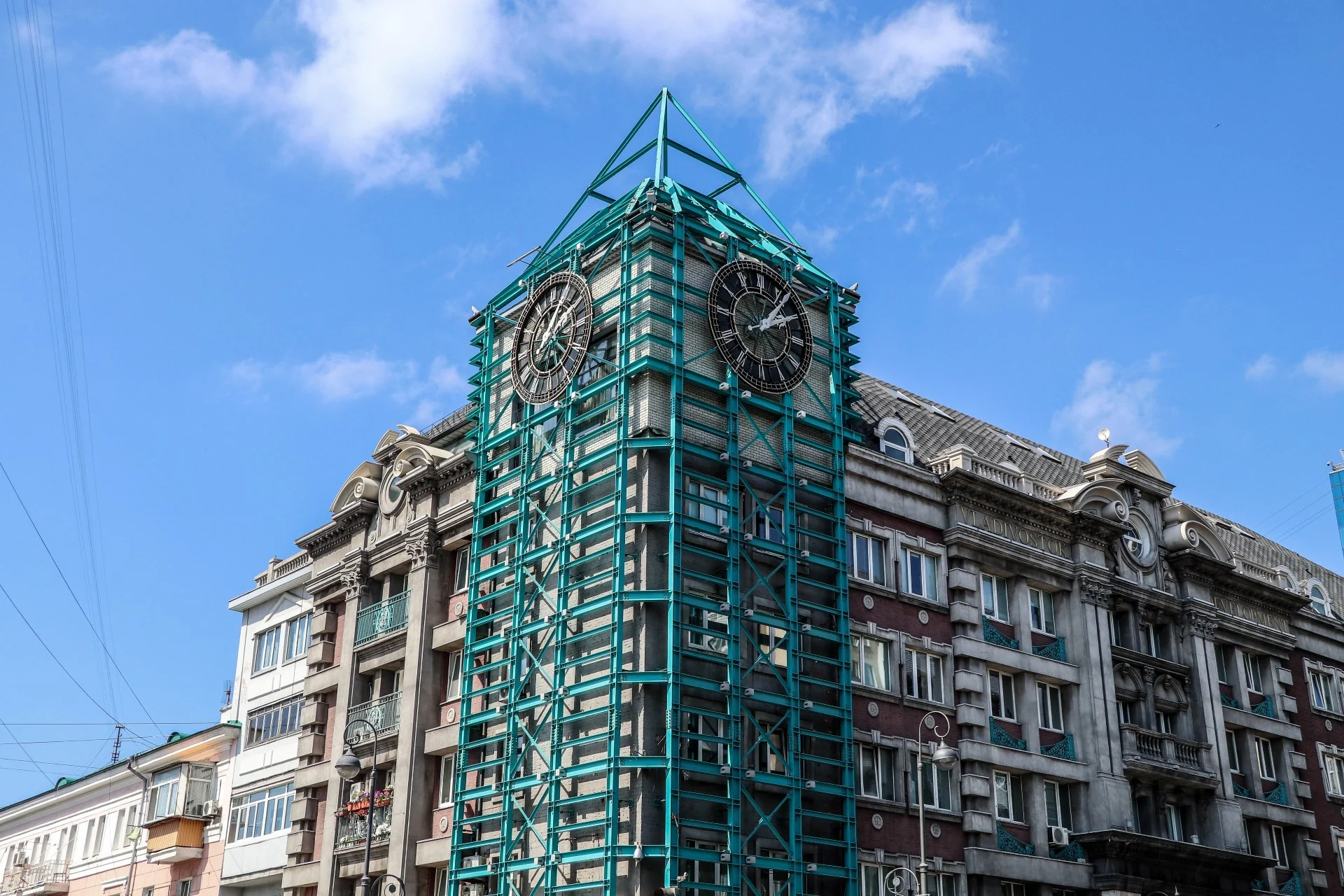
A clock tower wrapped in turquoise scaffolding for restoration
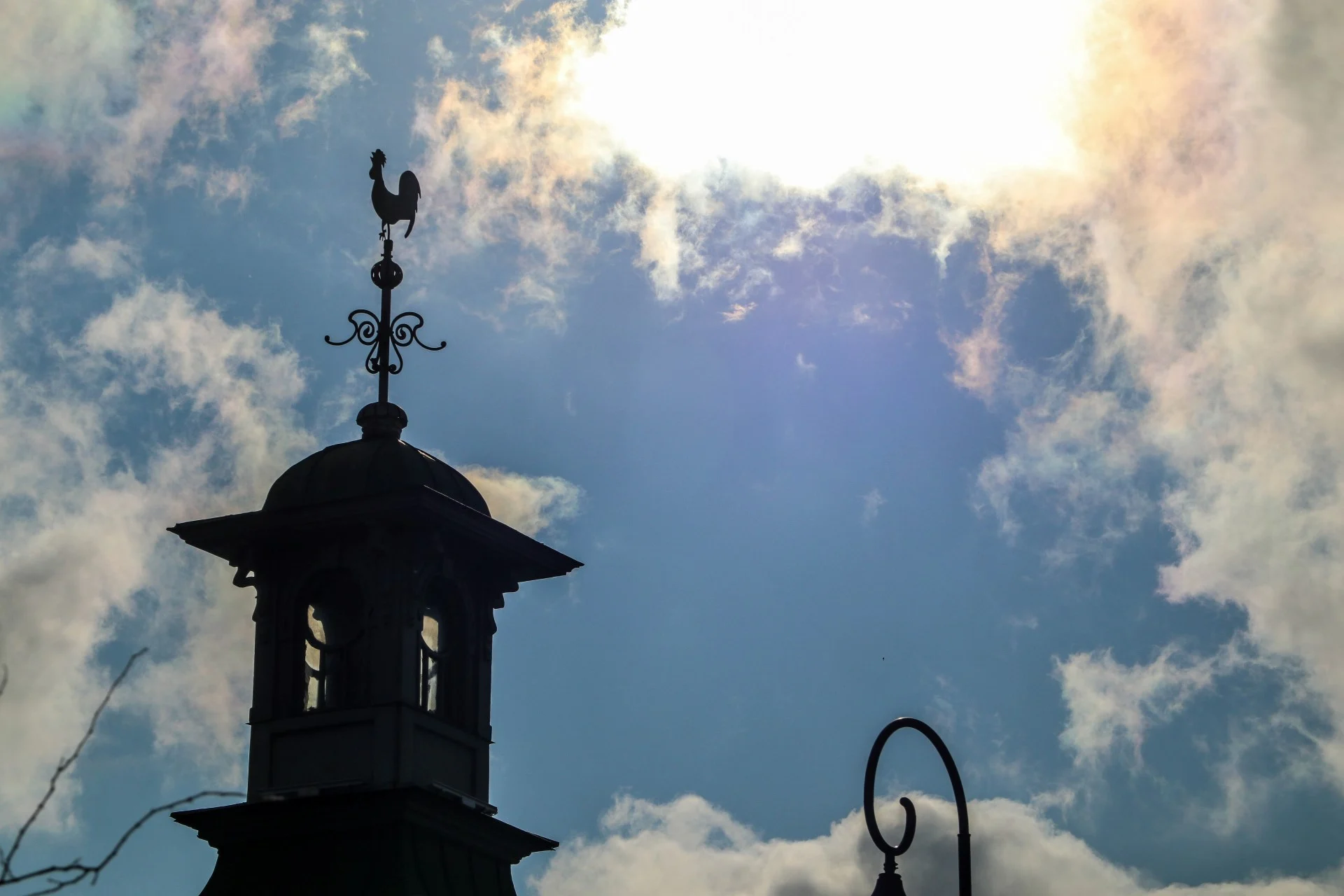
A weathervane rooster silhouetted on top of an old cupola
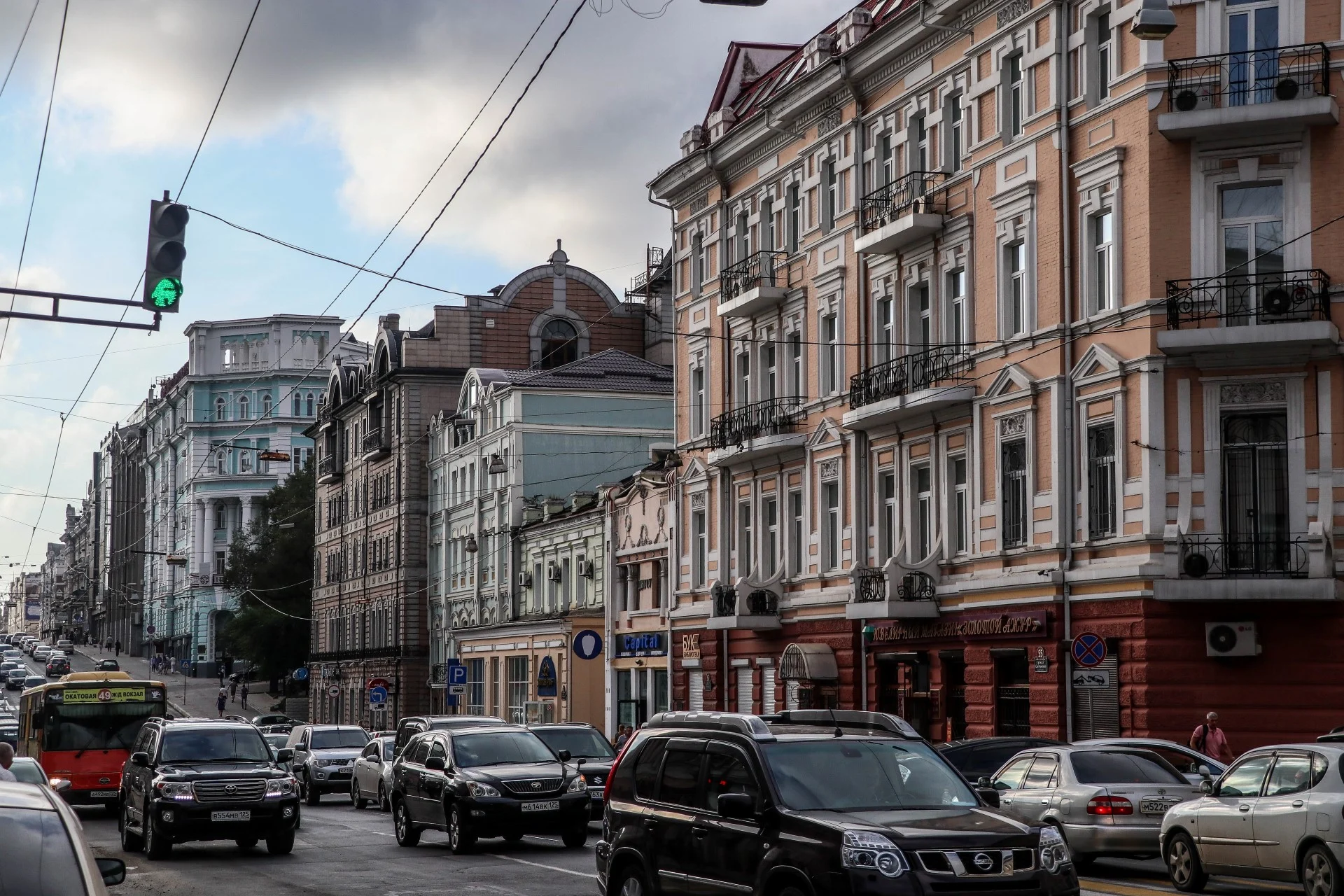
Downtown street with traffic threading past historic facades
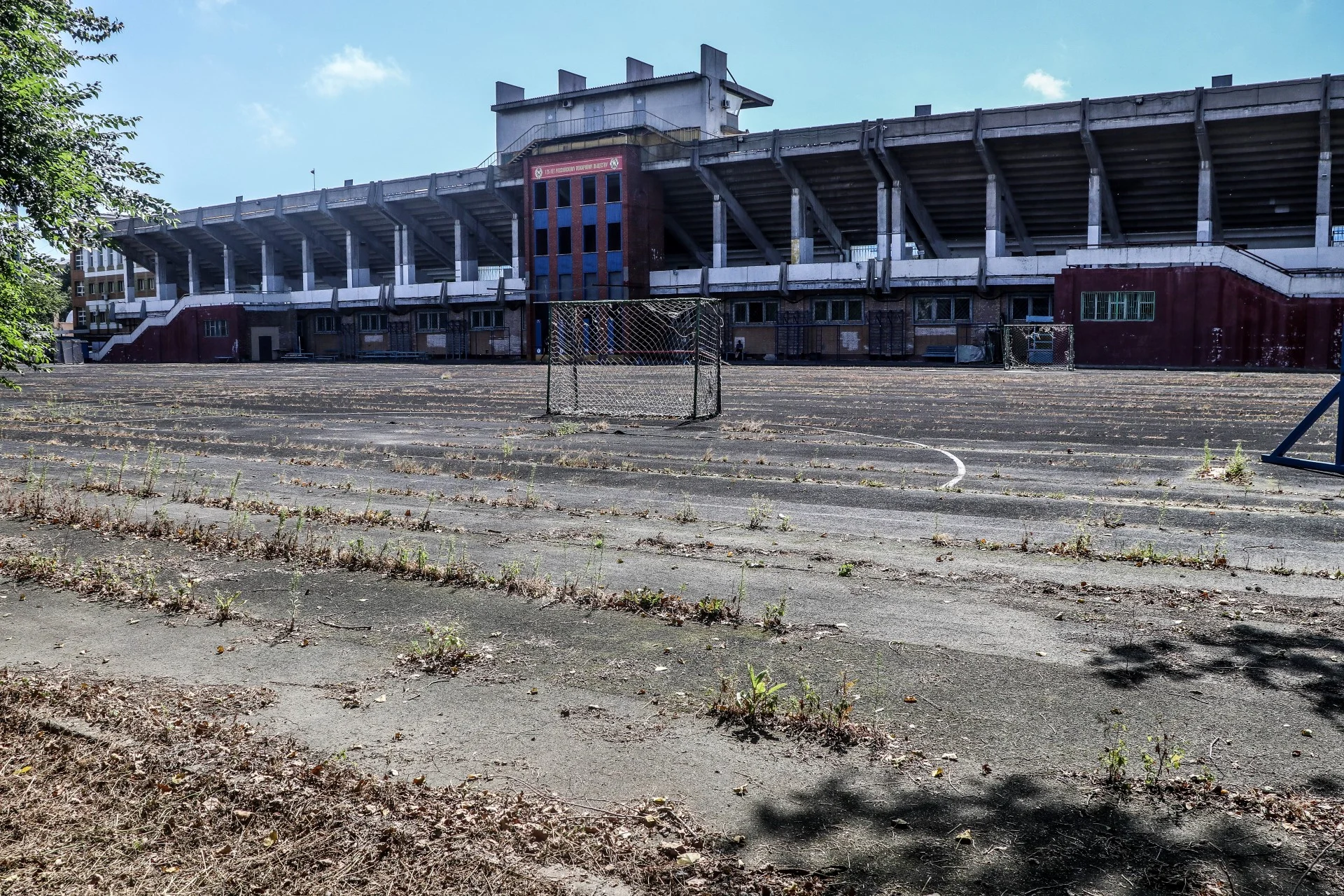
An abandoned Soviet-era stadium with weeds growing through the pitch
Eating in Vladivostok
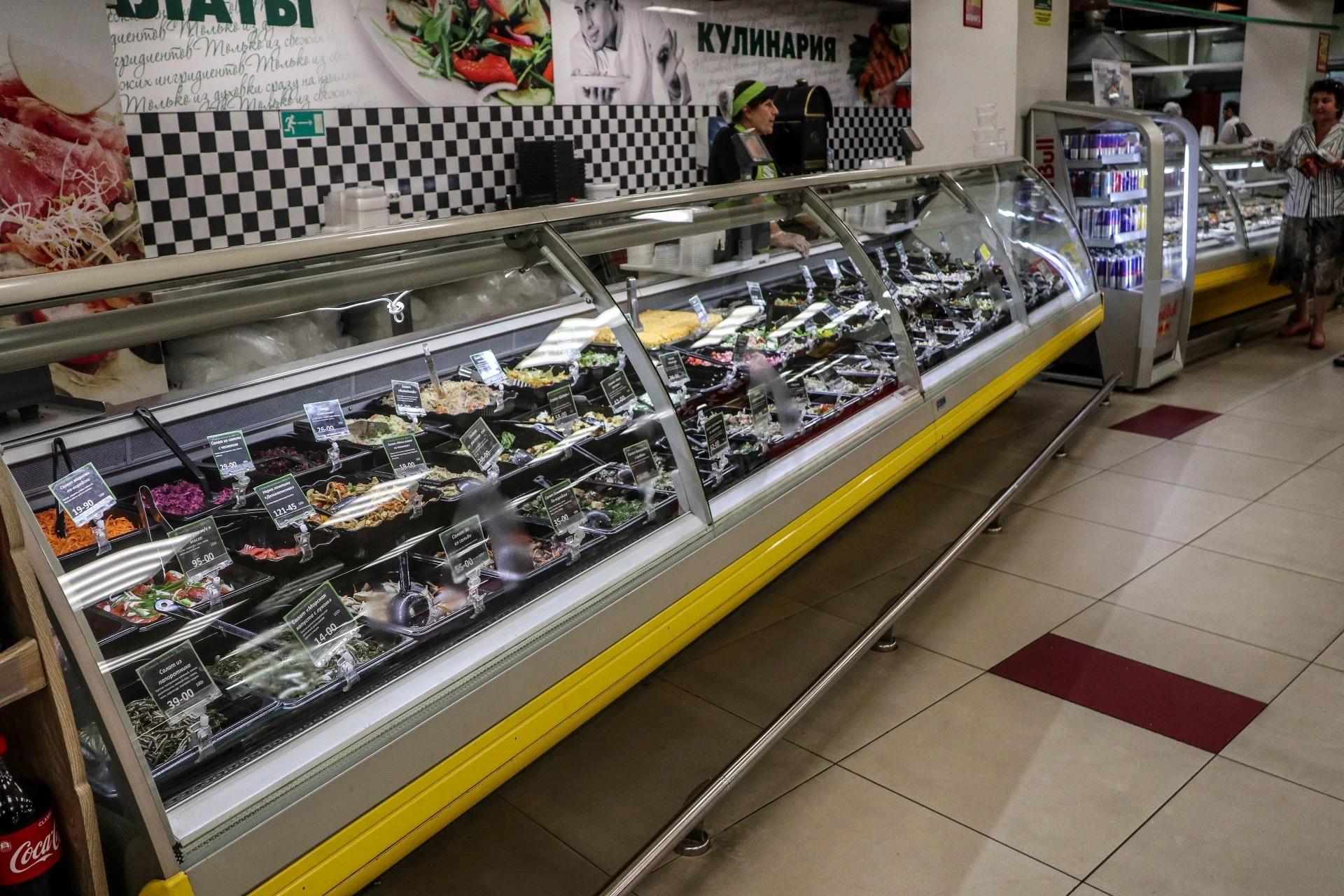
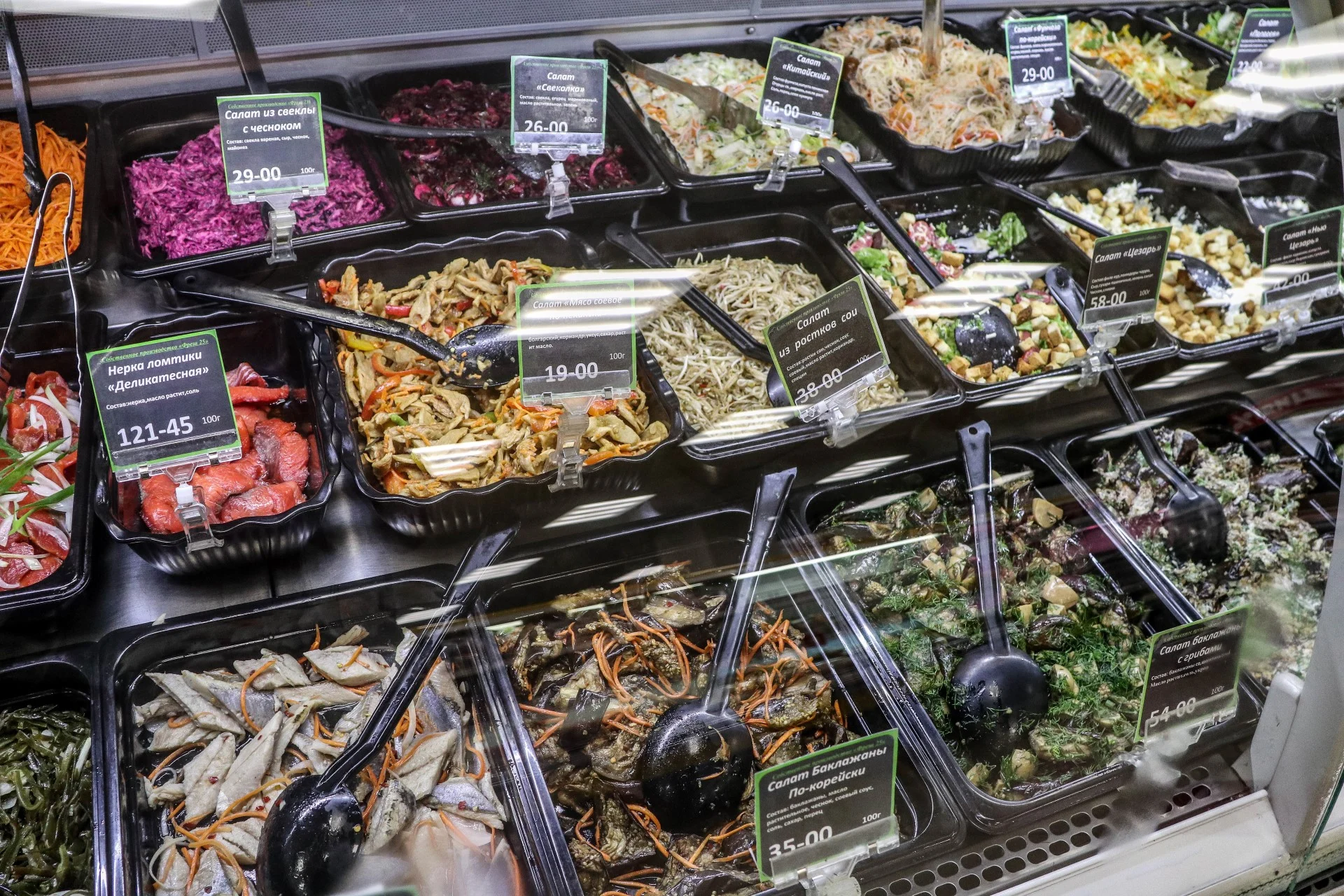
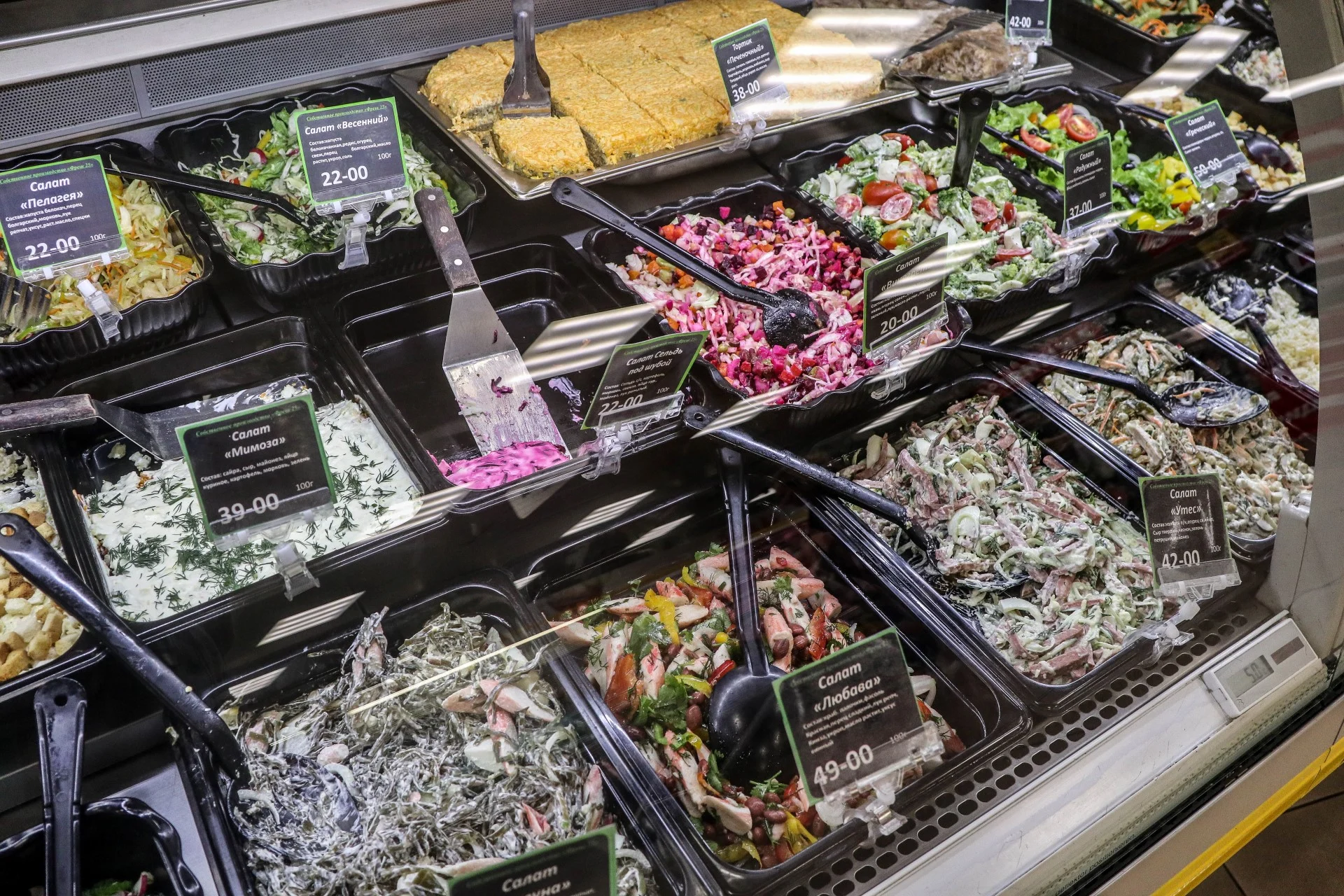
Russian supermarket delis are an underrated cultural experience. The kulinariya (готовая еда, “ready food”) counters sell everything pre-made: salads, fish, meat cutlets, dumplings. You point, they weigh, you pay per 100 grams. The portions are absurdly cheap by Moscow standards.
Supermarket deli counter packed with prepared salads, a Russian institution
Cabbage, beet, and seafood salads priced per kilo in rubles
Creamy salads, herring under a fur coat, and seafood mixes
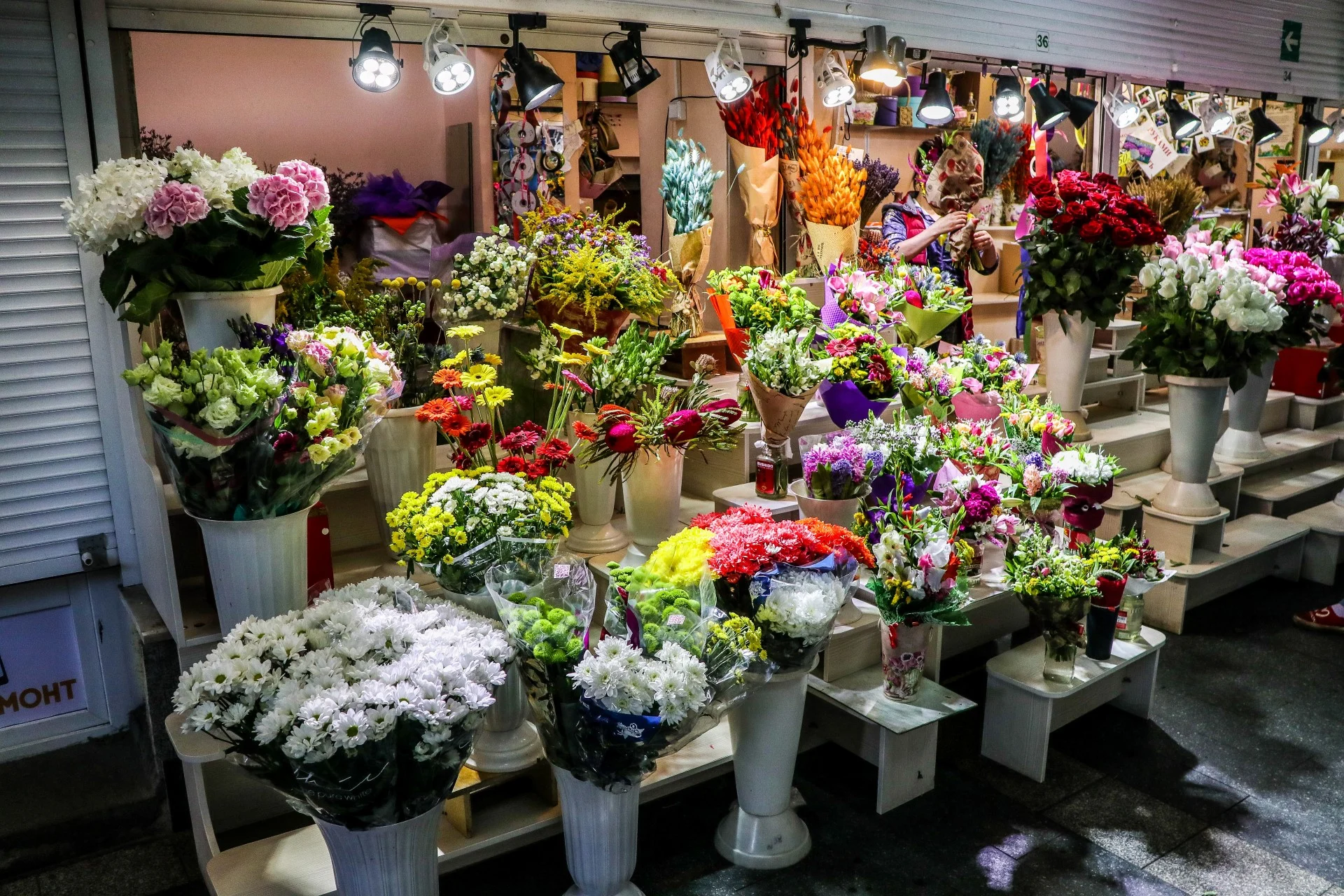
An indoor flower market in the central district
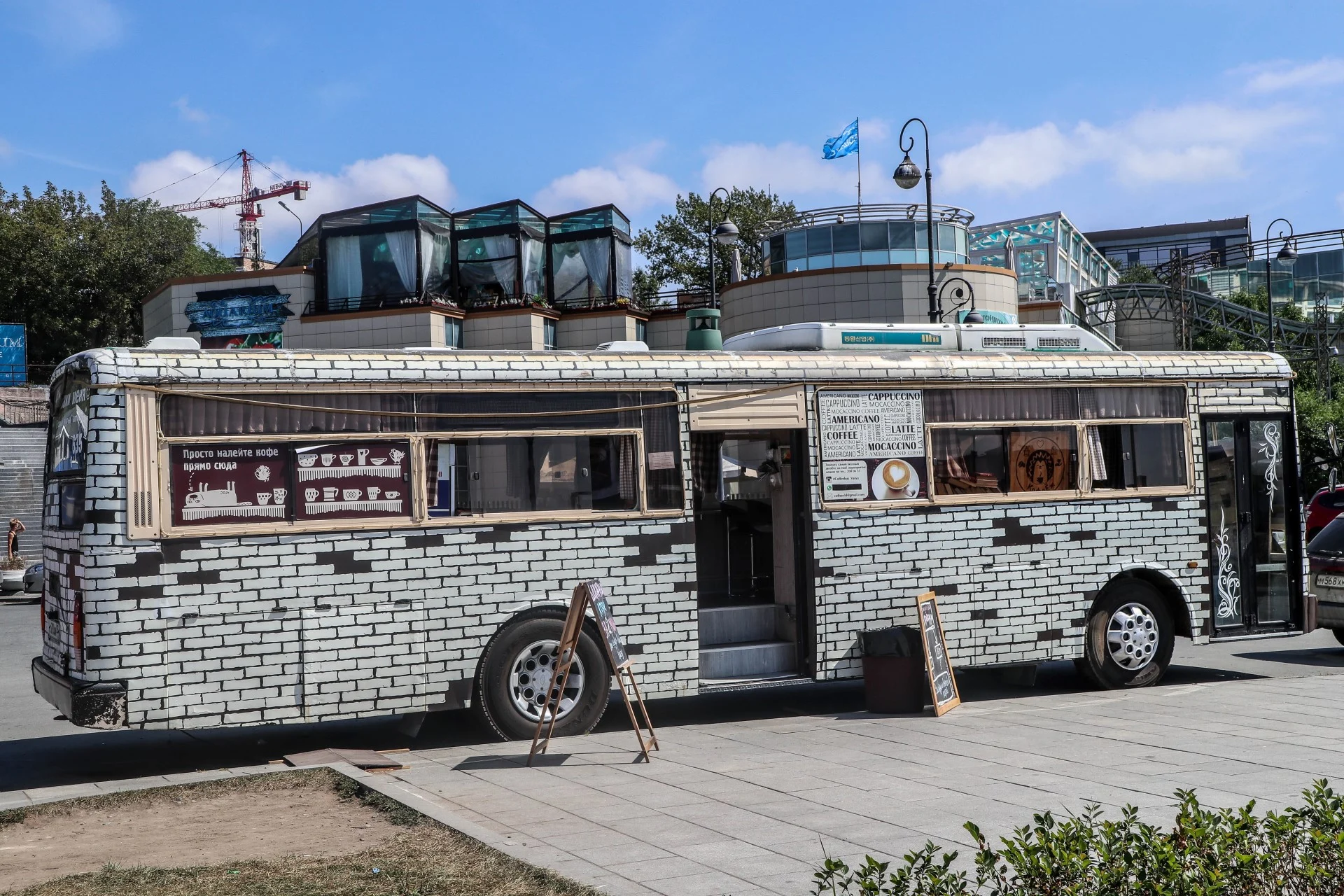
An old Soviet bus converted into a parked coffee bar
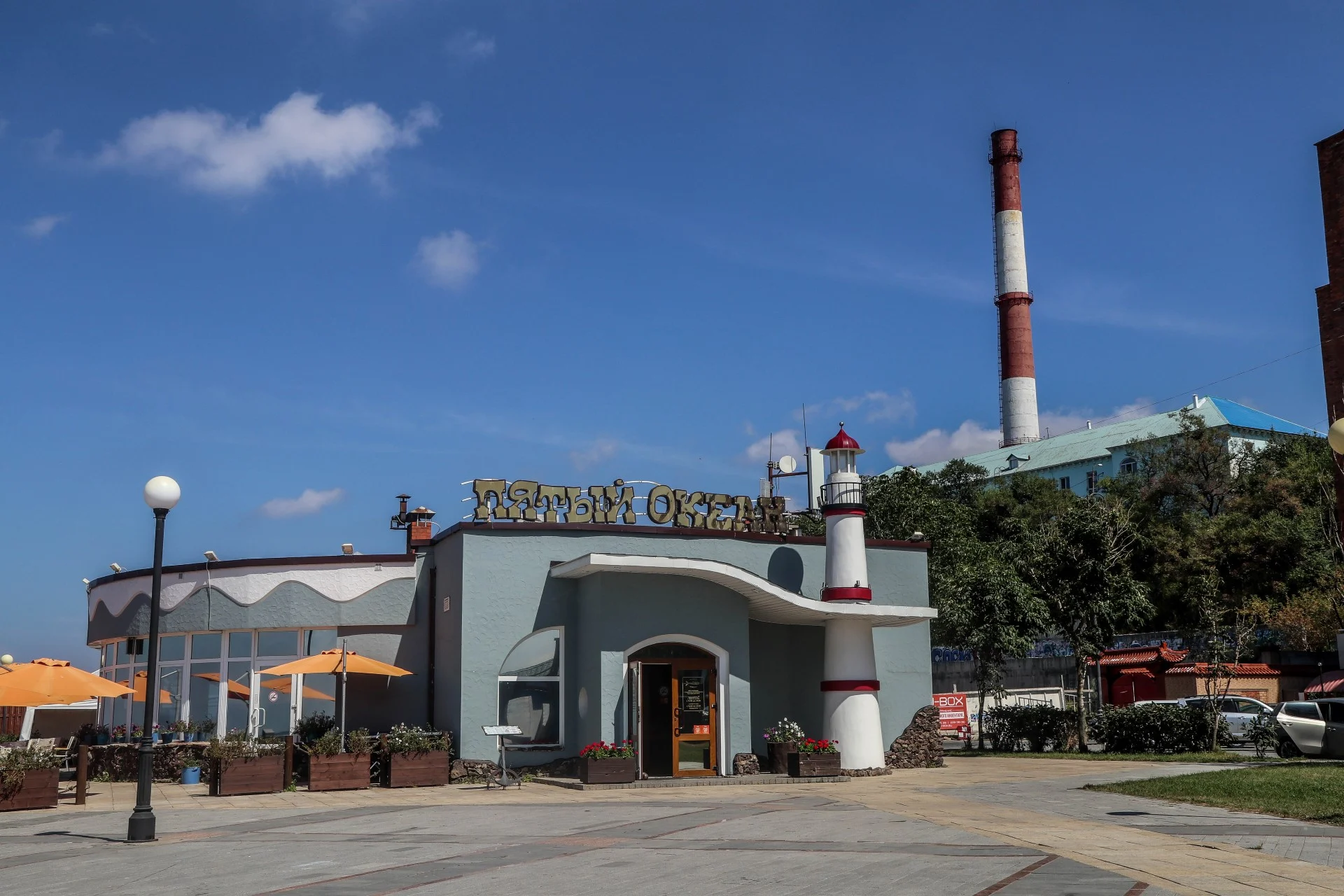
The Fifth Ocean (Пятый Океан) restaurant with its tiny mock lighthouse
Tsarist Heritage
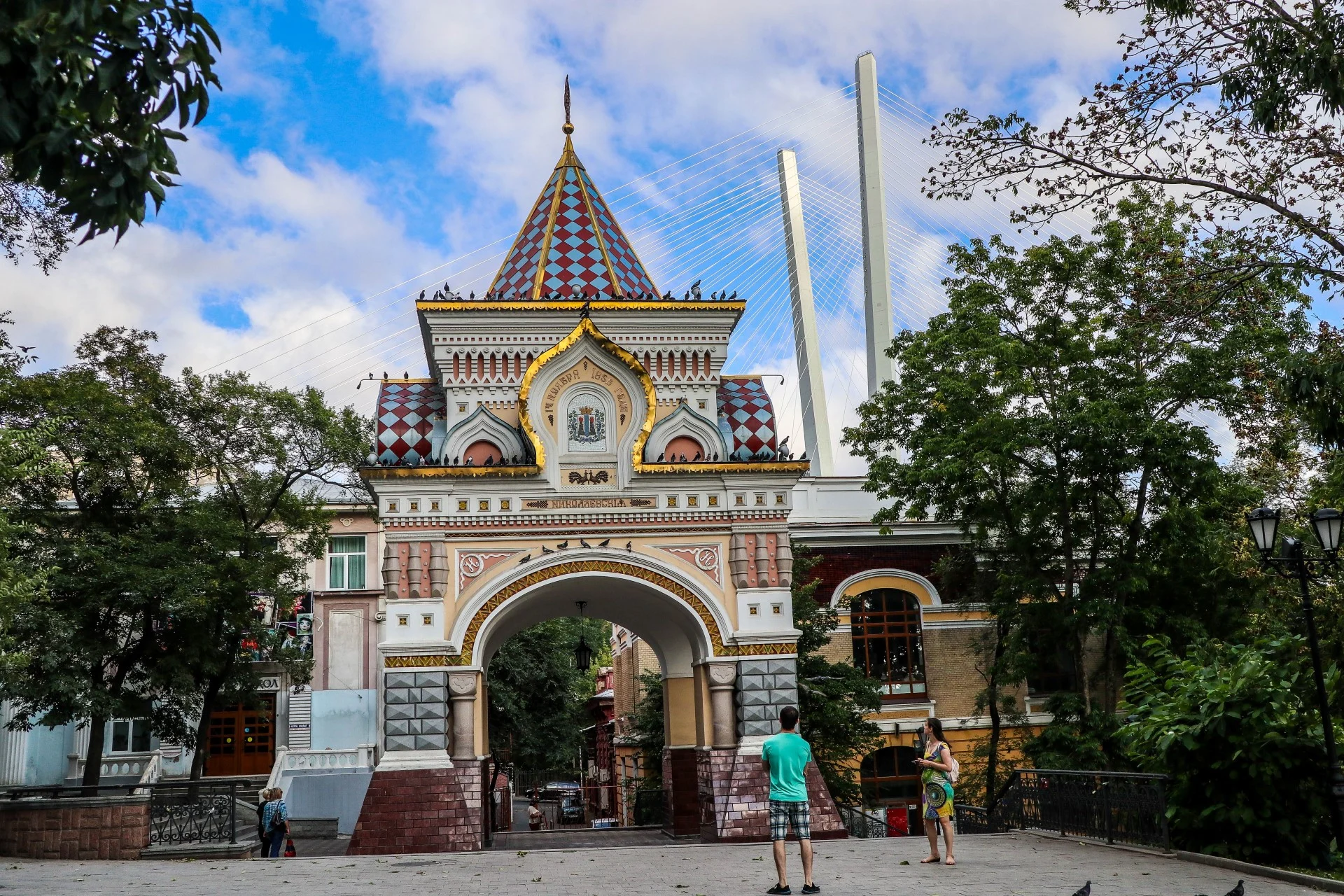
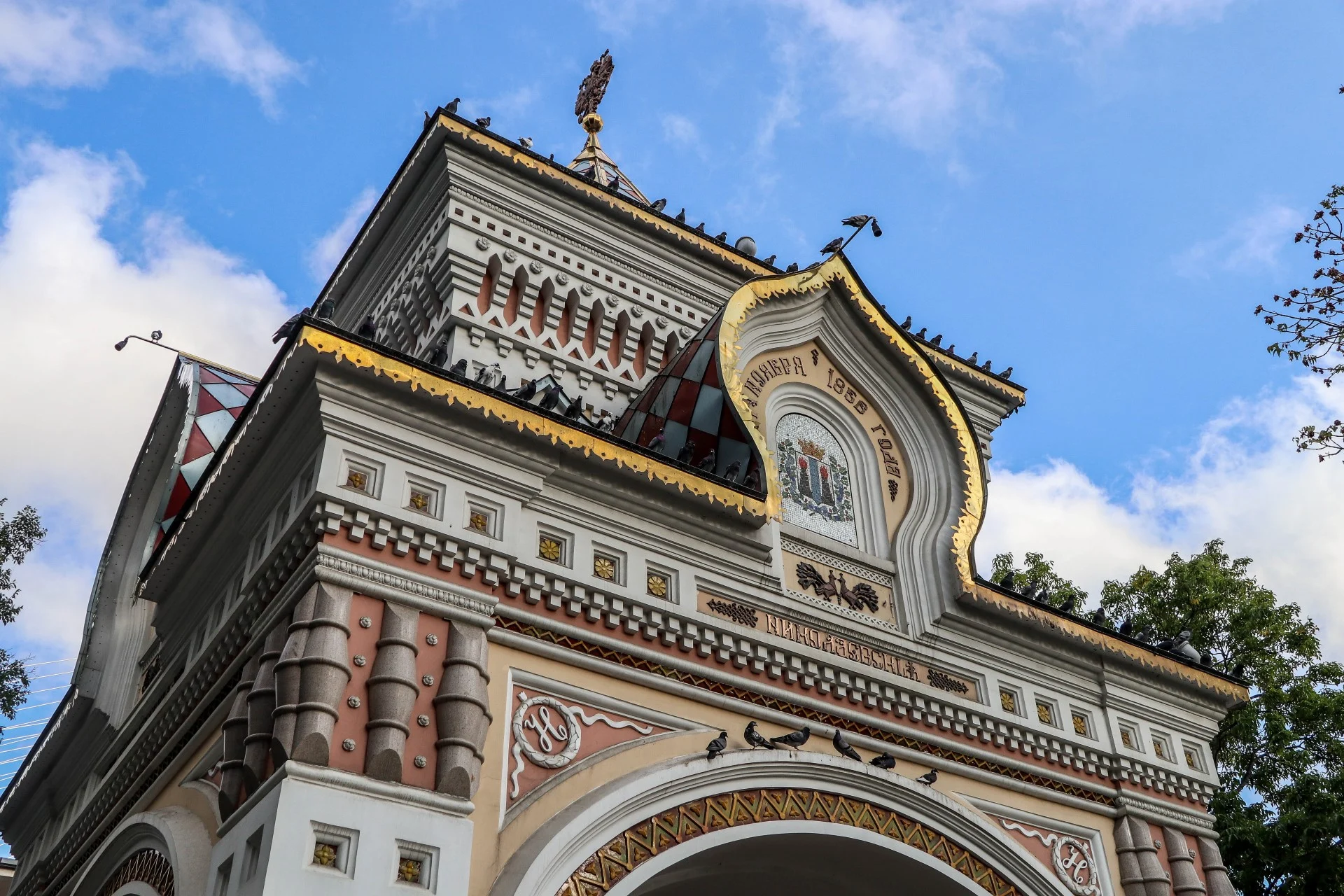
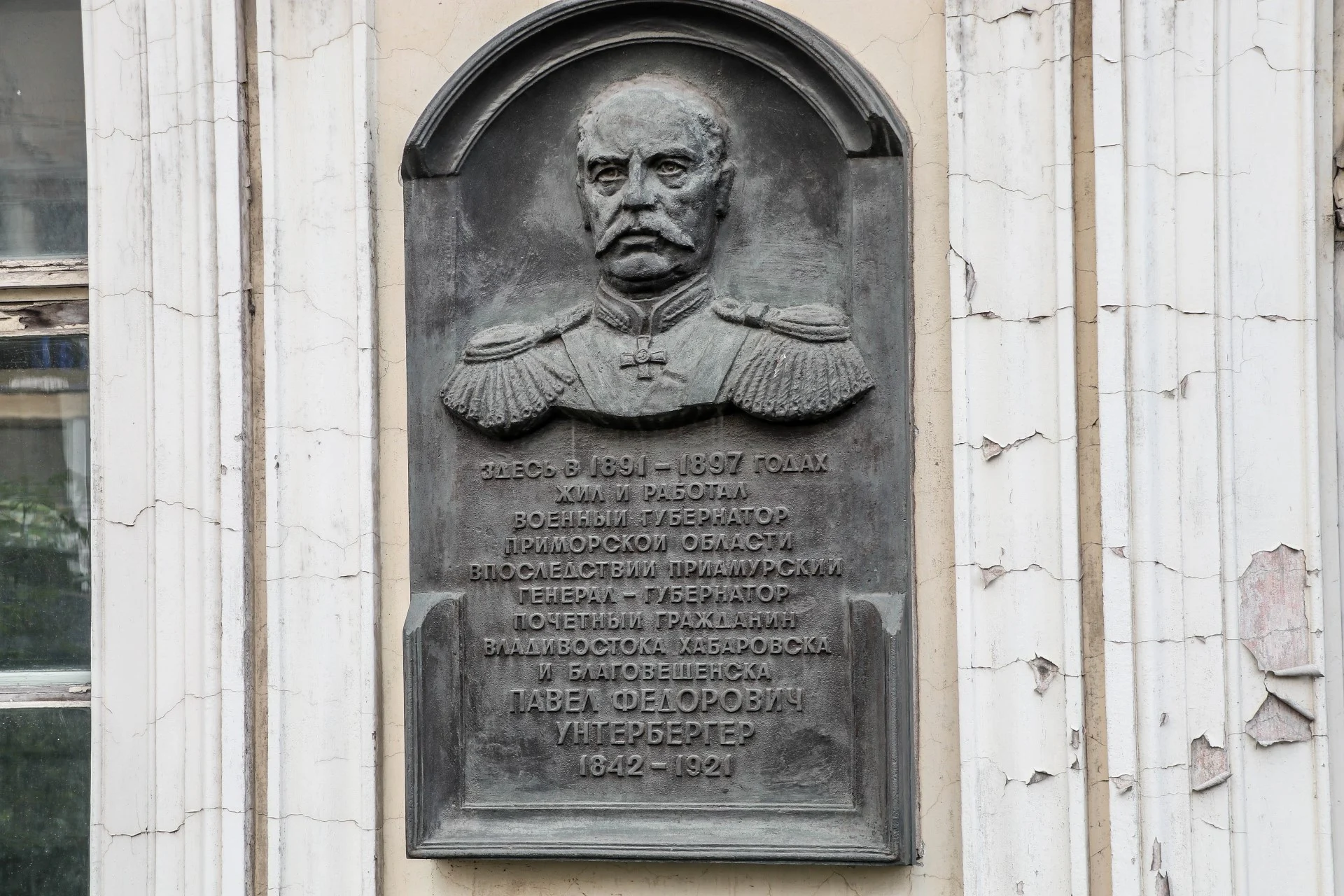
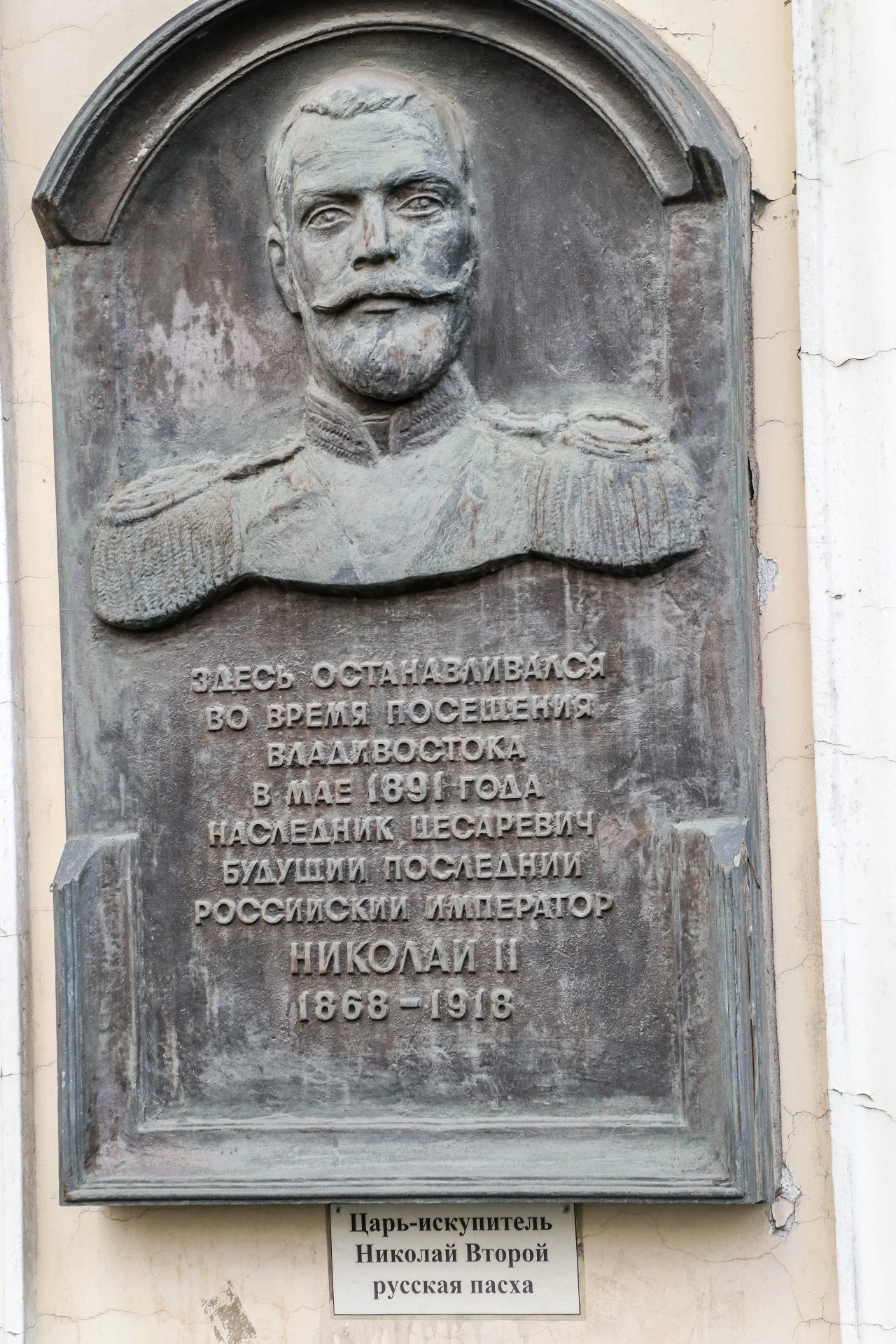
When the future Tsar Nicholas II visited in May 1891 to inaugurate construction of the Trans-Siberian’s Pacific end, the city built a triumphal arch for him. The Soviets tore it down in 1930. A faithful reconstruction went up in 2003. There are also bronze plaques around the historic core marking where Nicholas slept, where governors-general lived, and where the city’s tsarist past has been carefully restored or commemorated.
The Tsesarevich Triumphal Arch, originally built in 1891 to mark the future Tsar Nicholas II’s visit, demolished by the Soviets in 1930, and rebuilt in 2003
Close-up of the Tsesarevich Arch’s Russian revival details, kokoshniks and decorative tilework
Plaque honoring Pavel Unterberger, Military Governor of Primorye 1891-1897 and later Governor-General of the Russian Far East (1842-1921)
Russian plaque: ‘Here stayed in May 1891 the future last Russian Emperor Nicholas II, 1868-1918’
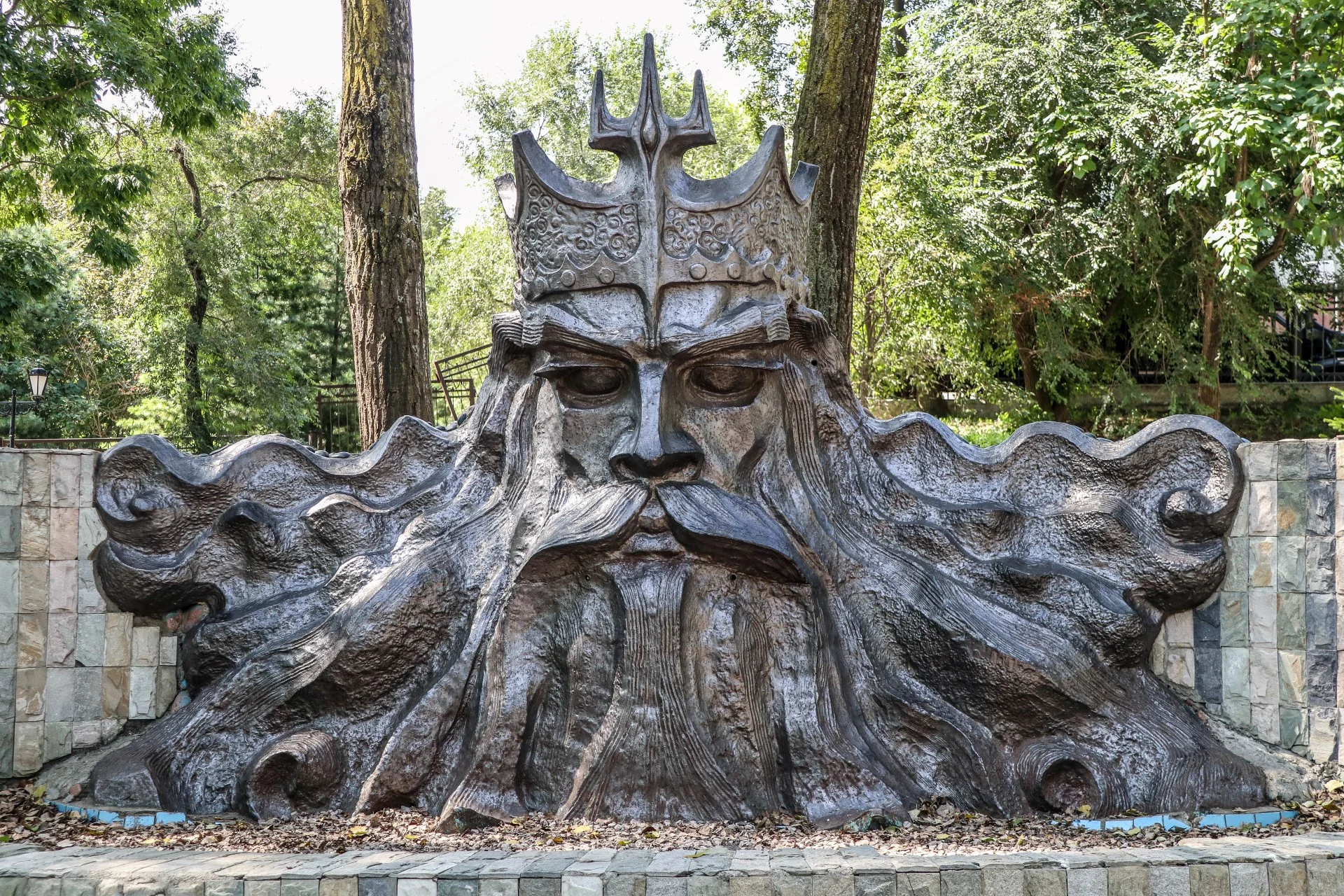
A bronze Neptune sculpture in the park, the city’s Greek-myth founding-myth
Bronze statue of Yul Brynner, the Oscar-winning Hollywood actor (The King and I, The Magnificent Seven) born here in 1920, his family lived in this very neighborhood
Soviet Legacy
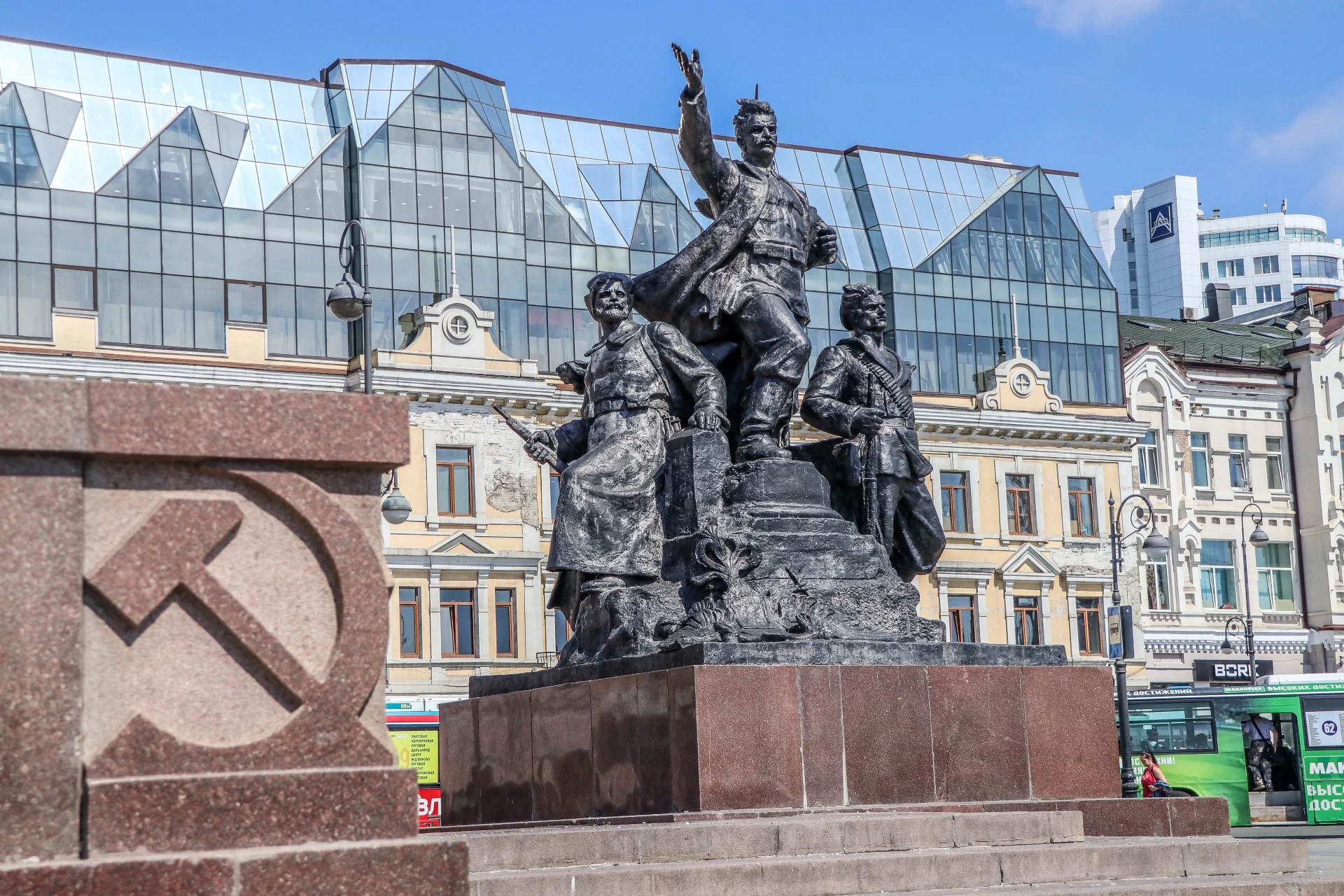
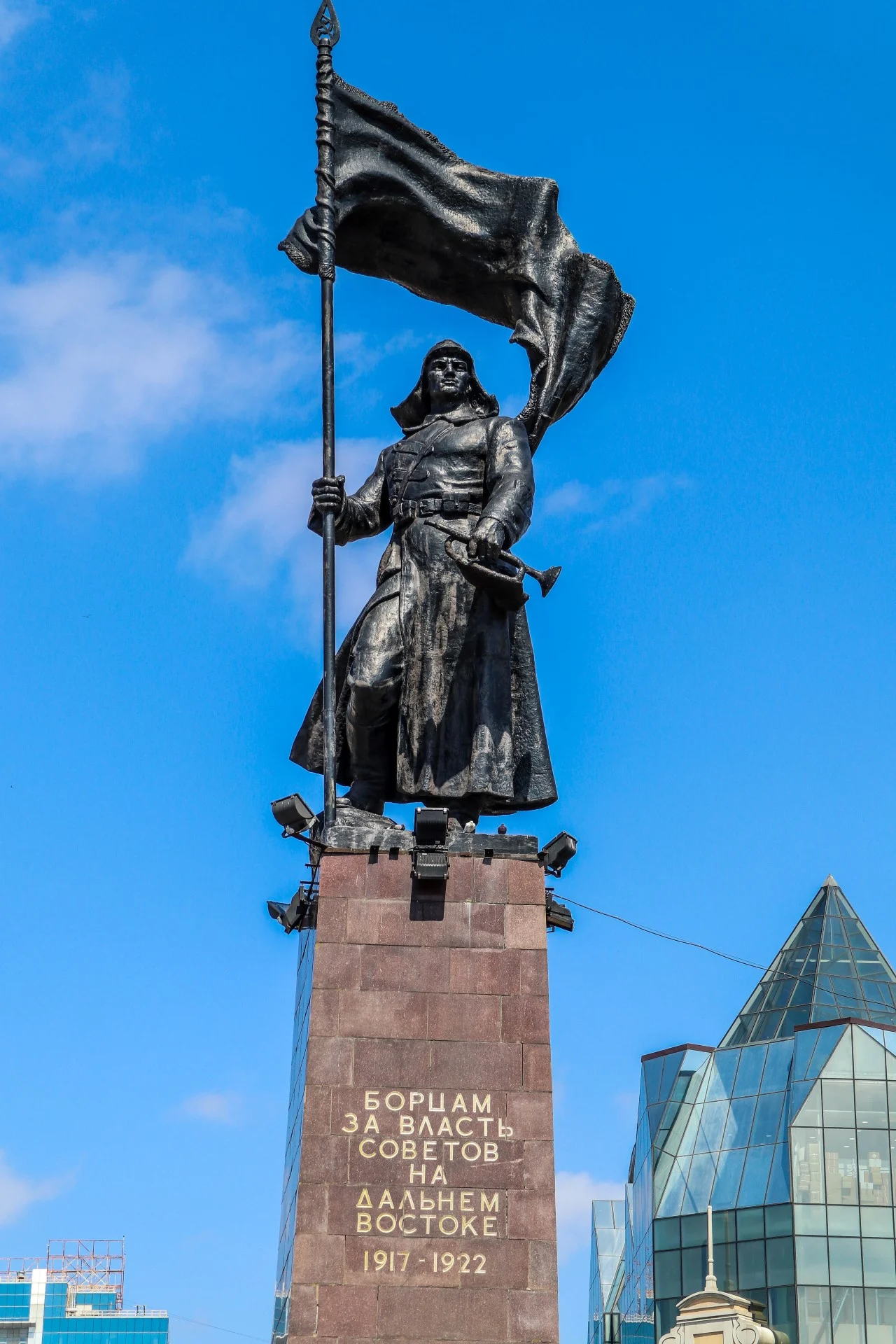
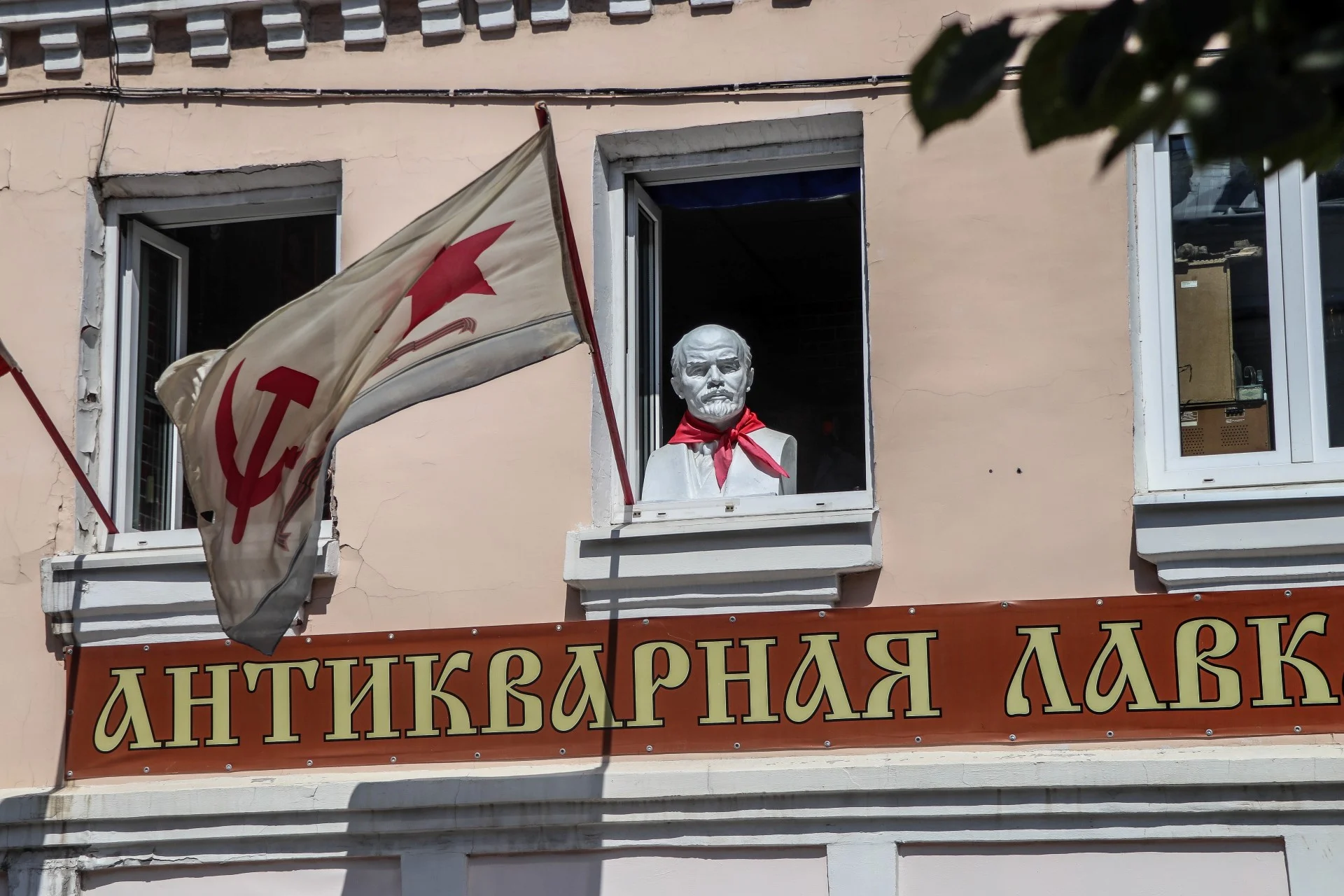
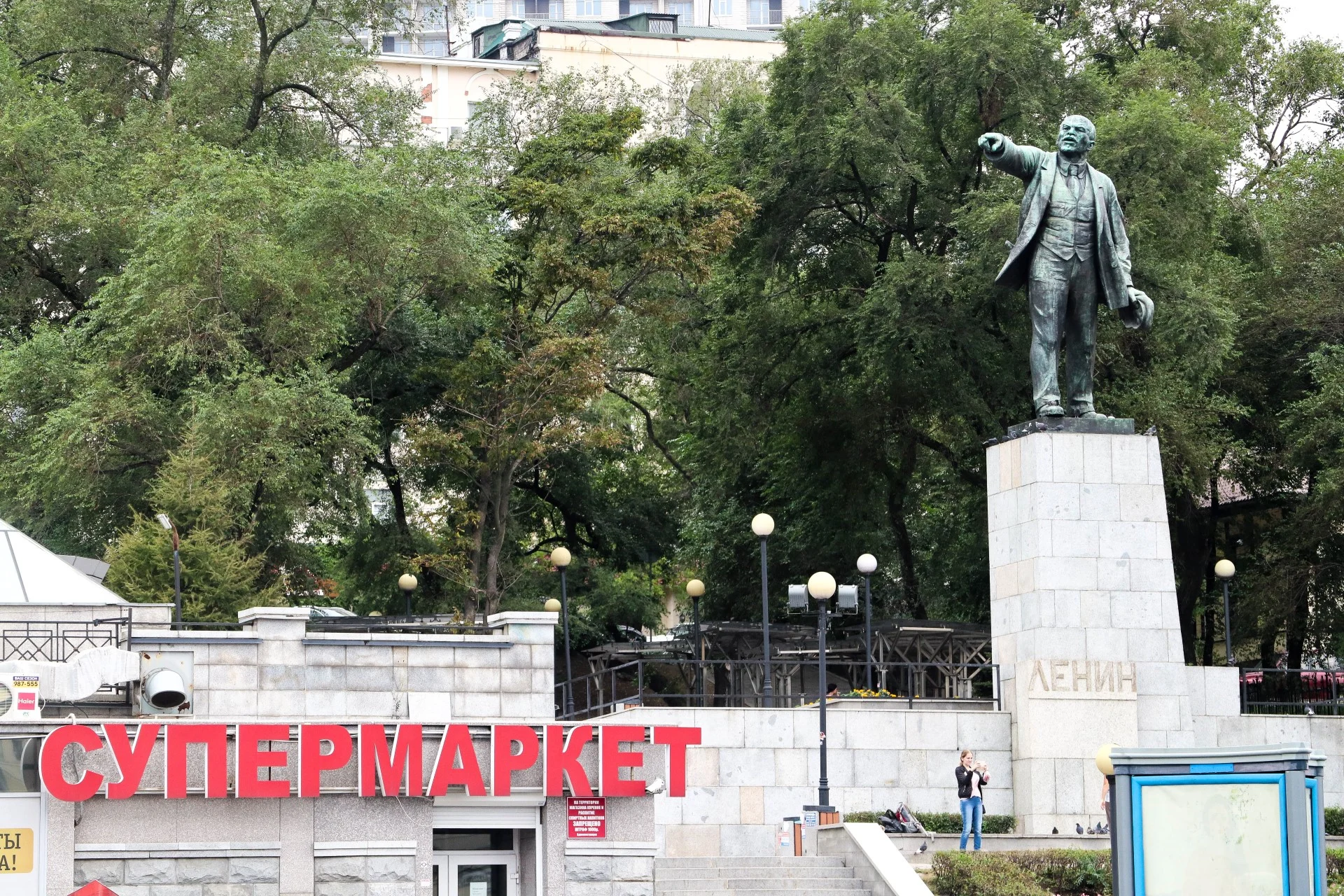
The Bolshevik Fighters’ Monument in the central square (erected 1961) is hard to miss: a Red Army soldier with a flag, flanked by two side-groups of revolutionaries. The inscription celebrates the Soviet victory over the White Tsarists in 1917-1922. Lenin still stands across town. A massive concrete mural quotes his line about Vladivostok (“it is far, but it is our city”). And in good Russian style, you can buy a Lenin bust at any antique shop on Svetlanskaya Street.
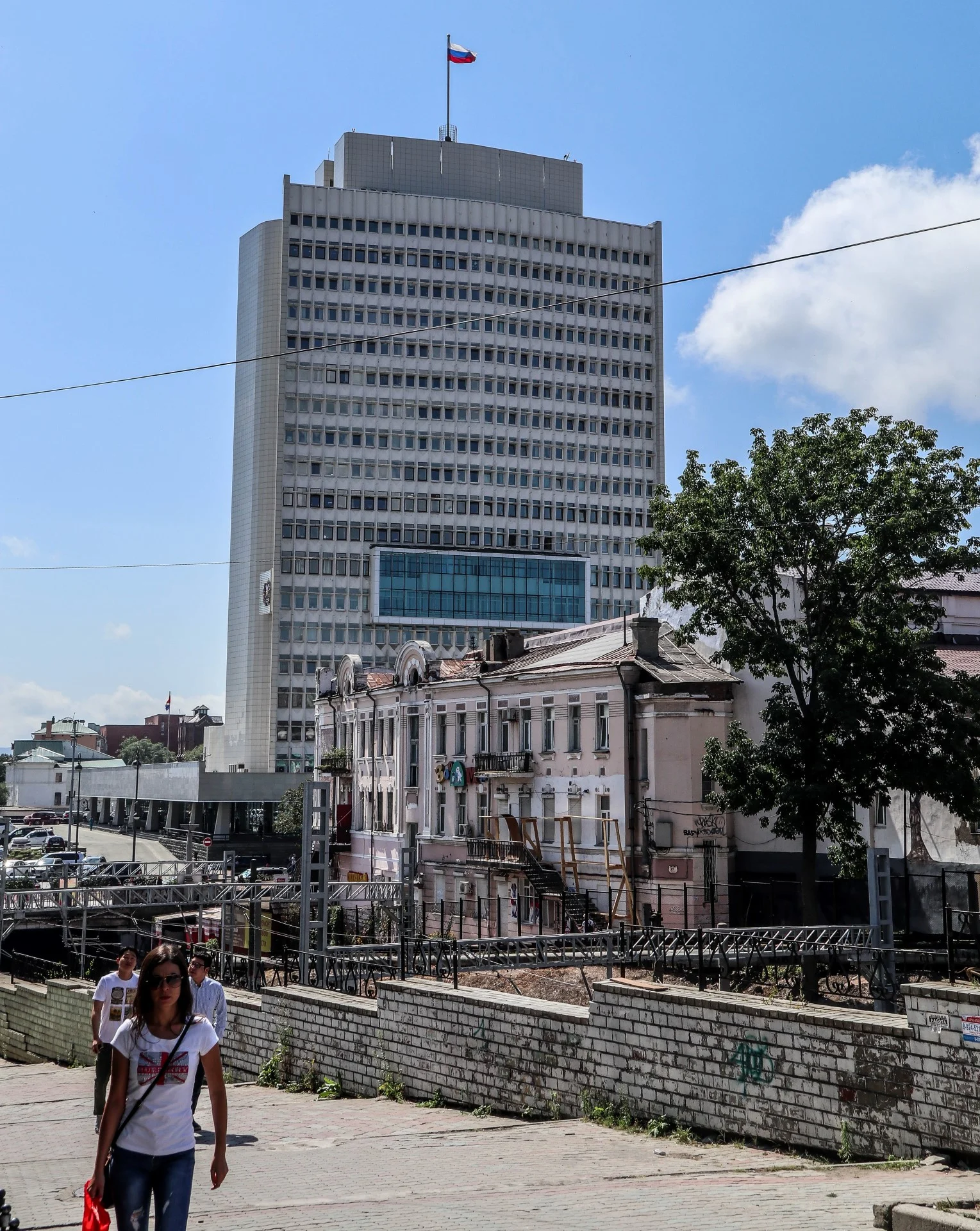
The ‘White House’ (Bely Dom), the Soviet-era government building that still anchors the central square
Side group of the Memorial to Fighters for Soviet Power in the Far East (erected 1961), hammer and sickle on the plinth
Another side group of the Bolshevik monument, soldier with raised arm hailing the Soviet victory
The main column of the Bolshevik monument, inscribed ‘To the fighters for Soviet power in the Far East 1917-1922’
Central figure of the Bolshevik monument, a Red Army soldier holding a flag
A Lenin bust and Soviet naval flag in the window of an antique shop, Антикварная Лавка
Lenin statue still standing in front of the central супермаркет, one of the largest Lenins left east of the Urals
Soviet concrete relief mural with Lenin’s quote, ‘Vladivostok is far away, but it is our city’ (the line he gave on signing off the city’s Soviet status in 1922)
Soviet relief sculpture above what is now a Zara store, capitalism slowly painted over the hammer and sickle
Russian Orthodox Faith on the Pacific
Most Vladivostok churches are new, rebuilt or first-built after the Orthodox Church revived in the 1990s. The Soviets had closed almost everything religious. The chapels around Korabelnaya embankment are mostly post-2000, dedicated to saints with naval or military connections.
A small Russian Orthodox church in the central district
Church of St. Igor of Chernigov, dedicated to the 12th-century Kievan Grand Prince who was deposed in a 1146 uprising, forced into monastic vows, then beaten to death by a Kiev mob in 1147 and canonized as a passion-bearer saint
Stone statue of Saint Nicholas the Wonderworker, the 4th-century Bishop of Myra and patron saint of Russian sailors (also the historical figure behind Santa Claus)
A small pink Orthodox chapel sitting in the shadow of the Golden Bridge
Statue of Saints Cyril and Methodius, the 9th-century Byzantine missionary brothers who created the Cyrillic alphabet and brought Christianity to the Slavs
Memorial cross at the navy quay, honoring sailors lost at sea
Navy memorial column with a bronze relief of a sailor and his warship
A Russian Orthodox cross at the entrance to the Pacific Fleet memorial complex
Russia’s Pacific Fleet
Vladivostok is home to the Russian Pacific Fleet, the country’s main naval force in the Far East. The fleet’s headquarters is downtown, the ships are parked along the Korabelnaya embankment in plain view, and sailors in white-and-blue are everywhere. The S-56 Soviet WWII submarine sits welded to the embankment as a museum (it sank 10 enemy ships in WWII). The whole memorial complex commemorates the fleet’s role in WWII and the Russian conquest of the Pacific.
Russian Pacific Fleet ships docked under the Golden Bridge, including the rescue vessel Igor Belousov (548)
Russian warships moored along the Korabelnaya embankment
Naval ships moored close, fleet command always keeps a visible presence in the harbor
The missile cruiser Varyag (011), flagship of the Russian Pacific Fleet
Russian Pacific Fleet warships and an icebreaker (Rosmorport) docked in port
Russian Navy minesweeper 525 returning to port, with the Russky Bridge looming in the haze
Three Russian sailors stand watch over the warships, with the Varyag’s radar dome behind
Three Pacific Fleet sailors in dress uniform outside the chapel of St. Andrew the First-Called
The S-56 submarine, a Soviet WWII sub credited with 10 confirmed kills, turned into a museum in 1975
The full broadside of the S-56, hauled out of the water and welded into a memorial pavilion
Eternal Memory wall: ‘To those who stood to the death for the Motherland’
Plaques honoring the Soviet marine infantry brigades that fought in WWII
Statue of Alexander Solzhenitsyn, Nobel-winning author of The Gulag Archipelago, who landed here in 1994 returning from 20 years of US exile (he toured Russia by train from this very embankment)
Statue of Count Nikolay Muravyov-Amursky, the Governor-General who negotiated the 1858 Treaty of Aigun with China and brought the entire Russian Far East, including the future Vladivostok, into the empire
End of the Trans-Siberian
The Vladivostok railway station marks kilometer 9,289 on the Trans-Siberian Railway, the world’s longest rail line. The full Moscow-to-Vladivostok run takes seven days non-stop. The station building itself dates to 1912, designed in the same Russian revival style as Moscow’s Yaroslavsky Station to bookend the route symbolically.
Vladivostok railway station, the eastern terminus of the Trans-Siberian Railway, 9,289 km from Moscow
A Russian Railways (РЖД) passenger car parked in the station yard
Vladivostok rail yard with passenger trains being shunted between the bridge and the harbor
Train yard and rolling stock viewed from the bridge above
The Working Port and Golden Horn Bay
Golden Horn Bay (Бухта Золотой Рог), named after its Constantinople counterpart, is the natural harbor that made Vladivostok possible. The Russians chose this site in 1860 specifically because the bay is deep, narrow, ice-free for most of the year, and easily defensible. Today it is still the operational core of the city: container terminals, fishing fleets, naval ships, and the FESCO shipping company (one of Russia’s biggest) all share the same water.
A tugboat works the entrance to Golden Horn Bay, the natural harbor that made the city
A cliffside cafe over the water with ducks paddling below
A Soviet heating plant smokestack rising behind a graffitied concrete fence
A red cargo ship sliding past the waterfront benches and decorative lampposts
The container port with the bulk carrier Shantar (Шантар), excavators waiting for export
Commercial port cranes line the far side of Golden Horn Bay
Fishing and cargo vessels at the working port across the bay
A run-down marina with the Russky Bridge fading into the distance
A windsurfer cuts across the bay, framed by my side mirror
The Naggat sightseeing ferry rounds a wooded headland
A cargo ship silhouetted against the gold of sunset on the bay
Soviet apartment blocks climb the hill behind the FESCO shipping HQ (Far Eastern Shipping Company)
View toward the Golden Bridge over the construction sites of downtown
Downtown rooftops climbing toward the central TV tower
Overlooking the core of the city from the eastern hills
A modern apartment tower with rounded glass balconies, one of the post-2012 luxury builds
The Bridges and the APEC 2012 Renaissance
For the 2012 APEC summit, Russia built two massive cable-stayed bridges: the Golden Bridge across Golden Horn Bay, and the Russky Bridge connecting the mainland to Russky Island (which got a new university campus to host the summit). The Russky Bridge held the world record for the longest cable-stayed span (1,104 meters) when it opened. Both bridges are now on the 2,000-ruble note. Together with the rebuilt airport and refurbished downtown, the APEC push genuinely changed the look of the city.
Driving up onto the Golden Bridge (Zolotoy Most), opened in 2012 for the APEC summit at a cost of $1 billion
Aerial view of the Golden Bridge sweeping across Golden Horn Bay, one of the largest cable-stayed bridges in the world
A Russian icebreaker docked under the cables of the Golden Bridge
Russky Bridge, with a 1,104-meter main span, the longest cable-stayed span in the world when it opened in 2012 (Russia really showed up for APEC)
Russky Bridge from a distance, with snow still on the peaks of the surrounding hills
Golden Horn Bay viewed from the Orlinoye Gnezdo (Eagle’s Nest) overlook
Selfie on a windy observation deck above the Golden Bridge
Love locks on the observation deck railing, with the Golden Bridge cables behind
The Far Edge: Egersheld and the Tokarevsky Lighthouse
The Egersheld peninsula juts south into the Sea of Japan, ending at a sand spit and the Tokarevsky Lighthouse (Маяк Токаревского), built in 1910. At low tide the spit dries out and you can walk across to the lighthouse. This is, in a real sense, the end of the Russian continent. Past this point is open ocean, then Japan, then nothing.
The southern tip of the city, hillside neighborhoods of Egersheld peninsula
Cliffside houses on the Egersheld peninsula, the city stops here
Sailboats anchored near the Tokarevsky Lighthouse spit
Yachts and the Tokarevsky Lighthouse in the haze
View across the bay to hillside houses on Cape Burnaya
Visitors walking the spit out to the Tokarevsky Lighthouse, built in 1910
Walking the Tokarevsky Cat sand spit at low tide, the lighthouse becomes a walkable island
A tour boat passes the Tokarevsky Lighthouse, the western edge of mainland Russia
Mayak Tokarevskiy (Tokarevsky Lighthouse), the symbolic end of the Russian continent
Since 2010, Leonidas has been an incredible Web Developer, and amazing Digital Marketer. He is the author of various exciting case studies in digital marketing, most notably in Pay Per Call Marketing.
Make sure to read the case studies to make your life so much better!