
A sweeping historical argument that violence has declined dramatically over the centuries — and why technology and empathy are the driving forces behind it.
“War appears to be as old as mankind, but peace is a modern invention.”
The news will tell you that the world is fucked up. Wars not too far away, murders just down the street in our community, corporations screwing over the little guy, viruses and diseases infecting everyone around you, etc. Right now sounds like a pretty bad place and time, if you listen to the news.
But if there is any presumption that THE PAST was a romantic place, with fair ideals and happy people, then let’s pop that bubble right now.
The past was ten to one thousand times worse.
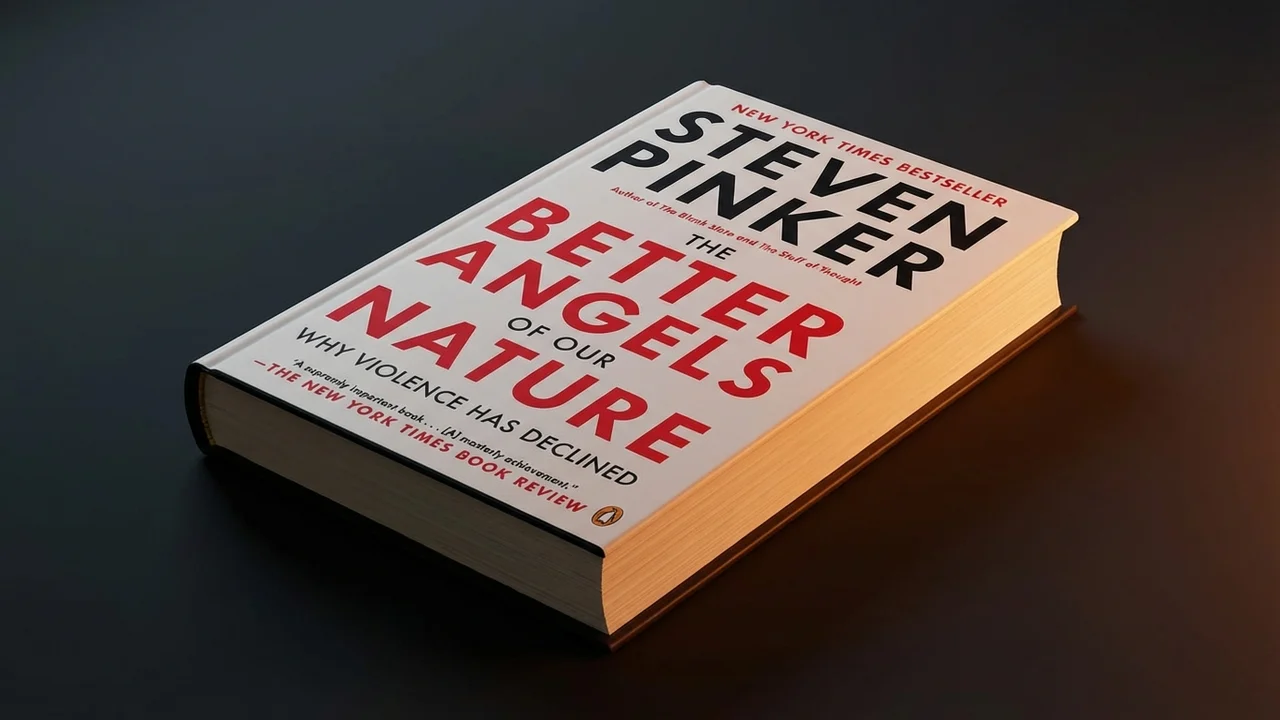
Steven Pinker — a cognitive psychologist at Harvard — makes this case with overwhelming evidence in The Better Angels of Our Nature. And once you see the data, you can’t look at human history the same way again.
For example, human rights is a REALLY new concept that just didn’t exist before the end of the Second World War. That time when humans destroyed each other in the worst way possible.
Prior to the end of World War 2, there were literally 5–10 new wars per year, getting murdered by someone on the street was just an everyday thing, and getting abused by the business you worked for was normal.
EVERYONE had some kind of disease that ate away at them in the worst possible way (imagine being nauseous or crippled or just rotting away on the street), and dying of hunger was the most common and cool thing to do.
Furthermore, women were property to be raped, beaten and won in battle, children were beaten mercilessly to teach them lessons, owning people by contract was business as usual, and torturing people to death was entertainment.
If you were from any religion, ideology, or ethnicity other than the majority, you would be victimized, enslaved, or just killed, just because.
The amount of death inflicted from humans onto other humans ranged not in the tens of thousands, hundreds of thousands, or several millions. Instead, the amount of terror we caused on our fellow brothers and sisters goes into the HUNDREDS OF MILLIONS (X00,000,000).
That’s only counting how many of our own we MURDERED. It’s an impossible number to comprehend, because our minds can only really care about maybe 5–10 people at a time.
The path to treating your fellow humans as equals has been a SLOW and GRADUAL process.
No one really thought that “burning witches” and “pulling out someone’s intestines while they were still alive” for torture were bad ideas.
Humans as slaves to be beaten, raped, and overworked until death… maybe not so good?
Why Did We Start Treating Each Other Better?
So WHY did we start treating each other just a bit better than before? Why did we slowly think screwing each other over wasn’t such a good idea?
The answer is technology!
The invention of the printing press allowed us to share information. By sharing information, we allowed ourselves to write and read books. These books allowed us to share and absorb ideas, perspectives, and emotions that were not our own!
Reading how a slave, a woman, a child, or another human being is mistreated gets us sick to our stomach.
We become them… and we want the pain to stop!
These ideas slowly permeated into our politics, our decisions, ourselves, and deep into our consciousness.
Watching movies such as Schindler’s List, 12 Years a Slave, or Saving Private Ryan shows the deep darkness of human nature. It makes us think that maybe engaging in these activities isn’t such a good idea.
Pinker calls this the expanding circle of empathy. The more we connect with people different from us — through books, stories, travel, trade — the harder it becomes to dehumanize them. Our monkey-brains evolved for small tribes, but empathy stretches far beyond that.
YET, the less we know about ourselves, our neighbors, and history, the more we are likely to repeat the past.
So Are Things Getting Better?
For humanity in general? Absolutely! Death by ANY MEANS now is almost unimaginable and unlikely. Don’t expect to be sold off to someone, or to be sent to fight a war you don’t know anything about, or to be stabbed and robbed just going to the grocery store, or to be tortured because you believe there might be an omnipotent spaghetti monster in the universe, or to be overworked by your corporate overlord until you die from exhaustion.
So are things REALLY that good? Absolutely not!
What you don’t know, you don’t care about. When we didn’t know about our fellow neighbors, we didn’t care what happened to them.
But what about the billions of animals in farms?
This is probably the greatest, fastest, and most industrial transfer of suffering in existence. We used to have death camps in Europe, China, and Russia. Now we have death camps in EVERY corner of the planet.
Instead of cutting the throats, boiling, frying, drowning, and breaking the bones of living people, we instead do the same to cows, pigs, chickens, dogs, cats, and everything in between that is tasty.
So that is the next step in our conscious evolution to correct. The more we know about it, the more we become conscious of suffering, and the more we push for changes.
In time, we will change the cruel consumption of animals as well.
But for now, we can be happy that we have ended (for the most part) our cruel mistreatment of ourselves.
Final Thoughts
As for the book? All of the ideas I have presented are from the book. It’s an incredibly enlightening book, one of the longest I have ever read, and it will probably open your eyes to how fucked up the world was before. Your brain can become fuzzy when the author presents data, graphs, and numbers, but if you can keep with the idea, The Better Angels of Our Nature is an amazing read.
If you believe the world is going to hell — and let’s be honest, the news wants you to think exactly that — this book is the antidote. Pinker presents our brutal past with unflinching honesty, and that’s what makes the progress so compelling.
It’s a long book. A VERY long book. But it’s one of those reads that fundamentally shifts how you see the world.
Highly recommended — 5/5
Thanks for reading.
— Leonidas
