
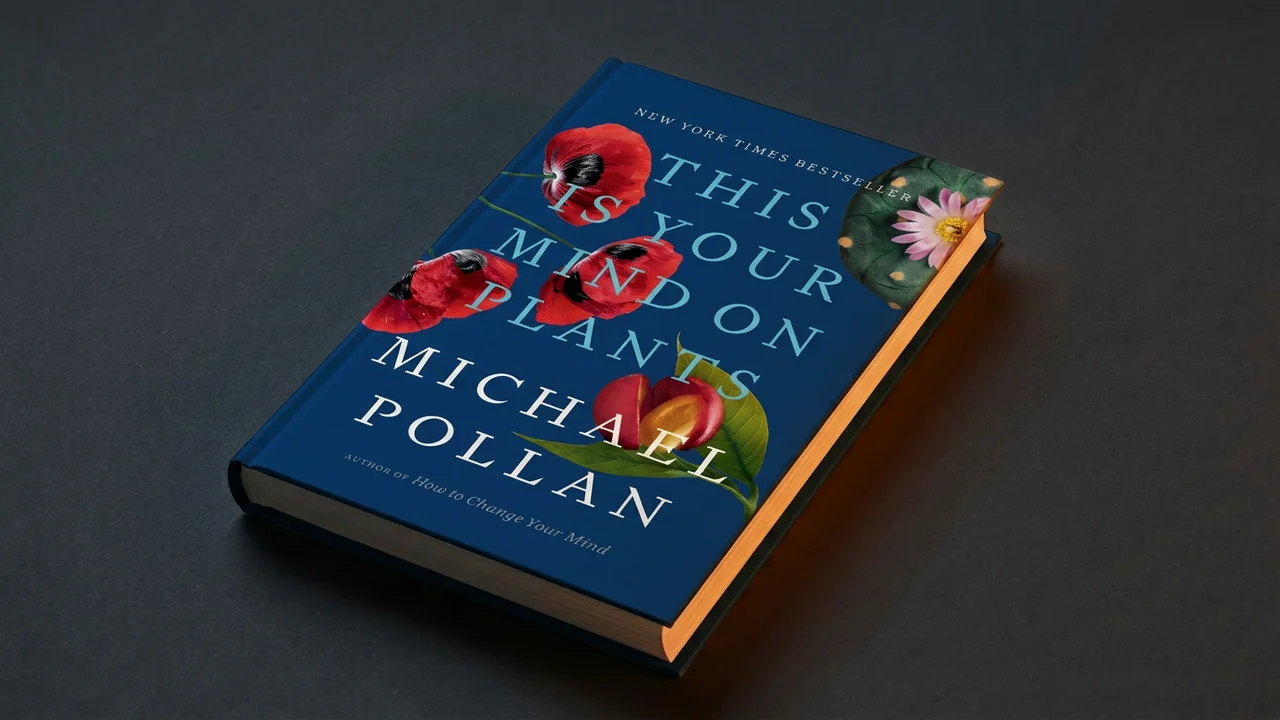

“A psychoactive drug is not a thing — without a human brain, it is inert — so much as it is a relationship; it takes both a molecule and a mind to make anything happen.”
Michael Pollan writes so artistically that the words come off as silk to the eyes and ears.
I listened to This Is Your Mind on Plants while going about my day — mostly during gym sessions, or while driving around in an automatic state of mind. And despite the divided attention, the quality of writing pulled me in every single time. The ability to flow vocabulary and grammar so beautifully to describe various states of consciousness, adventures in acquiring these plants, cultures, societies, and depth of history — it was astounding.
Since Pollan has been writing since 1991, I guess this is a craft that has been mastered well over three decades. And it shows.
The book is structured around three psychoactive plants — opium, caffeine, and mescaline — and each section reads almost like a standalone essay. But the thread that ties them all together is a fascinating question: why does society embrace some mind-altering substances while criminalizing others?
Opium
The first section on growing opium poppies, and being wrangled into the twisted and dangerous legal circumstances of the 1990s, was captivating. A plant that is legal to own in seed format, legal to grow in your garden, and legal to brew as tea — yet completely illegal to cultivate for its sap. Mr. Pollan described quite well the mental and legal gymnastics that needed to be played at the heights of the war on drugs within the USA.
What really got me was the FEAR. Pollan originally published an article about growing poppies in the late ’90s, then pulled parts of it from the published version because he was genuinely afraid the DEA would come knocking. This isn’t a paranoid writer — this is a bestselling author with a legitimate concern about possessing a PLANT that grows in gardens across America.
Yet Mr. Pollan does manage to brew himself some opium tea and embark on a colorful description of feelings, emotions, colors, and the euphoria that took place.
And here’s the dark irony that he hammers home: despite opium being incredibly illegal to this day, various pharmaceutical company families got away with flooding the USA market with “legal” opiates. The Sackler family engineered a system of addicting people suffering from pain and disabilities — all within the smooth gears of a capitalistic machine built on greed from pharmaceutical lobbyists, doctors, academics, and pharmaceutical giants to make an easy dollar. Hundreds of thousands dead. And that was LEGAL.
The hypocrisy is staggering.
Caffeine
In section two, Pollan re-shares his audiobook on caffeine and its amazing history — from the beans of Arabia, to the slave trade that brought it to the Western world, and ultimately into the industrial era by enhancing human output.
Caffeine is one of the few stimulants that is allowed by every government worldwide, simply because it was grandfathered in. But the REAL reason it gets a free pass? It makes people more productive. It enhances economic output. Governments love a drug that makes workers show up on time and stay focused for eight hours.
What I found most interesting is that Pollan actually quit caffeine for three months to write this section with clarity. And his description of the withdrawal was hilarious and painful at the same time. Mental fogginess, irritability, inability to concentrate, aches and pains — all from quitting a substance that society considers completely harmless.
Think about that. Most people who enjoy their morning coffee aren’t drinking it because they WANT it — they’re drinking it because they would not be able to operate at a bare minimum normal level otherwise. That’s not a preference. That’s a dependency.
Mescaline
The final section of the book is about mescaline, first discovered by indigenous Americans many thousands of years ago to induce a “spiritual awakening.”
This was the most culturally sensitive section of the book, and Pollan handles it carefully. Within indigenous cultures, you seek help and guidance from a shaman or spiritual doctor, and they guide your journey after you consume the cactus. It’s not recreational — it’s sacred. And within the USA, mescaline is only legal within indigenous societies based on religious and ethnic regulations. Outside those circles, it’s considered illegal.
What makes this section stand out is Pollan’s honesty about his position as an outsider. He wrestles with whether it’s appropriate for a white journalist to even WRITE about these ceremonies, let alone participate in them. That self-awareness elevated the entire section beyond just another psychedelic travelogue.
When I was in Mexico, I went on an adventure to a tiny town called Real de Catorce, deep in the mountains — you can only get there through a tunnel. My mission was to consume the peyote cactus or the San Pedro cactus, both of which contain the mescaline compound. Upon arriving, I decided against it. And because too many tourists were coming to this town to do the same thing, the Mexican government eventually made it illegal to cultivate either of the cacti.
My experience mirrors exactly what Pollan describes: the tension between curiosity and respect, between wanting to understand a substance and acknowledging that some things aren’t yours to take.
The Bigger Picture
What makes this book more than just three plant essays stitched together is the underlying thesis. Our relationship with psychoactive substances is governed not by science, not by health data, not by logic — but by politics, economics, and cultural bias.
Caffeine fuels capitalism, so it’s fine. Opium threatens productivity and control, so it’s demonized — unless a pharmaceutical company can profit from it. And mescaline belongs to indigenous cultures that the dominant society has historically tried to erase.
Once you see that pattern, you can’t unsee it.
Conclusion
My review doesn’t do full justice to the appeal of reading — or listening to — Michael Pollan describe the history, culture, sociology, legal mazes, and physiological effects these substances produce. His prose is EXCEPTIONAL. Every sentence feels intentional. Every metaphor lands.
If you decide to take the audiobook route, Mr. Pollan reads it himself, making it that much better. His delivery is calm, measured, and pulls you into every scene like you’re standing right beside him in his poppy garden.
A+ book.
Thanks for reading.
— Leonidas
